French writer Marguerite Duras fascinates and intimidates in equal measure. Was she a novelist, a filmmaker, a myth-maker of Indochina, or all of the above? This article offers a clear, reader‑friendly “who’s who” of Duras: her life, Cambodia and Indochina years, key books and films, and why her work still matters to anyone curious about memory, desire, and colonial history.

Introduction: Meeting Marguerite Without Panic
Marguerite Duras (1914–1996) is one of those writers people name‑drop with a slightly worried look, as if they’re not entirely sure they’ve actually read her. She was a French novelist, playwright, screenwriter and filmmaker, best known internationally for The Lover and the screenplay of Hiroshima mon amour.
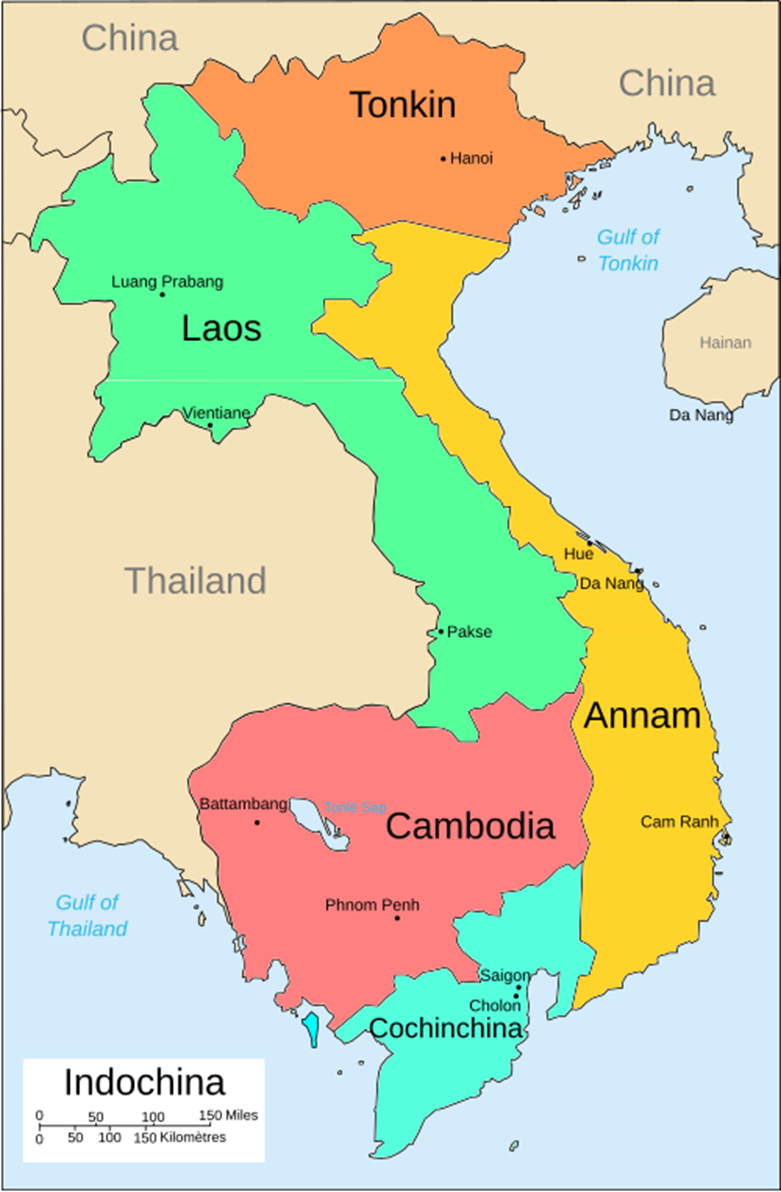
Born Marguerite Donnadieu in French Indochina, in what is now Vietnam, she spent her childhood between Saigon and the Cambodian countryside, an experience she later transformed into some of the most haunting depictions of colonial life in literature. Her work blends love stories with politics, memory with silence, and tropical landscapes with the very European art of existential unease.
If you are curious about who Marguerite Duras really was, how Cambodia and Indochina shaped her imagination, and which books or films to start with, this “who’s who” guide is for you. You will come away with a clear picture of her life, a shortlist of essential works, and a few hints on how to read her without getting lost in the tropical mist.
From Indochina to Paris: A Life in Fragments
Childhood in Indochina (with Cambodia in the background)
Marguerite Duras was born on 4 April 1914 in Gia Định, near Saigon, in then French Cochinchina (now Vietnam), to a family of French teachers working in the colony. Her father died when she was very young, leaving her mother to raise the children in difficult financial conditions at the edge of empire.
After his death, the family moved to a concession west of Kampot in what is now Cambodia, hoping to farm a piece of land bordering the Gulf of Siam. The land turned out to be nearly worthless: saltwater flooding repeatedly destroyed their crops, a disaster that later became the core material of her semi‑autobiographical novel Un Barrage contre le Pacifique (The Sea Wall).
A poor colon’s daughter, not a romantic exile
It is tempting to imagine Duras’s Indochina in soft sepia tones, all silk dresses and lazy rivers, but her own narratives refuse that easy nostalgia. She wrote instead about poverty, corruption among colonial officials, and the daily humiliations of a French family that was technically “colonial” but far from privileged. This tension – being both part of the colonizing group and economically marginal – gives her later work its distinctive uncomfortable edge.
At 20, she left Indochina for France in 1934, never to return. Yet the heat, dust, and blinding light of Cambodia and Vietnam remained lodged in her memory, resurfacing decades later in The Sea Wall, The Lover, and the Indochina‑set novels that orbit them.
War, resistance and literary beginnings
In Paris, Duras studied law and political science and began working as a civil servant before turning to writing in the 1940s. During the Second World War, she worked briefly for the Vichy administration before joining the French Resistance with her husband Robert Antelme. Antelme was deported to Buchenwald in 1944 and barely survived, an experience that marked both of them and fed into Duras’s later reflections on war and suffering.
Her early novels in the 1940s received modest attention, but The Sea Wall (1950) – the story of a widowed French mother and her children battling both saltwater and colonial bureaucracy on a Cambodian concession – brought her first major recognition.
What Did Marguerite Duras Actually Do?
Novelist, screenwriter, filmmaker
Calling Duras “a novelist” is technically correct but hopelessly incomplete. She wrote novels, short stories, plays, film scripts, essays, memoir‑like texts, and even directed her own films. Her career unfolded over several decades in three broad phases: early more traditional narratives, a mid‑period associated with the French “Nouveau Roman” (New Novel), and a late, more openly autobiographical and experimental style.
Her principal works include early novels such as Les Impudents (1943), La Vie tranquille (1944), and especially The Sea Wall (1950). Later came Le Square (1955), Moderato cantabile (1958), Détruire, dit‑elle (1969), and, in the 1980s, La Maladie de la mort and L’Amant (The Lover). She also wrote the screenplay for Hiroshima mon amour (1959), which revolutionized cinematic storytelling with its non‑linear structure, and directed films such as India Song (1975).
Themes: love, memory, power and silence
Duras’s recurring themes are deceptively simple to list: desire, memory, colonialism, class, and the difficulty of speaking about trauma. She often stages conversations in sparse settings – a café, a room, a balcony – where much of the action lies in what is not said. Her narrative voice is at once intimate and distant, as if she were remembering a memory that is already slipping away.
In the Indochina novels, the imbalance of power between Europeans and Asians intertwines with sexual and emotional relationships. In The Lover, a French adolescent girl from a poor settler family begins a relationship with the wealthy son of a Chinese businessman; the novel constantly shifts between the personal story and the larger colonial framework of race, money and dependence.
Cambodia and Indochina in Duras’s Imagination
The Sea Wall: Kampot, salt and despair
If you want to understand what Cambodia meant to Duras, Un Barrage contre le Pacifique (The Sea Wall) is the key starting point. The novel reworks her family’s years near Kampot into fiction: the widowed mother invests all her savings into a concession where the sea, each season, floods in and destroys the crops. The sea wall of the title is both literal and symbolic – a desperate engineering project and a metaphor for resistance against a corrupt, indifferent colonial administration that sold her useless land. The atmosphere of heat, dust, and tropical vegetation is not decorative; it shapes every gesture and decision, making the landscape an active character.

The Lover: Saigon, Mekong crossings and myth‑making
Published in 1984, L’Amant (The Lover) made Duras a household name and won the Prix Goncourt, France’s most prestigious literary prize. The book revisits, in a radically compressed and lyrical form, her adolescence in Saigon and her affair with a young man from a wealthy Chinese merchant family.
Here Indochina appears as a series of striking images: a hat, a ferry crossing the Mekong, colonial schools, hotel rooms with sluggish ceiling fans. The novel is less concerned with factual accuracy than with how memory and desire reconstruct the past; this is why Duras later felt free to write The North China Lover, another version of the same story.
Although Duras left Asia at 20 and never returned, Cambodia remained a recurring motif in her work. Characters introduced in The Sea Wall reappear years later in other novels, such as the Cambodian beggar woman whose wanderings near the Tonle Sap and in Battambang are evoked in Le Vice‑Consul.
For French readers, Duras has become almost synonymous with Indochina – but it is a harsh, disenchanted Indochina, stripped of romantic colonial nostalgia. She writes about concession fraud, hunger, and the petty cruelties of colonial administrators, while never ignoring the vast inequality between European and local populations.
Essential Works: Where to Start with Marguerite Duras
If you are new to Duras, a reasonable (and survivable) reading path might be:
- The Lover (1984): Short, intense, and accessible, this novel combines autobiographical material with an experimental, fragmentary style.
- The Sea Wall (1950): A more traditionally narrated story that provides the backstory to The Lover and a fierce critique of colonial exploitation in Cambodia.
- Moderato cantabile (1958): Set in France, this slim novel explores desire and social class through hypnotic conversations in a café.
- La Douleur (The War: A Memoir): A work about the Second World War and the return of her deported husband, blending testimony and literary reconstruction.
On screen: Hiroshima and India Song
On the cinematic side, two titles define Duras’s contribution:
- Hiroshima mon amour (1959, screenplay): Directed by Alain Resnais, this film tells the story of a brief love affair between a French actress and a Japanese architect, interwoven with memories of Hiroshima and wartime trauma; Duras’s script introduced a radically non‑linear approach that influenced generations of filmmakers.
- India Song (1975, directed by Duras): Set among French diplomats in Calcutta, with Indochina never far from the mood, this film uses sparse dialogue, off‑screen voices, and languid visuals to create a haunting atmosphere of colonial decay.
Why Marguerite Duras Still Matters Today
A voice for uncomfortable histories
Duras remains relevant because she resists both sentimental nostalgia and simple moralizing. Her work forces readers to confront the complexities of colonial history: poverty among settlers, systemic racism, gendered power relations, and the way memories of such worlds are later edited, beautified, or repressed.
At the same time, she speaks to more intimate experiences: impossible love, the long afterlife of childhood wounds, and the frustrating limits of language when we try to narrate trauma. For contemporary readers in or interested in Southeast Asia, her Indochina novels offer a valuable – if necessarily partial and French – perspective on a region she never stopped rewriting in her imagination.
How to read Duras without getting discouraged
Duras’s prose can appear simple, even repetitive, but the simplicity is a trap. The trick is to accept the gaps: what is left unsaid is part of the meaning. When she returns to the same scene from another angle, she is not being forgetful, she is showing how memory reshapes events over time.
A practical tip: read her shorter works first, in brief sessions, and let the atmosphere do its work. Do not worry about pinning down every reference; notice instead the rhythms of the sentences, the way time expands and contracts, and how geography – a ferry crossing in the Mekong delta, a dusty road near Kampot – becomes inseparable from the characters’ inner lives.
Marguerite Duras was not just “the author of The Lover,” but a complex, restless creator who turned her Cambodian and Vietnamese childhood, her war experiences, and her political engagements into a singular body of work. For anyone interested in Indochina, colonial history, or the tricky ways love and memory entangle, she remains an essential, if demanding, companion.
Sources & further reading / To know more
- Encyclopedia biography of Marguerite Duras – Concise overview of her life, major works, and historical context, including The Lover and Hiroshima mon amour.
- Literary guide to Duras – Short critical biography focusing on her role in 20th‑century French literature, politics, and wartime experiences.
- Research profile on Duras’s narrative style – Accessible introduction to her three main creative phases and key themes such as memory, identity and love.
- Principal works list – Chronological list of her main novels, plays and screenplays, useful for readers who want to explore beyond The Lover.
- Article on Duras and Indochina – Focus on how Cambodia and Vietnam shaped her imagination, with examples from The Sea Wall, The Lover and later novels.
Pascal Médeville is a writer and digital publisher based in Cambodia, where tropical heat and stubborn rivers continue to conspire against his concentration. He writes mainly about Southeast Asian history, literature and culture, with a soft spot for authors like Marguerite Duras who turn the region into living, troubling memory. When not reading or writing, he can usually be found refining articles for his various online projects.