Wonders of Cambodia
  • Home
  • Culture
  • Cuisine
  • Tourism
  • Business
  • Life in Cambodia
  • 中文
  • ខ្មែរ
  • Français
  • Tiếng Việt
  • e-Books
No Result
View All Result
  • Home
  • Culture
  • Cuisine
  • Tourism
  • Business
  • Life in Cambodia
  • 中文
  • ខ្មែរ
  • Français
  • Tiếng Việt
  • e-Books
No Result
View All Result
Wonders of Cambodia
No Result
View All Result
Home Culture History

From Turbulence to Renewal: A Short History of Modern Cambodia for First-Time Visitors

Pascal Medeville by Pascal Medeville
February 13, 2026
in History, Tourism
Reading Time: 6 mins read
0

Travelers arriving in Cambodia for the first time often come for the temples of Angkor, the smiling faces, and the riverfront cafés. Yet behind the warmth of daily life lies a story of survival and transformation. Modern Cambodia, shaped by a century of upheaval and renewal, offers visitors a deeper understanding of Southeast Asia’s complex past and a glimpse into the resilience of its people.

This short history is designed for curious visitors who want more than the tourist snapshot — a meaningful overview that connects Cambodia’s recent past to its present. In just a few minutes, you’ll learn how colonialism, war, and reconstruction shaped the country you see today.

The Colonial Legacy: Cambodia Under French Rule (1863–1953)

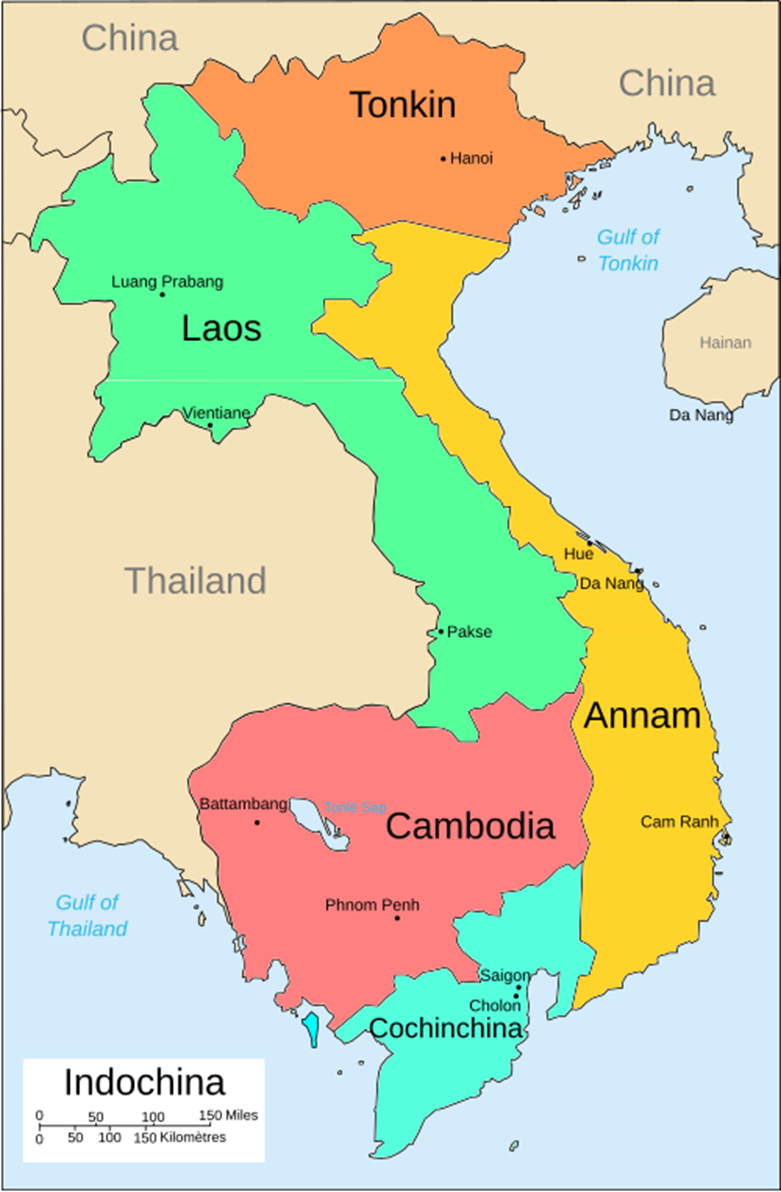
Cambodia’s modern story begins under the shadow of empire. In 1863, King Norodom signed a treaty placing his kingdom under French protection — a move intended to shield it from Siam (Thailand) and Vietnam, but which soon became full colonial control. For ninety years, the French administered Cambodia as part of Indochina, introducing modern infrastructure, centralized administration, and French-style education.

King Norodom of Cambodia (Public domain)

Phnom Penh was transformed from a sleepy river town into a colonial showcase of boulevards and villas. Yet, beneath the veneer of modernization, traditional power structures were weakened, and many Cambodians remained poor rice farmers, far removed from French urban life. The seeds of nationalism began to grow among a small elite educated in colonial schools — a generation that would later demand independence.

In 1953, after years of negotiation and rising anti-colonial sentiment, King Norodom Sihanouk achieved independence peacefully — a rare outcome in a region often marked by violent revolutions. Cambodia entered the world stage with optimism and a promise of neutrality.

Sihanouk’s Golden Age and the Shadow of War (1953–1970)

The two decades following independence are remembered by many older Cambodians as a time of beauty and pride. Phnom Penh became known as the “Pearl of Asia,” with cinemas, jazz bars, and growing industries. Sihanouk, both king and populist politician, led a policy of neutrality — balancing relations with the United States, China, and Vietnam during the Cold War.

Post-stamp edited for the 10 years of People Socialist Community “Sangkum Reastr Niyum” (Source: Original Briefmarken)

However, this neutrality proved fragile. The Vietnam War soon spilled across Cambodia’s borders as North Vietnamese forces used sanctuaries inside Cambodian territory. The U.S. responded with a secret bombing campaign (1969–1973), devastating rural areas and generating widespread displacement.

Discontent simmered. In 1970, while Sihanouk was abroad, his own prime minister, General Lon Nol, led a U.S.-backed coup that abolished the monarchy and established the Khmer Republic. The country slipped rapidly into chaos, caught between communist insurgents and a corrupt, crumbling regime.

The Khmer Rouge Regime (1975–1979)

On April 17, 1975, Phnom Penh fell to the Khmer Rouge — the radical communist movement led by Pol Pot. For many Cambodians, the entry of the black-clad guerrillas seemed to promise peace after years of war. Instead, it marked the beginning of one of the darkest chapters in modern history.

The Khmer Rouge abolished money, private property, and religion. Cities were evacuated; millions were forced into brutal rural labor camps. Intellectuals, monks, teachers, and anyone suspected of “foreign” influence were executed. Between 1.7 and 2 million Cambodians — roughly a quarter of the population — died from starvation, forced labor, or execution between 1975 and 1979.

Tuol Sleng (S-21) and the Choeung Ek “Killing Fields” remain today as stark memorials to those years. Visiting them offers travelers not morbid tourism, but a chance to bear witness and better understand the country’s extraordinary resilience.

Tuol Sleng Genocide Museum (©Pascal Médeville)

Vietnamese Occupation and Recovery (1979–1993)

In late 1978, Vietnam invaded Cambodia, toppling the Khmer Rouge and installing a new government led by former Khmer Rouge defectors. The People’s Republic of Kampuchea (1979–1989) faced isolation from much of the world, as Cold War politics kept international recognition locked in dispute.

During the 1980s, Cambodia slowly rebuilt from ruins. Schools reopened, Buddhist temples revived, and refugees returned from camps along the Thai border. Yet Vietnamese troops remained stationed in the country for a decade, and ongoing guerrilla warfare destabilized rural areas.

Diplomatic negotiations finally produced the Paris Peace Accords in 1991 — a landmark agreement that ended decades of conflict and paved the way for U.N. peacekeeping efforts. In 1993, Cambodia held its first democratic elections in modern history, restoring the monarchy under King Norodom Sihanouk once again.

A New Cambodia: Reconstruction and Renewal (1993–Present)

The 1990s opened a new chapter. Despite political tensions and sporadic violence, Cambodia embarked on a long journey toward stability. Prime Minister Hun Sen consolidated control through the Cambodian People’s Party (CPP), which would dominate Cambodian politics for decades.

Economically, the country shifted from aid dependency to export-driven growth, powered by textile manufacturing, tourism, and construction. Cities like Phnom Penh transformed rapidly, while Siem Reap became one of Asia’s most-visited heritage destinations thanks to the temples of Angkor.

Infrastructure, literacy, and internet access have grown dramatically in the new millennium. For most Cambodians the past forty years have also brought unprecedented peace — a chance to rebuild communities and traditions once almost annihilated.

Understanding Cambodia Today

For visitors, understanding modern Cambodia means seeing beyond its tragedies. The country’s complex past still echoes in its art, music, and religious life. Buddhist pagodas once destroyed now thrive again; city markets bustle with young entrepreneurs; rural families combine ancient customs with modern aspirations.

Travelers who take time to learn about this history — through local museums, guides, and conversations — find their experience richer and more meaningful. It transforms the visit from simple sightseeing into a human encounter with endurance, hope, and rebirth.

Sources & further reading / To know more

  • “A History of Cambodia” by David Chandler – A classic, accessible overview by one of the leading historians of modern Cambodia.
  • Documentation Center of Cambodia (DC-Cam) – Archival materials and survivor testimonies exploring the Khmer Rouge period.
  • Tuol Sleng Genocide Museum official site – Information about visiting the former S-21 prison and its exhibitions.
  • Cambodian Living Arts – A foundation preserving traditional music and dance, highlighting cultural resilience after conflict.
  • UNESCO Angkor World Heritage portal – Background on heritage conservation and Cambodia’s cultural revival in the 21st century.

About the author

Pascal Médeville is a writer and digital publisher based in Cambodia and focusing on Southeast Asian culture, history, and language. He creates in-depth cultural guides and online resources exploring Cambodia, China, and the broader region. His work often bridges travel, scholarship, and storytelling to make cultural understanding accessible to global readers.

Don’t miss our upcoming articles!

We don’t spam!

Check your INBOX or SPAM folder to confirm your subscription.

Tags: Angkor and beyondCambodia historyCambodia todayCambodia Travel GuideCambodian cultureCambodian independencehistory for travelersKhmer RepublicKhmer Rouge HistoryKhmer Rouge regimelearning Cambodian historyModern CambodiaPhnom Penh historypostwar CambodiaSihanouk era
ShareTweet
Previous Post

Picture of the day: White Horse Statue on the Road to Kep

Next Post

Picture of the day: Vajimukha from Prasat Neang Khmau, Ta Keo

Pascal Medeville

Pascal Medeville

Author of the blog Wonders of Cambodia, I share my passion for Cambodia through stories, cultural insights, and personal reflections on the country. I'm also the founder of Simili Consulting, where we provide high-quality, professional translation services to international clients.

Related Posts

Black and white photo of monk Khieu Chum speaking at a table with three journalists in a simple indoor setting
History

Who’s Who: Venerable Khieu Chum, the Monk Who Helped Topple a King

June 12, 2026
Black‑and‑white studio portrait of Albert Sarraut in 1914, shown from the chest up in a dark suit, white shirt and patterned tie, facing the camera against a plain, dark background.
History

Who’s Who: Albert Sarraut, The Governor-General Who Wanted to “Modernize” Indochina

June 8, 2026
Single-story red building with Khmer-style tiled roof and verandah, formerly George Groslier’s residence and now RUFA’s dean office, surrounded by potted plants, trees and parked cars on a sunny day
Art

George Groslier and the Cambodian School of Arts: How a Colonial Vision Tried to “Save” Khmer Art

June 7, 2026
Avion de la compagnie AirAsia peint en rouge avec la mention Cambodia sur le fuselage, volant dans le ciel avant l’atterrissage
Tourism

A New boost for Cambodia tourism

June 3, 2026
Statue of a robed Buddhist monk standing on a pedestal in front of a dark doorway and red wall, holding a closed umbrella and a book
History

Hem Chieu, the Monk Who Dared – Cambodian Nationalism in a Saffron Robe

May 31, 2026
Japanese Imperial Army troops and supply wagons advancing along a dirt road through rural Indochina in 1940, with mountains visible in the background
History

Imperial Japanese Control over Cambodia in World War II, From Quiet Garrison to Puppet Kingdom

May 30, 2026
Next Post
Picture of the day: Vajimukha from Prasat Neang Khmau, Ta Keo

Picture of the day: Vajimukha from Prasat Neang Khmau, Ta Keo

  • Trending
  • Comments
  • Latest
The French Protectorate of Cambodia (1863–1953): An Overview

The French Protectorate of Cambodia (1863–1953): An Overview

July 13, 2025
The Franco-Siamese Treaty of 23 March 1907: Borders, Politics, and the Return of Angkor

The Franco-Siamese Treaty of 23 March 1907: Borders, Politics, and the Return of Angkor

February 11, 2026
Cambodian-Vietnamese War (1978-1989)

Cambodian-Vietnamese War (1978-1989)

July 13, 2025
Working in Cambodia in 2026: Visas, Work Permits and Everyday Reality for Foreigners

Working in Cambodia in 2026: Visas, Work Permits and Everyday Reality for Foreigners

February 9, 2026
Kampot Province

Takeo Province: A Cradle of Cambodian History and Culture

3
Kratié Town on the Mekong: Colonial Echoes, River Life, and Irrawaddy Dolphins

Kratié Town on the Mekong: Colonial Echoes, River Life, and Irrawaddy Dolphins

3
Banteay Meanchey Province: A Gateway to Cambodia’s Rich Heritage

Banteay Meanchey Province: A Gateway to Cambodia’s Rich Heritage

2
Stung Treng Province: The Gateway to Cambodia’s Northern Wilderness

Stung Treng Province: The Gateway to Cambodia’s Northern Wilderness

2
Black and white photo of monk Khieu Chum speaking at a table with three journalists in a simple indoor setting

Who’s Who: Venerable Khieu Chum, the Monk Who Helped Topple a King

June 12, 2026
Close-up of opened red rambutans on a white plate in Phnom Penh, showing translucent flesh and playful “smiling” shapes, a typical Cambodian tropical fruit snack.

Picture of the day: Rambutan Smiles, Sweet Cambodia on a Plate

June 12, 2026
Close-up of a Siem Reap artisan using metal chisels and a wooden mallet on a leather panel to create traditional sbaek thom Khmer shadow puppets.

Video: Chiseling the sbek thom puppets

June 11, 2026
Two people walking along a wet sandy beach at dusk beside foaming waves, with golden light from the setting sun reflecting on the ocean and low clouds in the distance.

Each New Wave Pushes the Old One Back: A Khmer Proverb in a Changing World

June 11, 2026

Recent News

Black and white photo of monk Khieu Chum speaking at a table with three journalists in a simple indoor setting

Who’s Who: Venerable Khieu Chum, the Monk Who Helped Topple a King

June 12, 2026
Close-up of opened red rambutans on a white plate in Phnom Penh, showing translucent flesh and playful “smiling” shapes, a typical Cambodian tropical fruit snack.

Picture of the day: Rambutan Smiles, Sweet Cambodia on a Plate

June 12, 2026
Close-up of a Siem Reap artisan using metal chisels and a wooden mallet on a leather panel to create traditional sbaek thom Khmer shadow puppets.

Video: Chiseling the sbek thom puppets

June 11, 2026
Two people walking along a wet sandy beach at dusk beside foaming waves, with golden light from the setting sun reflecting on the ocean and low clouds in the distance.

Each New Wave Pushes the Old One Back: A Khmer Proverb in a Changing World

June 11, 2026
Wonders of Cambodia

Exploring Culture, Nature, and Spirit in the Land of Wonder.

Follow Us

Browse by Category

  • Architecture
  • Architecture
  • Art
  • Books
  • Business
  • Business
  • Cinema
  • Costume
  • Costume
  • Cuisine
  • Culture
  • Defense
  • Du lịch
  • e-Books
  • Education
  • Expat life
  • Fauna
  • Festival
  • Flora
  • Food providers
  • Français
  • Geography
  • Handicraft
  • Health
  • Histoire
  • History
  • Hotels
  • Khmer Stories
  • Khmer stories
  • Knowledge
  • Language
  • Last posts
  • Lịch sử
  • Life in Cambodia
  • Literature
  • Music
  • Pictures
  • Politics
  • Population
  • Press review
  • Professional services
  • Proverbs
  • Reference
  • Reference
  • Religion
  • Restaurants
  • Textile
  • Tiếng Việt
  • Tourism
  • Tourisme
  • Transport
  • Uncategorized
  • Video
  • Vie quotidienne
  • Who's who
  • ខ្មែរ
  • ទេសចរណ៍៖
  • បគ្គលល្បី
  • ប្រវត្តិសាស្ត្រោ
  • 中文
  • 书籍
  • 历史
  • 旅游
  • 生活

Recent News

Black and white photo of monk Khieu Chum speaking at a table with three journalists in a simple indoor setting

Who’s Who: Venerable Khieu Chum, the Monk Who Helped Topple a King

June 12, 2026
Close-up of opened red rambutans on a white plate in Phnom Penh, showing translucent flesh and playful “smiling” shapes, a typical Cambodian tropical fruit snack.

Picture of the day: Rambutan Smiles, Sweet Cambodia on a Plate

June 12, 2026
  • About Us
  • Advertise
  • Privacy & Policy
  • Contact Us

© 2025 - Made with 💫 by TechFlow.

No Result
View All Result
  • Home
  • Culture
  • Cuisine
  • Tourism
  • Business
  • Life in Cambodia
  • 中文
  • ខ្មែរ
  • Français
  • Tiếng Việt
  • e-Books

© 2025 - Made with 💫 by TechFlow.