Short presentation of the author and the text
Dr. Puangthong Rungswasdisab is a Thai political scientist and an associate professor in the faculty of political science at Chulalongkorn University. She was a research fellow with the Cambodian Genocide Program at Yale University, specializing in Thai foreign policy, security politics, and Indochina relations. Her study “Thailand’s Response to the Cambodian Genocide” analyzes how Thai state elites, the military, and mainstream academia reacted to the Khmer Rouge regime and its overthrow, from the mid‑1970s through the early 1990s.

The text is structured in four main parts:
- Introduction: Thai domestic change after 1973 and the peculiar continuity of a hardline, security‑driven Indochina policy.
- I. The Khmer Rouge as a Threat: early relations between Thailand and Democratic Kampuchea and escalating border conflict.
- II. Alliance with the Khmer Rouge: how the Vietnamese invasion turned Pol Pot from enemy into de facto ally.
- III. Doing Business with the Khmer Rouge: border trade, arms, and the aid-refugee complex that sustained guerrillas.
- Postscript: reflections on nationalist historiography, academic complicity, and the costs of a “national security first” paradigm.
The text argues that Thailand’s foreign policy toward Cambodia was driven less by concern for genocide victims than by fear of Vietnam, Cold War alignments, and deeply rooted nationalist narratives about Cambodia and Indochina.
The study begins by situating Thailand’s response to the Cambodian genocide within broader political changes after the 14 October 1973 uprising, which overthrew the Thanom-Praphat military regime and briefly opened Thai politics to pluralist participation. While domestic debates about decentralization, reform, and transparency flourished, foreign policy toward Indochina remained tightly controlled by the foreign ministry, National Security Council, and the armed forces. On Cambodia policy there was near‑total elite consensus: Vietnam was perceived as the primary threat, and the Khmer Rouge question had to be handled through a national security lens.
Thai school and popular histories reinforced a hierarchy in which Thailand appeared as a great, civilized kingdom and Cambodia a subordinate, unreliable neighbor whose rulers alternated between Thai and Vietnamese patrons. Narratives of Siam’s victories over Angkor and stories such as the apocryphal beheading of “Phraya Lovek” by King Naresuan fed a sense of Thai superiority and distrust of Cambodians. This nationalist historiography, together with weak Indochina studies in Thai academia, produced both ignorance and prejudice that shaped policy and public opinion.
From rapprochement to confrontation (1973-1976)
After 1973, civilian governments under Sanya, Seni Pramoj, and Kukrit Pramoj attempted to distance Thailand from the United States, withdraw American bases, and normalize relations with communist neighbors, including Democratic Kampuchea (DK) under the Khmer Rouge. Student movements and progressive media harshly criticized Thailand’s role as an American platform for Indochina wars and demanded withdrawal of US forces.
Kukrit’s government officially recognized Democratic Kampuchea in April 1975 and moved to reopen the border and trade, while simultaneously allowing US arms shipments to the collapsing Lon Nol regime through Thai territory-often via arrangements made by military and security agencies outside full cabinet control. Khmer Rouge emissaries signaled willingness to resume border commerce, and Ieng Sary’s 1975 visit led to a joint communiqué promising mutual respect of frontiers and non‑use of territory by third parties.
Yet even as diplomatic ties were established, border tensions escalated dramatically. Khmer Rouge forces clashed with Thai units along the Trat, Prachinburi, Surin, and Aranyaprathet-Poipet sectors, seized Thai fishing boats, laid mines, and raided villages. Thai officials partly attributed these clashes to overlapping claims and to sabotage by right‑wing Cambodian groups (such as In Tam and Sek Sam Iet’s forces) that the Thai military tolerated or quietly supported as anti‑communist assets and bandit networks. Attempts to expel these groups exposed divisions between prime ministers and security agencies, with the National Security Council and segments of the military resisting civilian orders.
At the same time, Thailand’s own domestic polarization intensified. Left‑right conflict, assassinations of peasant leaders and activists, and fear of the Communist Party of Thailand led the armed forces and right‑wing politicians to perceive the open political system as a communist gateway. This culminated in the 6 October 1976 Thammasat University massacre and the Thanin Kraivixien government installed by the National Administrative Reform Council (NARC), which swung foreign policy back to hardline anti‑communism.
Borders of blood: the Thanin period and after
Under Thanin, relations with DK deteriorated into repeated violent clashes. Cambodian forces raided Thai villages in Prachinburi and Aranyaprathet, with particularly brutal incidents in January and August 1977, where dozens of villagers-including women and children-were killed and houses burned. Thailand responded with embargoes, border closures, and encouragement of local militias, while the Khmer Rouge’s “sweeping up the masses” tactics, sometimes coordinated with Thai communist networks like Angkar Siem, degenerated into looting raids on Thai territory.
Despite this, diplomatic initiatives did not completely collapse. By late 1977, with Chinese mediation, Ieng Sary and Thai Foreign Minister Uppadit Pachariyangkun met in New York and declared intentions to ease tensions. However, the deepening war between DK and Vietnam overshadowed Thai-Cambodian rapprochement; Vietnamese leaders warned Thailand about Pol Pot’s aggression and proposed non‑aggression arrangements, but Bangkok – guided by its intelligence reading of Vietnamese ambitions for an Indochina federation – saw Hanoi as the main danger.
From enemy to ally: the Vietnamese invasion and Thai-Khmer Rouge cooperation
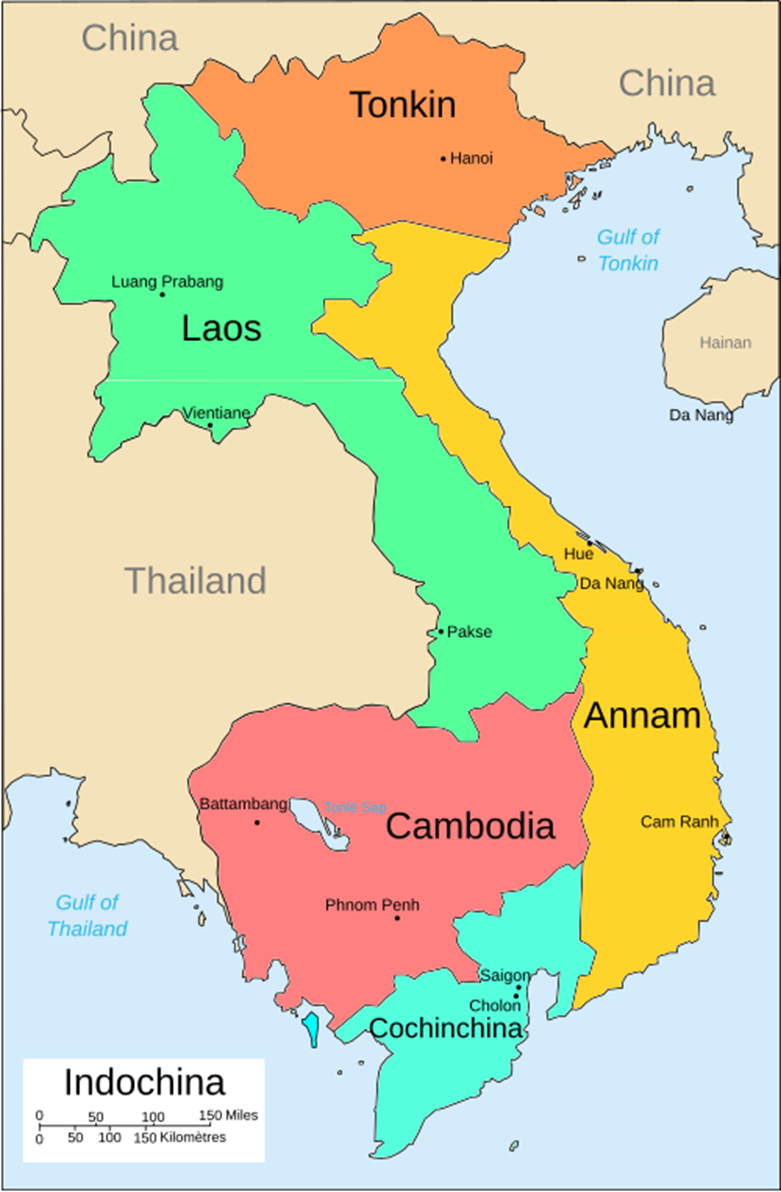
The turning point came with Vietnam’s full‑scale invasion of Cambodia in December 1978, the fall of Phnom Penh in January 1979, and the proclamation of the People’s Republic of Kampuchea (PRK) under Heng Samrin. For Thai policymakers, the “Cambodian problem” effectively began at this moment: the Vietnamese occupation and the presence of roughly 180,000 Vietnamese troops were framed as the real threat to Thailand’s security and regional stability, not the previous genocidal rule of the Khmer Rouge.
General Kriangsak Chomanan’s government, while publicly claiming neutrality, recognized Democratic Kampuchea as the sole legitimate representative of Cambodia and welcomed Khmer Rouge leaders to transit through Thai territory. Over time, Thailand, China, and ASEAN cooperated in supporting three main Cambodian resistance factions: the Khmer Rouge, Prince Sihanouk’s FUNCINPEC, and Son Sann’s KPNLF. China provided arms and political backing; Thailand became the essential “land bridge” and logistical hub; ASEAN, particularly through Thailand, worked at the United Nations and other forums to prevent recognition of the PRK and to keep the DK (later the Coalition Government of Democratic Kampuchea) seat.
This policy was broadly rationalized inside Thailand as a defensive measure to protect national security, uphold international law against aggression, and prevent Vietnam from transforming Cambodia and Laos into a Hanoi‑dominated Indochina federation. Thai elites insisted they were supporting “Cambodian independence” rather than Pol Pot per se, and many dismissed Western reports of Khmer Rouge atrocities as Vietnamese or “imperialist” propaganda. Some academics even argued that Vietnamese actions had caused as many or more deaths than Democratic Kampuchea, without offering solid evidence.
Refugees, aid, and “humanitarian” politics
The study devotes considerable attention to the refugee issue, exposing a stark gap between Thai official rhetoric of humanitarianism and the actual use of Cambodian refugees in border politics. Initially, Kriangsak’s government refused to recognize post‑1979 Cambodian arrivals as refugees, labeling them “displaced people” or illegal immigrants and carrying out forced repatriations across mined borders that caused many deaths. At the same time, Khmer Rouge fighters and their dependents were allowed sanctuary on Thai soil.
Under international pressure and in coordination with UNHCR, UNICEF, and ICRC, Thailand shifted to an “open door” policy by late 1979-1980, allowing large camps such as Sa Kaeo and Khao I Dang to be established in Prachinburi Province. However, the location and management of camps often served military and political goals: border‑proximate camps were vulnerable to artillery fire and cross‑border raids, enabling Thai authorities to blame Vietnam and the PRK for civilian deaths while resisting calls to move camps deeper inside Thailand on “security” grounds.

Foreign journalists reported that Thai officers in some camps not only guarded but also commanded Cambodian guerrilla units, and that refugees were coerced into mine‑clearing and military tasks under harsh conditions. Relief agencies were kept at arm’s length after dark, media access was controlled, and academic research restricted, allowing abuses by camp leaders and security forces to go largely undocumented.
Economically, refugee and resistance infrastructures generated substantial profits. Aranyaprathet and other border towns experienced property booms, thriving black markets, and profitable cross‑border trade in rice, timber, fuel, and other commodities, often involving Thai military and Cambodian factions-including the Khmer Rouge. Bangkok’s public complaints about the economic “burden” of refugees thus obscured the ways in which the border economy and aid flows benefited local elites and security networks.
Justifying support for a genocidal movement
Throughout the 1980s, Thai policy circles, supported by much of the media and mainstream academia, articulated a coherent but highly selective narrative of the Cambodian conflict:
- Conflict began with the Vietnamese invasion, not with Khmer Rouge mass killings.
- Vietnam, backed by the Soviet Union, was the expansionist “big fish” threatening to swallow Cambodia and then Thailand.
- Thailand and ASEAN were defending international law, small‑state sovereignty, and Cambodian independence by opposing occupation and supporting resistance.
- China was portrayed as a necessary counterweight to Soviet-Vietnamese power and a reliable ally of Thailand.
Within this framework, calls to exclude the Khmer Rouge from any settlement or to disarm them were viewed as naïve or as serving Vietnamese interests. Proposals for UN‑supervised elections that would categorically bar Pol Pot’s forces were rejected; instead, Bangkok and its allies insisted on unconditional Vietnamese withdrawal first and equal participation of all resistance factions, thereby preserving the Khmer Rouge’s political future.
By the late 1980s and early 1990s, when peace initiatives and UN involvement advanced toward the Paris Agreements, the long‑standing Thai approach – security first, Vietnam as main threat, Khmer Rouge as necessary instrument – had already shaped the regional diplomatic landscape and left deep moral ambiguities unresolved.
In its postscript, the text underlines that Thailand’s foreign policy toward Cambodia, rooted in nationalism and Cold War security thinking, largely bypassed the human cost of the genocide and the suffering of refugees. The study calls for critical reflection on Thai historiography, academic complicity, and the need to incorporate ethical and humanitarian considerations into foreign policy toward neighboring countries.
William Shawcross, Sideshow: Kissinger, Nixon and the Destruction of Cambodia.
Puangthong Rungswasdisab, “Thailand’s Response to the Cambodian Genocide,” Yale University Genocide Studies Program (download here).
Ben Kiernan, The Pol Pot Regime: Race, Power, and Genocide in Cambodia.
David Chandler, The Tragedy of Cambodian History: Politics, War, and Revolution since 1945.
Nayan Chanda, Brother Enemy: The War After the War.
Michael Vickery, Cambodia 1975-1982.

![Reference: A l’école des diplomates: La perte et le retour d’Angkor [At the School for Diplomats – The Loss and Return of Angkor]](https://wondersofcambodia.com/wp-content/uploads/2025/12/image-106-350x250.png)