Norodom Sihanouk’s film “The Little Prince” (ព្រះប្រជាកុមារ Preah Prachea Komar / Le petit prince du peuple, 1967) is a royalist historical melodrama that tells the story of a young orphaned prince confronting a cruel regent, using his journey toward just rule as a vehicle to project Sihanouk’s own ideals of benevolent leadership in 1960s Cambodia. Set in a vaguely 18th‑century kingdom but filmed around the Angkor temple complex in Siem Reap, the movie blends palace intrigue, moral didacticism, and iconic views of Khmer heritage into a cinematic allegory about legitimacy, virtue, and the bond between ruler and people.

The film is officially known in Khmer as “Preah Prachea Komar”, with the French distribution title “Le petit prince du peuple” and the informal English title “The Little Prince.” It was directed, written, and produced by Norodom Sihanouk through his company Khemara Pictures, and it stars his son Norodom Sihamoni in the role of the little prince, which ties the fiction directly to the royal family’s public image. Completed and released in 1967, it is usually listed as Sihanouk’s third Cambodian feature, following “Apsara” and “The Enchanted Forest,” and it occupies an early but central place in his filmography.
The narrative unfolds in a small, unnamed kingdom where a young prince becomes king after the death of his parents, only to discover that real power lies with his aunt, a domineering princess who rules as regent. She mistreats both the boy and the population, using palace guards and ritual authority to maintain control, while the child‑king initially appears timid and dependent. As the story progresses, the prince encounters loyal retainers, oppressed villagers, and scheming courtiers; through these encounters he learns to distinguish self‑interested flattery from honest counsel and to see the human cost of the regent’s abuses. The dramatic tension centers on whether the young sovereign will accept his marginalization or assert his legitimate authority; in the film’s resolution he confronts his aunt, curbs her tyranny, and restores a more equitable order at court, re‑establishing a morally grounded monarchy that listens to its subjects.
Filming locations and visual style
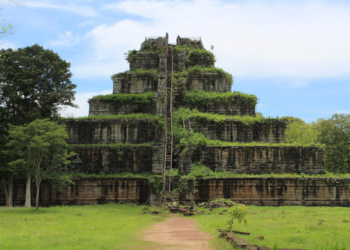
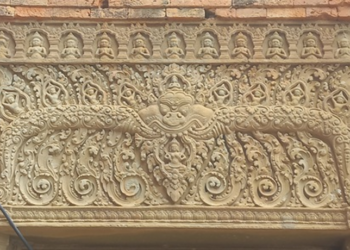
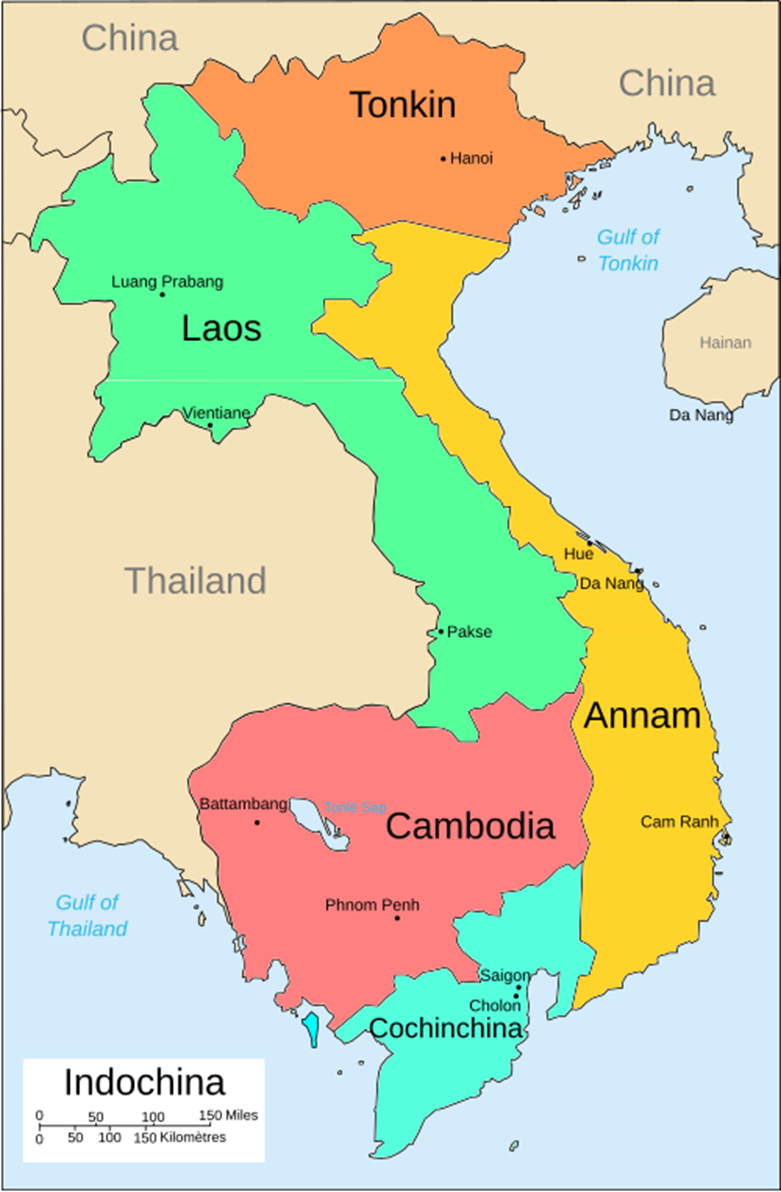
Unlike the earlier reference to “Angkor Kandal,” modern catalogues and databases identify the film’s shooting location simply as Angkor in Siem Reap province, with sequences staged among the famous temples and in nearby landscapes. The choice of Angkor as a backdrop gives the story an immediate visual connection to Cambodia’s classical past: processions, courtly scenes, and intimate dialogues are framed against bas‑reliefs, galleries, and moats that evoke the grandeur of Angkor Wat and related monuments. Stylistically, the film carries Sihanouk’s signature approach: carefully composed shots, an emphasis on scenic spectacle, melodramatic acting, and a didactic tone that foregrounds moral lessons over psychological complexity. The use of real locations rather than studio sets, especially the iconic temples, reinforces the idea that the fictional kingdom is a symbolic stand‑in for Cambodia itself, rooted in an ancient and sacred landscape.
Beneath its fairy‑tale surface, “The Little Prince” functions as a political parable for the Sangkum era, mapping contemporary concerns about power, corruption, and paternal authority onto a distant royal past. The cruel aunt‑regent embodies the dangers of intermediaries who abuse their position, echoing Sihanouk’s critique of self‑serving elites and bureaucrats who distorted the intentions of the monarch and alienated ordinary citizens. The boy‑king, portrayed as innocent, compassionate, and gradually more decisive, reflects Sihanouk’s carefully cultivated self‑image as “father of the nation,” directly attuned to the people’s needs and morally distinct from corrupt political factions. The film’s resolution, with rightful authority restored and social harmony re‑established, conveys a clear message: national stability depends on a virtuous monarch who reins in bad advisers and maintains intimate contact with the populace.
Contemporary technical assessments often describe Sihanouk’s films, including “The Little Prince,” as uneven in pacing and acting, but they are now widely regarded as invaluable documents of Cambodia’s pre‑1970 cultural and political landscape. For historians of cinema and of the monarchy, the film offers rare moving images of Angkor and of mid‑1960s court culture, while also revealing how Sihanouk adapted melodrama and royal myth to legitimize his rule and articulate a vision of monarchic democracy. Surviving copies, some restored or digitized, circulate in archives and online platforms, allowing new audiences to see how a sitting head of state used film as both artistic expression and propaganda, and how a seemingly simple story of a little prince became a key text in the visual history of modern Cambodia.
Below is a remastered version of the film, available on Youtube: