
Introduction
Hariharalaya (Khmer: ហរិហរាល័យ) is widely regarded as the birthplace of the great Khmer Empire, a place where the political, cultural, and spiritual foundations of Angkor civilization were first established. Situated in the present-day Roluos area, southeast of Siem Reap, this ancient capital flourished in the late 8th and 9th centuries during the reigns of King Jayavarman II and his successors. Although less majestic in scale than the later capital of Angkor Thom, Hariharalaya remains historically significant as the first enduring center of political administration, religious worship, and monumental architecture in Khmer history.
Historical Context
In the late 8th century, the Khmer-speaking polities of mainland Southeast Asia were still fragmented into multiple principalities. King Jayavarman II, often considered the founder of the Khmer Empire, unified these territories under his rule. He declared independence from foreign suzerainty, particularly from Java, and established himself as the chakravartin or universal monarch.
While Jayavarman II initially founded his capital at Mahendraparvata on Phnom Kulen, he later shifted the center of administration to the fertile plain near the Tonle Sap Lake around the early 9th century. This site became known as Hariharalaya, named after the Hindu deity Harihara — a syncretic fusion of Vishnu (Hari) and Shiva (Hara) — symbolizing religious and political unity.
Etymology and Religious Significance
The name Hariharalaya comes from Sanskrit, a language of sacred and political legitimacy in ancient Cambodia. “Hari” refers to Vishnu, the preserver, while “Hara” refers to Shiva, the destroyer and transformer. The suffix “alaya” means abode or sanctuary. Thus, Hariharalaya translates roughly to “The Abode of Harihara.”
The choice of such a name reflects the syncretic nature of early Khmer state religion. By worshipping Harihara, the kings of Angkor legitimized their rule through a unifying symbol that bridged different sects of Hinduism, ensuring solidarity between followers of Shaivism and Vaishnavism. The spiritual epicenter of the capital was the devaraja cult — a royal cult centered on the worship of a divine king whose soul was associated with Shiva.
Urban Layout and Geography
Hariharalaya occupied a strategic location on the northern floodplains near the great Tonle Sap Lake. This area provided fertile soil for rice cultivation, easy access to waterways, and security from seasonal flooding.
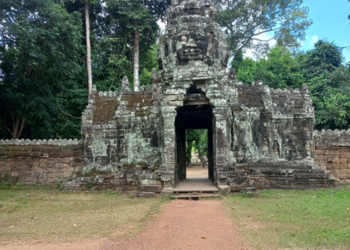
The city was designed with a combination of wooden residential buildings, enclosed palace complexes, and stone temples that served both spiritual and political functions. Although much of the wooden architecture has been lost to time, the surviving stone structures — now known collectively as the Roluos Group — provide us with a clear glimpse into early Khmer city planning and temple construction.
The Roluos Group Temples
The renowned Roluos Group represents the monumental heritage of Hariharalaya. These include:
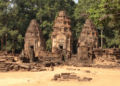
- Preah Ko – Built in 879 CE by King Indravarman I in honor of his ancestors, Preah Ko features six brick towers on a common platform. The temple is richly decorated with carvings and inscriptions, and it served as a memorial sanctuary linking royal ancestry with divine blessing.
- Bakong – Considered the first large-scale sandstone mountain temple in Cambodia, Bakong symbolizes Mount Meru, the cosmic center in Hindu mythology. Built on a stepped pyramid base, it became the state temple of Indravarman I and set the architectural blueprint for future Angkorian temple-mountains such as Baphuon and Angkor Wat.
- Lolei – Constructed on an artificial island in the middle of the Indratataka Baray (a large reservoir), Lolei was commissioned by King Yasovarman I in honor of his parents and grandparents. This temple reflects the close connection between spirituality, water management, and royal ancestral veneration.
Water Management and Economic Foundations
A key reason for Hariharalaya’s prosperity was the sophisticated water-management system initiated by early Khmers. King Indravarman I is credited with constructing the Indratataka Baray, an enormous reservoir that stored monsoon water for agriculture and daily life. This system ensured a consistent rice surplus, enabling population growth and the economic stability needed for monumental construction projects.
This hydraulic mastery would later be expanded on a much grander scale during the Angkor period, allowing the Khmer Empire to sustain one of the largest pre-industrial cities in the world for several centuries.
Political and Cultural Legacy
Hariharalaya was more than just a political capital; it was a cultural crucible where architecture, religion, and state ideology fused into a distinct Khmer identity. It marked the transition from small-scale brick sanctuaries to grand sandstone temple-mountains. The city also became a training ground for artisans, architects, and priests who would later build the great Angkorian wonders.
By the end of the 9th century, King Yasovarman I moved the capital to Yasodharapura (near present-day Angkor Thom), seeking a location closer to the Kulen highlands and better suited for expansive urban planning. Even so, Hariharalaya maintained its spiritual and ancestral importance, and its temples continued to be used and venerated for generations.
Art and Architectural Style
Temples of Hariharalaya represent the early Preah Ko style of Khmer art. This style is characterized by:
- Brick towers with sandstone door frames
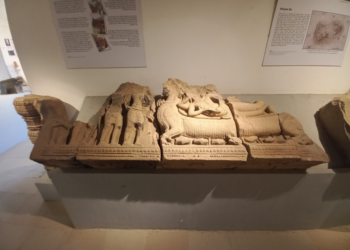
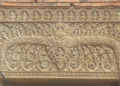
- Intricate lintel carvings featuring floral motifs, divine figures, and kala faces
- Stucco decoration applied over brick surfaces
- Use of laterite for foundations
- A harmonious combination of form and symbolism, with each temple designed to mirror sacred Hindu cosmology.
The choice of brick as the main construction material reflects both technological limitations and artistic preference of the period. The transition to sandstone as a primary material began at Bakong, heralding the monumental achievements of later centuries.
Religious Practices and Society
Life in Hariharalaya revolved around the royal court and the temples. Brahmin priests supervised religious rituals, often involving offerings to the linga — a phallic symbol of Shiva representing fertility, power, and cosmic creation. The worship of Vishnu also had its place, making Hariharalaya spiritually inclusive within the Hindu tradition.
Common people engaged in rice farming, fishing, and craft production. Social hierarchy was highly stratified, with the king, priests, military officials, and artisans occupying upper tiers, while farmers and laborers formed the majority. The temples were both religious sanctuaries and social hubs, drawing people together during festivals and state ceremonies.
Hariharalaya in the Present Day
Today, the remains of Hariharalaya attract visitors who wish to trace the roots of Angkor civilization. The Roluos Group temples stand as silent witnesses to the grandeur of early Khmer ingenuity. Although less crowded than Angkor Wat, these sites offer a more intimate experience, allowing travelers to reflect on the early stages of an empire that would dominate Southeast Asia for centuries.
Ongoing conservation efforts aim to preserve the brick and sandstone structures, which face threats from erosion, vegetation, and human impact. Local communities in the Roluos area continue to honor these sites as part of Cambodia’s living heritage.
Conclusion
Hariharalaya was the seedbed of the Khmer Empire — a place where political vision, religious devotion, and engineering skill converged to create a lasting legacy. From the symbolic worship of Harihara to the establishment of hydraulic systems and monumental architecture, the city laid the groundwork for Angkor’s golden age. Even after the capital moved, Hariharalaya’s cultural imprint remained embedded in Khmer identity, making it not just an archaeological site, but a testament to the enduring creativity and unity of the Cambodian people.