When a woman bargains with a forest serpent to retrieve her fallen adze, she sets in motion a tragic chain of betrayal, murder, and the birth of all snakes.

Introduction
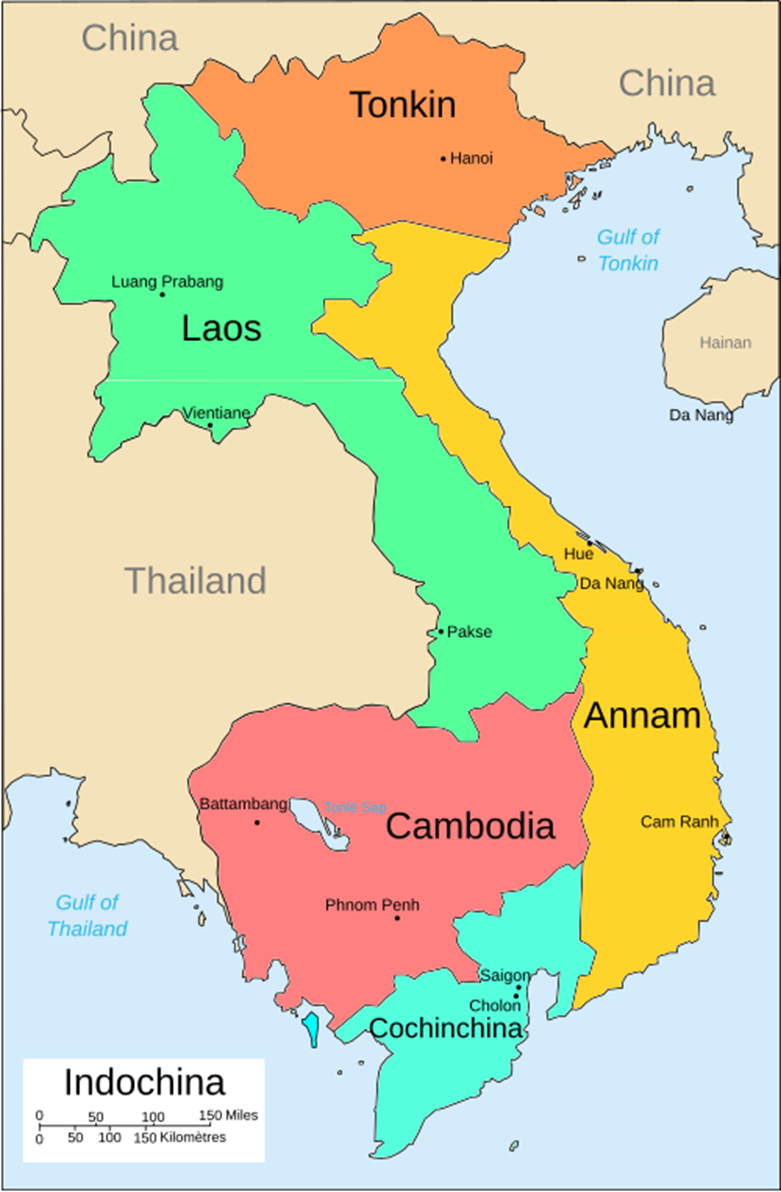
This story of the serpent Keng Kang is one of Cambodia’s best‑known folk tales, familiar to generations of Khmer children and adults alike. It has been told and retold across villages, schools, and storybooks as a powerful moral warning about infidelity, fear, and retribution. In many Cambodian families, the tale is part of childhood, recounted by elders at night and echoed in popular culture, making Keng Kang a widely recognized figure in the country’s oral tradition. The name of Phnom Penh’s Boeung Keng Kang area (“the lake of Keng Kang”) is traditionally said to derive from this very story.
This version of the story is adapted from the Khmer folk tale collection published by Cambodia’s Buddhist Institute, based on the original Khmer text. (The original Khmer version of this tale is available to read online on Wikisource.)
The Tale
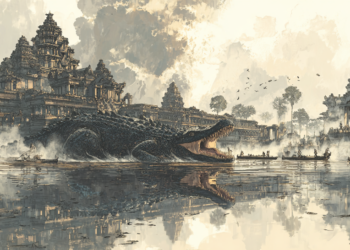
Long ago, in the early days of the world, there were no poisonous snakes and no harmless snakes in that land. There was only one kind of serpent, and its name was Keng Kang.
In a certain village lived a husband and wife. The wife was called Neang Ni, and she had a young daughter named Neang Et. One day, the husband set off on a long journey to trade beads. He was gone so long that the neighbors spoke of him as if he might never come back.
Time passed. One morning, the villagers agreed to go together into the forest to gather firewood. When Neang Ni heard them calling one another, she decided to join them and took little Et along. Deeper and deeper they went into the woods until they came upon a large old stump that would make good wood for burning. Neang Ni took up her adze and began to chop at the stubborn roots.
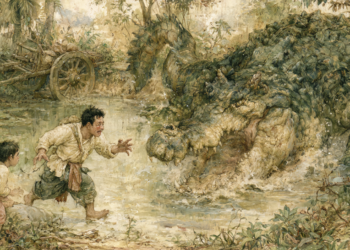
She struck and struck. Suddenly, the earth under the stump collapsed. Her adze slipped from her hands and dropped straight down into a hidden hole beneath the roots. When she peered down, she saw not only her adze but also a huge serpent coiled in the darkness. This was Keng Kang.
“Serpent Keng Kang!” she called down. “Give me back my adze!”
From the hole, the serpent’s voice rose up, deep and smooth.
“Oh, Ni,” it said, “if you will be my wife, I will push your adze back up to you. If you will not be my wife, I will not give it back.”
Neang Ni’s heart was not virtuous. Instead of recoiling, she thought only of the tool she needed. After a moment, she answered, “Very well. If you give me back the adze, then this evening I will have my daughter Et come and call you.”
Satisfied, Keng Kang pushed the adze up out of the hole. Neang Ni took it, repeated, “This evening I will send Et to call you,” and then went home with the others, carrying firewood with Neang Et by her side.
When evening came and shadows lengthened, Neang Ni turned to her daughter.
“Et,” she said, “go to the serpent’s hole and call for Keng Kang. Tell him I am sending for him.”
Et’s heart tightened with fear and anger. She knew nothing good could come from her mother’s dealings with a serpent, yet she dared not disobey. Afraid of her mother, she went.
At the mouth of the dark hole, she stood trembling and called out, “Serpent Keng Kang! Neang Ni sends for you!”
From within, the serpent uncoiled and rose, his long body sliding up through the earth. When Et saw him – huge, gleaming, and long – goosebumps ran over her skin. Still, she forced herself to walk ahead of him, leading him back through the grass toward the village. Wherever Keng Kang passed, the grass flattened under his weight.
At the house, Keng Kang climbed up and lay beside Neang Ni as if he were her husband. Neang Ni spoke to him calmly.
“I have a husband,” she said. “He has gone to trade beads. He only comes home once every two or three years.”
“How many days and months until he returns?” Keng Kang asked.
“I do not know,” she answered. “No one can say when he will come back.”
That night, Neang Ni and the serpent lay together until near dawn, when Keng Kang slipped quietly away and returned to his burrow. Before he left, Ni warned him:
“If my husband comes home, I will not send Et to call you, and you must not come. But if he has not yet returned, I will send Et to call you, and then you may come.”
So Keng Kang went back into the earth.
From that night on, as long as her husband did not return, Neang Ni sent Et each evening to summon the serpent. Afraid of her mother, Et obeyed, but in her heart she was filled with dread and burning resentment. Each time she approached the hole, she called out, “Serpent Keng Kang, Neang Ni sends for you,” and each time Keng Kang emerged, asking first if the husband had come back.
“Tell your mother that I am not going,” he would say, “for your father is there ready to cut off my head.”
But Et always replied, “My father has gone to trade beads. For two or three years he has not returned.”
Hearing this, Keng Kang believed the husband was still far away. He would then crawl out and follow Et to the house as before. So the nights went by, one after another, with the serpent visiting Ni in secret.
In time, Neang Ni became pregnant. After a long absence, the husband finally returned from his trading journey. When he saw his wife’s swollen belly, suspicion gnawed at him. He called his daughter to him and asked gently, “Et, who has been with your mother while I have been away?”
Et, who had long held her anger inside, now told him the truth. “Mother has been lying with the serpent Keng Kang,” she said. “Every evening she sends me to call him, every single day.”
The husband’s face darkened, but he kept his voice steady.
“When evening comes,” he told Et, “go and call that serpent again, just as your mother has ordered before. I will wait at the doorway with a sword. Do not say a word to your mother.”
That evening, under a sky fading to purple, Et walked once more to the serpent’s hole.
“Keng Kang, Keng Kang!” she called. “Neang Ni sends for you.”
From the darkness came his wary reply. “Et, Et! Tell your mother that I am not coming. Your father is there ready to cut off my head.”
But Et answered as before, “My father has gone to trade beads. For two or three years he has not yet come back.”
Trusting her words, Keng Kang believed the husband was still far away. He emerged from the hole and followed Et toward the house. At the doorway, the husband stood waiting, sword in hand, hidden in the shadows.
As the serpent’s head crossed the threshold, the husband struck with all his strength. The blade bit into Keng Kang’s neck and severed the head from the great body.
Afterward, the husband cut a piece from the tail and laid it on a shelf inside the house. He took a piece from the head and hung it on the branch of a jujube tree near the dwelling. The thick middle part of the body he skinned, throwing away the serpent’s hide and keeping only the flesh.
He turned to Et and said quietly, “Do not let your mother know. Keep this meat and cook it into soup for your mother to eat.” Then he washed the blood from the floor and yard until no stain remained.
At that time, Neang Ni was not at home. She had gone to visit relatives in another village and knew nothing of what had happened. At daybreak she returned, and Et had already boiled the serpent’s flesh into a rich soup.
When Ni saw how thick and oily the soup was, with fat shining on the surface of the pot and bowl, she asked, “Et, what meat did you use to make this soup?”
“Pork,” Et answered at once.
Thinking it truly was pork, Neang Ni told her daughter to ladle the soup to eat with rice. The husband sat down to eat as well.
As they were eating, a crow perched nearby caught sight of the serpent’s head hanging from the jujube branch. Craving the serpent’s flesh, it called out in a harsh, mocking voice, “Klo-uv, klo-uv, klem, klom – you are gobbling down your husband’s meat!”
Hearing this, Neang Ni’s heart jumped. She looked up at the jujube tree and saw Keng Kang’s head hanging there. A wave of pity and sorrow swept over her, and tears welled in her eyes. Yet she did not dare cry aloud, for her husband was there at her side, watching.
He noticed her tears and asked, “Why are you crying?”
“The rice is hot, the soup is hot,” Ni replied quickly, “and I suddenly remembered the children and grandchildren, so my tears came.”
But the crow did not stop. Again and again it cried, “Klo-uv, klo-uv, klem, klom, you gobble your husband’s meat – his head is on the jujube tree, his tail is on the shelf!”
Ni’s eyes drifted toward the shelf, and there she saw a piece of Keng Kang’s tail. Now there could be no doubt. Her heart broke with grief and shame, even as she forced herself to keep her face composed.
Her husband now understood with certainty that Et had spoken the truth: his wife had indeed been with the serpent Keng Kang. Rage burned within him, but he hid his anger, waiting for the moment to act.
When Neang Ni was heavy with child and close to giving birth, the husband spoke to her with gentle words.
“Ni,” he said, “let us go to the lake and wash our hair. We will go a little farther away from the other people’s village, and the two of us will relax together.”
Ni, suspecting nothing, believed him. She followed him out of the village and into the forest path, her steps slow under the weight of her pregnancy.
They walked until they reached a landing by the water’s edge, smooth and open, a quiet place surrounded by trees. The husband looked around and said, “This landing is flat and pleasant. Let us stop here and wash our hair.”
Not knowing that death was close upon her, Neang Ni sat down on the bank, loosened her hair, and leaned over the water to wash it.
As she bent forward, the husband drew his sword. Stepping behind her, he struck a single hard blow. The blade cut through her body, and she fell dead on the bank of the lake.
At that very moment, from Neang Ni’s belly crawled a clutch of tiny serpents – her unborn offspring by Keng Kang. Horrified, the husband swung his sword again and again, hacking at the baby serpents. Some he struck and killed, but others slipped away too quickly. Some wriggled into holes in the earth, some plunged into the water, and some vanished into the shadows of the forest.
From those that escaped, it is said, all the many kinds of snakes that live in the world today are descended.