Introduction
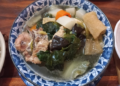
Banana flower salad, or nhoam trâ-yong chek (ញាំត្រយូងចេក), is a dish straight from the heart of Cambodian cuisine, combining the delicate flavors of banana blossoms with the vibrant notes of Southeast Asia. It’s a humble yet celebrated dish, an intersection of crisp textures, refreshing herbs, and umami-rich dressings, often seen on family tables and street stalls across Cambodia. To understand this salad is to open a window into the traditions, tastes, and resourcefulness of Khmer culinary culture.

The Banana Blossom: The Unsung Hero
The key ingredient of the salad is the banana flower, sometimes called banana blossom. Found dangling beneath clusters of unripe bananas, this purple and white, teardrop-shaped bud has layers of tightly packed, translucent petals. Beneath their tough exterior lies an inner core of tender, mildly fragrant flesh, prized in Khmer kitchens for its crunchy texture and subtle flavor.
Selecting a banana blossom for salad begins with freshness. The outermost petals are often too tough and are carefully peeled away to reveal the more supple inner layers. A little patience is required — the core oxidizes quickly, turning brown if exposed to the air — so the shredded petals are immediately soaked in acidic water, often with lime or vinegar, to preserve their pale hue and crispness.
The Cambodian Salad Philosophy
Cambodian salads encapsulate a broader Southern Asian philosophy: balance above all. Here, taste is king, and the role of a salad is to awaken the palate, excite the senses, and provide a counterpoint to rich stews and hearty staples. Cambodian banana flower salad typifies this approach. It’s built on the Thai and Vietnamese notion of harmonious flavor profiles but is uniquely Khmer in spirit and accent.
This salad is never just an assembly of vegetables. It’s a medley of textures — crunchy banana flower, crisp shallots, delicate mint, and roasted peanuts — combined with bursts of sweet, sour, salty, and spicy flavors. The dressing deserves special mention: an alchemy of fish sauce, sugar, lime juice, garlic, and sometimes ground roasted rice, bringing an extraordinary depth to what could otherwise be simple fare.
Preparing Banana Flower Salad: Tradition and Technique
Creating banana flower salad is an exercise in craft. The process begins with the banana blossom itself. After the outer petals are removed, the blossom is sliced thinly, often with deft knife skills born from years of experience. The shredded petals are soaked in acidulated water not just to keep them fresh but also to mellow their astringency.
The next step is assembling the salad. Chicken is a popular addition — usually poached and then shredded for a savory, protein-rich note. In coastal areas, shrimp or even crab may appear. Others prefer to complement the salad with pork of beef, or even sea snail meat. For a simpler, vegetarian version, the banana flower shines on its own, supported by sprigs of fresh herbs — mint, cilantro, sometimes sawtooth coriander — that lend a cooling lift.
Sliced shallots and chili provide heat and pungency, while roasted peanuts bring a nutty crunch that contrasts the salad’s lacy texture. A handful of bean sprouts are sometimes thrown in, along with slivers of cabbage or cucumber, depending on regional tastes and what’s available. Carrot shreds can be added to add color.
The Dressing: Umami and Harmony
What truly sets banana flower salad apart is its dazzling dressing. While precise recipes differ from home to home, the essentials are rhythmically similar: fish sauce (or salt for a vegetarian salad), lime juice, palm sugar or white sugar, minced garlic, chopped chilies, and sometimes toasted rice powder for a savory, smoky edge. The balance is everything — the interplay of tart, sweet, spicy, and salty should be perfectly pitched, never overwhelming but assertive enough to draw out the salad’s best qualities.
The dressing is traditionally made fresh, pounded in a mortar and pestle to release the aromatic oils, then poured over the vegetables just before serving. It’s this thoughtful final touch, added at the last moment, that ensures the salad remains lively and the textures intact.
Banana Flower Salad in Cambodian Life
This salad frequently graces Khmer celebrations, from family gatherings to festivals. Its broad appeal lies in its accessibility: banana plants grow abundantly, and even modest households can afford the secondary blossoms that would otherwise go unused. In rural regions, it’s food of the people — resourceful and respectful of every part of the plant.
Banana flower salad also bridges generations and communities. Younger Cambodians may remember mothers and grandmothers peeling banana blossoms and sharing stories over bowls of freshly dressed salad. In markets, the sight of banana flowers nestled among produce is a familiar one, a symbol of Khmer ingenuity and thrift.
Flavors of the Land: Regional Variations
Cambodia’s banana flower salad is not monolithic; it reflects the country’s varied landscape and culinary influences. In some regions, dried shrimp or small river fish are mixed in for an intense umami kick, while areas closer to the Vietnamese border might lean toward punchier flavors and liberal use of fresh herbs — testament to the porous foodways of Southeast Asia.
Sometimes, banana flower salad appears alongside fermented fish paste, prahok, demonstrating the Cambodians’ celebrated love of strong, earthy flavors in concert with the salad’s brightness. Elsewhere, the salad might be served with sticky rice or crisped noodles, transformed into a more substantial meal.
Banana Flower Salad Beyond Cambodia
In recent years, the profile of Cambodian cuisine has grown overseas, and banana flower salad found new admirers among food travelers and health-conscious eaters. Its gluten-free, plant-rich base fits contemporary tastes, while its textures and flavors offer culinary adventurers a glimpse into a lesser-known facet of Southeast Asian gastronomy.
Restaurants abroad are beginning to replicate the salad, sometimes with creative twists: adding grilled meats, tossing in tropical fruits, or experimenting with vegan fish sauce. But purists will argue that the soul of the dish lies in its modesty and respect for tradition — the careful preparation, the humble ingredients, and the unpretentious presentation.
The Spirit of Cambodian Hospitality
Serving Cambodian banana flower salad is, above all, an act of hospitality. It is light, cleansing, and designed to be shared. The act of making the salad — from slicing the flower to pounding the dressing — can be meditative, almost ritualistic, threading together memory, labor, and love.
To eat banana flower salad is to participate in a continuum of tradition, to taste the past and the present on a single plate. It’s an edible testament to the resourcefulness of Cambodian cooks and their ability to transform the simplest of ingredients into something spirited and memorable.
Conclusion
Cambodian banana flower salad is more than an appetizer or a side dish: it is a story on a plate. Through its layered flavors, humble origins, and communal nature, it embodies the heart of Khmer cuisine. Whether in a village kitchen or a bustling restaurant, this salad offers a taste of Cambodia’s ingenuity, vibrancy, and enduring connection to the land — and an invitation to savor something both familiar and refreshingly new.