Wonders of Cambodia
  • Home
  • Culture
  • Cuisine
  • Tourism
  • Business
  • Life in Cambodia
  • 中文
  • ខ្មែរ
  • Français
  • Tiếng Việt
  • e-Books
No Result
View All Result
  • Home
  • Culture
  • Cuisine
  • Tourism
  • Business
  • Life in Cambodia
  • 中文
  • ខ្មែរ
  • Français
  • Tiếng Việt
  • e-Books
No Result
View All Result
Wonders of Cambodia
No Result
View All Result
Home Khmer notes

Khmer Note: Why Do Cambodians Eat Mooncakes?

Pascal Medeville by Pascal Medeville
September 13, 2026
in Khmer notes
Reading Time: 4 mins read
0
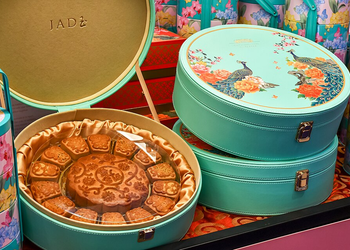
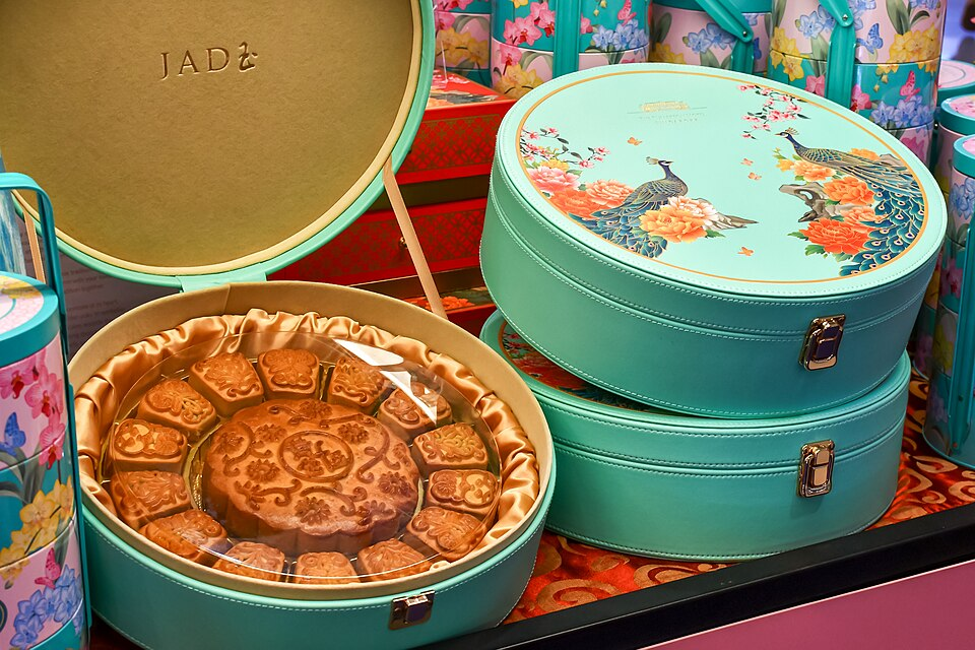
Mooncake gift sets (ScribblingGeek, CC BY-SA 4.0)

There is a slightly curious sight in Cambodia around the time of the Mid-Autumn Festival: boxes of mooncakes appear in bakeries, supermarkets, markets, and gift shops, and people who may have no particular reason to celebrate a Chinese festival happily buy them.

So why do Cambodians eat mooncakes?

The short answer is that Cambodia has long been a place where cultures overlap, especially in its cities and trading communities. But there is more to the story than Chinese heritage alone. The moon itself already has a place in Khmer tradition, and the idea of gathering under a full moon is not culturally foreign at all.

The moon was already important in Cambodia

The Mid-Autumn Festival is Chinese, and the mooncake is unmistakably part of that tradition. Celebrated on the fifteenth day of the eighth month of the Chinese lunar calendar, it is associated with the full moon, family reunion, prosperity, and the sharing of food.

But Cambodia has its own traditions involving the moon. One Cambodian observance is often described as Praying to the Moon, in which offerings are prepared and families gather to honor the full moon and ask for blessings. Traditional offerings can also include fresh produce and drinks.

That makes the arrival of the Chinese Moon Festival rather less culturally alien than it might initially appear. The moon was already looking for a place at the Cambodian table.

Then came the mooncakes

Cambodia has a long history of Chinese migration and Chinese-Cambodian communities, particularly in Phnom Penh and other commercial centers. For families of Chinese ancestry, the Mid-Autumn Festival is naturally an occasion for family gatherings, moon worship, and mooncakes. But cultural practices rarely stay neatly inside their original communities.

Over time, mooncakes became familiar to many other Cambodians as well. By the early 2000s, Cambodian bakeries were reporting growing mooncake sales, with the festival becoming an important commercial season. Today, you do not necessarily need a Chinese family tree to receive a box. You may simply have a relative, friend, colleague, neighbor, business contact, or generous bakery nearby. And that is rather Cambodian.

A mooncake is also a gift

There is another reason mooncakes have become so visible in Cambodia: they are particularly well suited to the country’s culture of giving food. Mooncakes are traditionally associated with reunion and completeness because of their round shape. During the Mid-Autumn Festival, sharing them with family expresses togetherness and good wishes. In Cambodia, this has also developed into a familiar gift-giving custom.

Boxes of mooncakes can circulate between relatives and friends, but also between customers and businesses or among professional contacts. Some are beautifully packaged, sometimes rather more elaborately than the humble cake inside strictly requires. But that is part of the point. The box says: I thought of you. The mooncake merely provides the edible evidence.

Chinese festival, Cambodian habit

It is tempting to describe mooncakes in Cambodia simply as a Chinese tradition imported by the Chinese-Cambodian community. That is historically useful, but it does not quite explain their place in contemporary Cambodian life. Cambodian culture has never been a sealed container. Food, words, religious practices, family customs, and celebrations have crossed borders for centuries. The mooncake is a particularly tasty example of this process.

For some Cambodians, it carries Chinese family traditions. For others, it is connected to the broader custom of honoring the full moon. For many, it is simply something that appears every year, is given by somebody, and is eaten with tea. And sometimes that is how cultural exchange works. Nobody holds a meeting to approve it.

The Cambodian mooncake paradox

There is also something wonderfully Cambodian about the way the mooncake has settled into local life. Cambodia did not need to invent the mooncake. It simply found something familiar in the tradition surrounding it: the full moon, family gatherings, offerings, good fortune, and the pleasure of giving food to other people. The result is a small cultural hybrid that is easy to overlook.

So the next time a Cambodian friend hands you a box of mooncakes, you can accept it without wondering whether you have accidentally joined a Chinese family. You probably have not. But you have been invited to participate in a tradition that Cambodia has made room for, as it has done with so many things over the centuries. And, frankly, few forms of cultural exchange are as pleasant as one involving pastry.

Don’t miss our upcoming articles!

We don’t spam!

Check your INBOX or SPAM folder to confirm your subscription.

Tags: cambodiaCambodian culturecambodian foodChinese-Cambodian culturefamily traditionsKhmer CultureKhmer traditionsMid-Autumn FestivalMoon Festivalmoon worshipmooncakes
ShareTweet
Previous Post

Le Couronnement de Jayavarman VII : Angkor prend vie sur scène

Pascal Medeville

Pascal Medeville

Author of the blog Wonders of Cambodia, I share my passion for Cambodia through stories, cultural insights, and personal reflections on the country. I'm also the founder of Simili Consulting, where we provide high-quality, professional translation services to international clients.

Related Posts

Khmer Note: Why Can’t You Find Salt on Khmer Tables
Cuisine

Khmer Note: Why Can’t You Find Salt on Khmer Tables

September 12, 2026
Khmer Note: Why Cambodian Homes Often Have Spirit Houses
Khmer notes

Khmer Note: Why Cambodian Homes Often Have Spirit Houses

September 11, 2026
Khmer note: Why Cambodian Parents Draw Cats on Children’s Necks
Khmer notes

Khmer note: Why Cambodian Parents Draw Cats on Children’s Necks

September 3, 2026
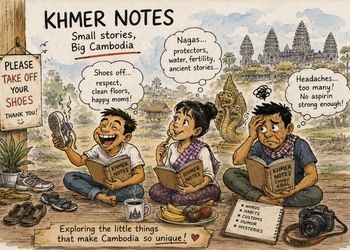
Khmer Notes: Small Stories, Big Cambodia
Khmer notes

Khmer Notes: Small Stories, Big Cambodia

September 1, 2026
Khmer note: Why Khmer People Have So Many “Headaches”
Khmer notes

Khmer note: Why Khmer People Have So Many “Headaches”

September 1, 2026
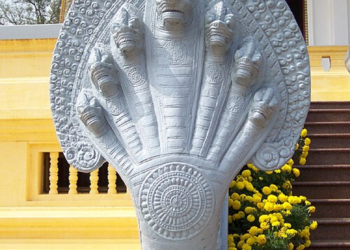
Khmer note: Why Nagas Appear Everywhere in Cambodia
Khmer notes

Khmer note: Why Nagas Appear Everywhere in Cambodia

August 30, 2026

Leave a Reply Cancel reply

Your email address will not be published. Required fields are marked *

  • Trending
  • Comments
  • Latest
The French Protectorate of Cambodia (1863–1953): An Overview

The French Protectorate of Cambodia (1863–1953): An Overview

July 13, 2025
The Franco-Siamese Treaty of 23 March 1907: Borders, Politics, and the Return of Angkor

The Franco-Siamese Treaty of 23 March 1907: Borders, Politics, and the Return of Angkor

February 11, 2026
Cambodian-Vietnamese War (1978-1989)

Cambodian-Vietnamese War (1978-1989)

July 13, 2025
The Legend of Preah Ko Preah Keo: Guardians of Cambodia’s Lost Treasures

The Legend of Preah Ko Preah Keo: Guardians of Cambodia’s Lost Treasures

February 23, 2026
Kampot Province

Takeo Province: A Cradle of Cambodian History and Culture

3
Kratié Town on the Mekong: Colonial Echoes, River Life, and Irrawaddy Dolphins

Kratié Town on the Mekong: Colonial Echoes, River Life, and Irrawaddy Dolphins

3
Banteay Meanchey Province: A Gateway to Cambodia’s Rich Heritage

Banteay Meanchey Province: A Gateway to Cambodia’s Rich Heritage

2
Stung Treng Province: The Gateway to Cambodia’s Northern Wilderness

Stung Treng Province: The Gateway to Cambodia’s Northern Wilderness

2
Khmer Note: Why Do Cambodians Eat Mooncakes?

Khmer Note: Why Do Cambodians Eat Mooncakes?

September 13, 2026
Le Couronnement de Jayavarman VII: A Khmer Ballet of Power and Memory

Le Couronnement de Jayavarman VII : Angkor prend vie sur scène

September 13, 2026
Purple Argyreia nervosa elephant creeper flower blooming among white flowers and green leaves in Phnom Penh, Cambodia

Picture of the day: Purple Elephant Creeper in Phnom Penh

September 13, 2026
Khmer Note: Why Can’t You Find Salt on Khmer Tables

Khmer Note: Why Can’t You Find Salt on Khmer Tables

September 12, 2026

Recent News

Khmer Note: Why Do Cambodians Eat Mooncakes?

Khmer Note: Why Do Cambodians Eat Mooncakes?

September 13, 2026
Le Couronnement de Jayavarman VII: A Khmer Ballet of Power and Memory

Le Couronnement de Jayavarman VII : Angkor prend vie sur scène

September 13, 2026
Purple Argyreia nervosa elephant creeper flower blooming among white flowers and green leaves in Phnom Penh, Cambodia

Picture of the day: Purple Elephant Creeper in Phnom Penh

September 13, 2026
Khmer Note: Why Can’t You Find Salt on Khmer Tables

Khmer Note: Why Can’t You Find Salt on Khmer Tables

September 12, 2026
Wonders of Cambodia

Exploring Culture, Nature, and Spirit in the Land of Wonder.

Follow Us

Browse by Category

  • Architecture
  • Architecture
  • Art
  • Books
  • Business
  • Business
  • Cinema
  • Costume
  • Costume
  • Cuisine
  • Culture
  • Defense
  • Du lịch
  • e-Books
  • Education
  • Entertainment
  • Expat life
  • Fauna
  • Festival
  • Flora
  • Food providers
  • Français
  • Geography
  • Handicraft
  • Health
  • Histoire
  • History
  • Hotels
  • Khmer notes
  • Khmer stories
  • Khmer Stories
  • Knowledge
  • Language
  • Last posts
  • Latest posts
  • Lịch sử
  • Life in Cambodia
  • Literature
  • Loisirs
  • Meet the neigbhors
  • Music
  • Personnalités
  • Pictures
  • Politics
  • Population
  • Press review
  • Professional services
  • Proverbs
  • Reference
  • Reference
  • Religion
  • Restaurants
  • Temples
  • Textile
  • Tiếng Việt
  • Tourism
  • Tourisme
  • Transport
  • Transport
  • Uncategorized
  • Video
  • Vidéo
  • Vie quotidienne
  • Who's who
  • ខ្មែរ
  • ទេសចរណ៍៖
  • បគ្គលល្បី
  • ប្រវត្តិសាស្ត្រោ
  • សៀវភៅ
  • 中文
  • 书籍
  • 交通
  • 历史
  • 商业
  • 旅游
  • 生活

Recent News

Khmer Note: Why Do Cambodians Eat Mooncakes?

Khmer Note: Why Do Cambodians Eat Mooncakes?

September 13, 2026
Le Couronnement de Jayavarman VII: A Khmer Ballet of Power and Memory

Le Couronnement de Jayavarman VII : Angkor prend vie sur scène

September 13, 2026
  • About Us
  • Advertise
  • Privacy & Policy
  • Contact Us

© 2025 - Made with 💫 by TechFlow.

No Result
View All Result
  • Home
  • Culture
  • Cuisine
  • Tourism
  • Business
  • Life in Cambodia
  • 中文
  • ខ្មែរ
  • Français
  • Tiếng Việt
  • e-Books

© 2025 - Made with 💫 by TechFlow.