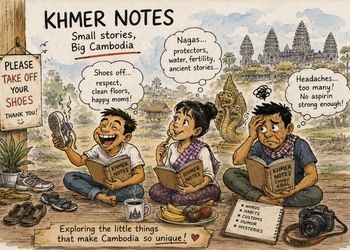
There is a particular kind of headache in Cambodia that cannot be cured with aspirin. It may not even involve the head.
In Khmer, ឈឺក្បាល (chheu kbal) literally means “to have a headache,” and it is indeed the ordinary expression for physical head pain. But Khmer dictionaries also recognize a figurative meaning: having a complicated or troublesome matter to deal with.
This makes Cambodia a country where you can have a headache because your head hurts, or because somebody has given you a problem. Sometimes, with a little bad luck, you can have both at the same time.
When the headache is not medical
Imagine someone saying:
ខ្ញុំឈឺក្បាល។
Khnhom chheu kbal.
“I have a headache.”
The speaker may genuinely need a quiet room and some rest. But depending on the context, the sentence can also mean something closer to, “I have a problem,” “This is complicated,” or “This is giving me a headache.”
The figurative meaning is particularly revealing because it is so physical. Instead of simply saying that something is difficult, the Khmer expression turns the difficulty into a bodily sensation. The problem has reached the head. And once it reaches the head, apparently, it has become serious business.
A problem can become a headache
Khmer has a wonderfully concrete way of talking about troublesome situations. Chheu kbal is used as an idiom for having a very complicated matter or troublesome affairs.
This is not unique to Khmer. English speakers also say, “That gives me a headache,” when discussing paperwork, bureaucracy, difficult colleagues, family problems, or an especially stubborn computer.
But Khmer uses the expression naturally enough that the distinction between physical discomfort and metaphorical trouble can become pleasantly blurred.
A complicated administrative procedure? chheu kbal.
A family disagreement? chheu kbal.
A business problem? chheu kbal.
A relative who keeps borrowing money and never quite remembers to return it? Very likely chheu kbal.
Why does everything seem to reach the head?
Of course, this does not mean Khmer people literally have more headaches than everybody else. Physical headaches are a medical phenomenon, with causes ranging from migraine and tension headaches to dehydration, illness, and lack of sleep. The cultural interest lies elsewhere.
The head, ក្បាល (kbal), is an especially useful place in Khmer language for describing mental activity, difficulty, and personal experience. When something becomes too complicated, the metaphor makes it feel physically burdensome.
Perhaps this is why the expression works so well in everyday conversation. You do not need a philosophical explanation of your problem. You simply announce that your head hurts. Everybody understands.
Cambodia’s most versatile headache
There is also something wonderfully economical about the expression. Instead of explaining for five minutes why a situation is complicated, a Cambodian can sometimes reduce the whole story to two words: chheu kbal.
The listener may then ask what happened. Or perhaps, if they already know the story, they may simply nod sympathetically.
And that is where the expression becomes more than vocabulary. It reflects a very ordinary feature of conversation: Khmer speakers often rely heavily on context. A short expression can carry considerably more meaning than its literal translation suggests.
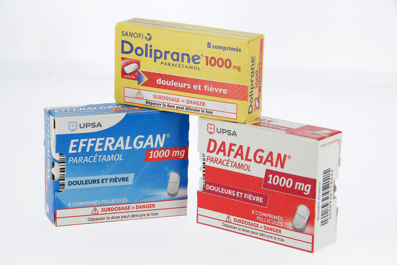
So the next time somebody in Cambodia tells you they have a “headache,” do not immediately reach for the paracetamol. First ask what kind.
If they touch their forehead, it may be medical.
If they start telling you about their boss, their in-laws, their business partner, or a government form, you have probably encountered the other kind. And that one, unfortunately, may require considerably stronger medicine.
Conclusion
ឈឺក្បាល (chheu kbal) is a small expression with a surprisingly large range. It describes a real physical pain, but it can also describe the mental burden of a complicated situation.
Perhaps that is why it is such a useful Khmer expression. Life does not always give us problems neatly labeled “physical” or “emotional.” Sometimes they simply arrive together, sit heavily on the head, and make us say the same two words: Chheu kbal!
Some headaches need medicine. Others need patience, a good laugh, and possibly a strong cup of coffee.