Wonders of Cambodia
  • Home
  • Culture
  • Cuisine
  • Tourism
  • Business
  • Life in Cambodia
  • 中文
  • ខ្មែរ
  • Français
  • Tiếng Việt
  • e-Books
No Result
View All Result
  • Home
  • Culture
  • Cuisine
  • Tourism
  • Business
  • Life in Cambodia
  • 中文
  • ខ្មែរ
  • Français
  • Tiếng Việt
  • e-Books
No Result
View All Result
Wonders of Cambodia
No Result
View All Result
Home Culture

History of the Kola People

Pascal Medeville by Pascal Medeville
July 13, 2025
in Culture, Population
Reading Time: 5 mins read
0
A plate of “Burmese noodles” (mee kola) in Battambang (©Pascal Médeville)

The Kola people — sometimes spelled Kula, Gula, or Kŏla — are an ethnic group whose history, culture, and identity are deeply intertwined with the borderlands of Cambodia and Thailand. Their story is one of migration, adaptation, and resilience, marked by a distinctive blend of Southeast Asian influences and a legacy that continues to shape the cultural landscape of the region.

Origins and Migration

The Kola people (Khmer: កុឡា) are descendants of migrants from Burma (present-day Myanmar) who began settling in the Pailin-Chanthaburi region along the Cambodia–Thailand border during the 19th century. Their precise ethnic origins remain a subject of debate: some sources suggest a primary connection to the Shan people, while others point to a multi-ethnic heritage involving the Bamar, Pa’O, Mon, and possibly Dai (Tai Lue and Tai Nua) traders. The Kola migration was driven by both economic opportunities and political circumstances in Burma and the surrounding regions.
During the 19th century, the discovery of precious gemstones in Pailin, Cambodia, played a pivotal role in attracting the Kola and other groups to the area. Stories of lucrative sapphire fields spread among trading communities, prompting expeditions and further settlement by Shan families and merchants. The Kola quickly became central to the region’s burgeoning gem trade, establishing Buddhist temples and monastic orders to serve both spiritual and economic functions.

Settlement and Economic Life
The Kola community flourished in Pailin, where they became renowned for their expertise in mining and trading gemstones, particularly sapphires. Their success attracted further immigration and contributed to the growth and prosperity of the region. The Kola were not only miners but also skilled traders and merchants, often traveling extensively and maintaining strict codes regarding food, trade, and social conduct.
During the French colonial period in Indochina, the Kola maintained positive relations with the French authorities, which allowed some to travel to France for education and return with new skills and perspectives. The economic vitality of Pailin in the mid-20th century was closely linked to the Kola, who were considered the most prosperous ethnic group in the area before the upheavals of the Cambodian Civil War.

Language and Cultural Influence
The Kola language is a Creole based primarily on Shan and Dai, with significant influences from Lanna, Burmese, and Karen languages. This linguistic blend reflects the group’s diverse origins and has left a lasting mark on the local Khmer dialect in Pailin, particularly in terms of tone and pronunciation.
Kola cultural influence extends beyond language. Their Burmese heritage is evident in local dress styles, the use of umbrellas by women, the architecture of pagodas, and culinary traditions. The Kola introduced dishes such as mee kola (Khmer: មីកុឡា) — a vegetarian noodle dish with rice stick noodles, soy sauce, and garlic — which remains a local specialty. Other culinary influences include adaptations of Thai and Mon dishes, often prepared with a distinctive Kola touch.

Religion and Social Practices
The Kola are predominantly Theravada Buddhists, with elements of animism woven into their belief system. Their religious life centers around Buddhist temples, such as Wat Phnom Yat, which they established in Pailin. These temples not only serve spiritual needs but also function as community centers and symbols of Kola identity.
Socially, the Kola maintained strict dietary rules, abstaining from beef and certain other meats out of respect for animals that played crucial roles in their livelihoods. Alcohol consumption was traditionally forbidden, as it was believed to interfere with the magical practices employed by Kola merchants for protection during their travels.

Architecture and Daily Life
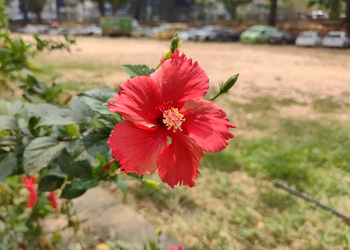
Kola houses in Pailin are typically constructed from wooden panels and feature wide doors and central shrines dedicated to Gautama Buddha. It is common to see roses planted in front of Kola homes, adding a distinctive aesthetic touch.
Their daily life was shaped by the rhythms of trade and the demands of the gem industry. The Kola were known for their self-sufficiency, often preparing their own meals and carrying brass kitchenware during their travels. Tea was a staple beverage, consumed both at home and on the road.

Historical Challenges and Modern Realities
The fortunes of the Kola people changed dramatically with the rise of the Khmer Rouge in the 1970s. As official policy targeted non-Khmer ethnic groups for persecution, many Kola fled to Thailand to escape violence and repression. The community was dispersed, and much of its distinct identity was suppressed during this period.
Since the end of the Khmer Rouge era and the subsequent breakup of the movement in the 1990s, some Kola have returned to Pailin. However, the trauma of the past and ongoing pressures to assimilate have led many to keep a low profile, and most no longer openly identify as Kola. The community’s numbers have dwindled, and their cultural practices are at risk of fading away.

Contemporary Status
Today, the Kola are recognized as one of Cambodia’s ethnic minorities, though their population is small and their influence has waned compared to earlier times. They are still present in Pailin and parts of Thailand, but assimilation and migration have diluted their distinctiveness. The Kola language and many traditional practices survive primarily among older generations and in cultural memory.
Despite these challenges, the Kola legacy endures in the architecture, cuisine, and linguistic landscape of Pailin and surrounding regions. Their story is a testament to the complex tapestry of Southeast Asian history, where migration, commerce, and cultural exchange have shaped communities in profound ways.
“The Kola in Pailin were historically active in the lucrative gem trading business and were the most prosperous ethnic group in the region before the war. As the Khmer Rouge, whose official policy was to persecute all non-Khmer ethnic groups, took control of Pailin, the Kola fled across the border into Thailand. Since the breakup and surrender of the Khmer Rouge in the 1990s, many Kola have returned to Pailin, although preferring to keep a lower profile, most no longer outwardly identify as Kola.” (Wikipedia)
The Kola people’s journey — from migration and prosperity to persecution and quiet resilience — offers a window into the broader dynamics of ethnicity, identity, and survival in Southeast Asia. Their contributions to trade, language, and culture remain embedded in the fabric of the regions they once dominated, even as their community faces the challenges of modernity and assimilation.

Don’t miss our upcoming articles!

We don’t spam!

Check your INBOX or SPAM folder to confirm your subscription.

Tags: cambodiaethnic minorities in CambodiaIndigenous groups in CambodiaKhmer RougeKola peopleLanguage and linguistics in CambodiaMee kolaPailinកុឡា
ShareTweet
Previous Post

Cambodia Press Review – July 5–11, 2025

Next Post

Picture of the day: A statue of Ganesha in Battambang

Pascal Medeville

Pascal Medeville

Author of the blog Wonders of Cambodia, I share my passion for Cambodia through stories, cultural insights, and personal reflections on the country. I'm also the founder of Simili Consulting, where we provide high-quality, professional translation services to international clients.

Related Posts

Sandstone 7th‑century Devi statue from Sambor Prei Kuk style, showing elegant Khmer feminine form with high jata hairstyle and sampot, displayed against a warm backdrop.
Art

Picture of the day: Devi Statue from Sambor Prei Kuk Gracefully Reimagined

June 4, 2026
Illustration of a Cambodian folk scene at a riverside: a large fish leaps dramatically out of the water in the foreground while a rabbit watches from the grassy bank, and in the background a couple in traditional clothing stands near a stilted thatched house, suggesting a moment from a village proverb.
Culture

When the Rabbit Escapes and the Fish Slips Away: A Khmer Proverb about Greed

June 3, 2026
Close-up of a Siem Reap artisan using metal chisels and a wooden mallet on a leather panel to create traditional sbaek thom Khmer shadow puppets.
Art

Picture of the day: Chisels of Sbaek Thom Artisans in Siem Reap

June 2, 2026
Statue of a robed Buddhist monk standing on a pedestal in front of a dark doorway and red wall, holding a closed umbrella and a book
History

Hem Chieu, the Monk Who Dared – Cambodian Nationalism in a Saffron Robe

May 31, 2026
Close-up of pale cream and pink Pithecellobium dulce (âmpil tœk) flowers blooming on a leafy branch in rural Cambodia, softly blurred green background.
Flora

Picture of the day: Manila Tamarind Blossom in Cambodia

May 31, 2026
Japanese Imperial Army troops and supply wagons advancing along a dirt road through rural Indochina in 1940, with mountains visible in the background
History

Imperial Japanese Control over Cambodia in World War II, From Quiet Garrison to Puppet Kingdom

May 30, 2026
Next Post
Picture of the day: A statue of Ganesha in Battambang

Picture of the day: A statue of Ganesha in Battambang

  • Trending
  • Comments
  • Latest
The French Protectorate of Cambodia (1863–1953): An Overview

The French Protectorate of Cambodia (1863–1953): An Overview

July 13, 2025
The Franco-Siamese Treaty of 23 March 1907: Borders, Politics, and the Return of Angkor

The Franco-Siamese Treaty of 23 March 1907: Borders, Politics, and the Return of Angkor

February 11, 2026
Cambodian-Vietnamese War (1978-1989)

Cambodian-Vietnamese War (1978-1989)

July 13, 2025
Working in Cambodia in 2026: Visas, Work Permits and Everyday Reality for Foreigners

Working in Cambodia in 2026: Visas, Work Permits and Everyday Reality for Foreigners

February 9, 2026
Kampot Province

Takeo Province: A Cradle of Cambodian History and Culture

3
Kratié Town on the Mekong: Colonial Echoes, River Life, and Irrawaddy Dolphins

Kratié Town on the Mekong: Colonial Echoes, River Life, and Irrawaddy Dolphins

3
Banteay Meanchey Province: A Gateway to Cambodia’s Rich Heritage

Banteay Meanchey Province: A Gateway to Cambodia’s Rich Heritage

2
Stung Treng Province: The Gateway to Cambodia’s Northern Wilderness

Stung Treng Province: The Gateway to Cambodia’s Northern Wilderness

2
Sandstone 7th‑century Devi statue from Sambor Prei Kuk style, showing elegant Khmer feminine form with high jata hairstyle and sampot, displayed against a warm backdrop.

Picture of the day: Devi Statue from Sambor Prei Kuk Gracefully Reimagined

June 4, 2026
Illustration of a Cambodian folk scene at a riverside: a large fish leaps dramatically out of the water in the foreground while a rabbit watches from the grassy bank, and in the background a couple in traditional clothing stands near a stilted thatched house, suggesting a moment from a village proverb.

When the Rabbit Escapes and the Fish Slips Away: A Khmer Proverb about Greed

June 3, 2026
Avion de la compagnie AirAsia peint en rouge avec la mention Cambodia sur le fuselage, volant dans le ciel avant l’atterrissage

A New boost for Cambodia tourism

June 3, 2026
Rectangular plate of Cambodian rice sautéed with finely chopped garlic, served on a wooden table in a small Kampong Thom street restaurant.

Picture of the day: Kampong Thom Garlic Fried Rice Comfort

June 3, 2026

Recent News

Sandstone 7th‑century Devi statue from Sambor Prei Kuk style, showing elegant Khmer feminine form with high jata hairstyle and sampot, displayed against a warm backdrop.

Picture of the day: Devi Statue from Sambor Prei Kuk Gracefully Reimagined

June 4, 2026
Illustration of a Cambodian folk scene at a riverside: a large fish leaps dramatically out of the water in the foreground while a rabbit watches from the grassy bank, and in the background a couple in traditional clothing stands near a stilted thatched house, suggesting a moment from a village proverb.

When the Rabbit Escapes and the Fish Slips Away: A Khmer Proverb about Greed

June 3, 2026
Avion de la compagnie AirAsia peint en rouge avec la mention Cambodia sur le fuselage, volant dans le ciel avant l’atterrissage

A New boost for Cambodia tourism

June 3, 2026
Rectangular plate of Cambodian rice sautéed with finely chopped garlic, served on a wooden table in a small Kampong Thom street restaurant.

Picture of the day: Kampong Thom Garlic Fried Rice Comfort

June 3, 2026
Wonders of Cambodia

Exploring Culture, Nature, and Spirit in the Land of Wonder.

Follow Us

Browse by Category

  • Architecture
  • Architecture
  • Art
  • Books
  • Business
  • Business
  • Cinema
  • Costume
  • Costume
  • Cuisine
  • Culture
  • Defense
  • Du lịch
  • e-Books
  • Education
  • Expat life
  • Fauna
  • Festival
  • Flora
  • Food providers
  • Français
  • Geography
  • Handicraft
  • Health
  • Histoire
  • History
  • Hotels
  • Khmer Stories
  • Khmer stories
  • Knowledge
  • Language
  • Last posts
  • Lịch sử
  • Life in Cambodia
  • Literature
  • Music
  • Pictures
  • Politics
  • Population
  • Press review
  • Professional services
  • Proverbs
  • Reference
  • Reference
  • Religion
  • Restaurants
  • Textile
  • Tiếng Việt
  • Tourism
  • Tourisme
  • Transport
  • Uncategorized
  • Video
  • Vie quotidienne
  • Who's who
  • ខ្មែរ
  • ទេសចរណ៍៖
  • បគ្គលល្បី
  • ប្រវត្តិសាស្ត្រោ
  • 中文
  • 书籍
  • 历史
  • 旅游
  • 生活

Recent News

Sandstone 7th‑century Devi statue from Sambor Prei Kuk style, showing elegant Khmer feminine form with high jata hairstyle and sampot, displayed against a warm backdrop.

Picture of the day: Devi Statue from Sambor Prei Kuk Gracefully Reimagined

June 4, 2026
Illustration of a Cambodian folk scene at a riverside: a large fish leaps dramatically out of the water in the foreground while a rabbit watches from the grassy bank, and in the background a couple in traditional clothing stands near a stilted thatched house, suggesting a moment from a village proverb.

When the Rabbit Escapes and the Fish Slips Away: A Khmer Proverb about Greed

June 3, 2026
  • About Us
  • Advertise
  • Privacy & Policy
  • Contact Us

© 2025 - Made with 💫 by TechFlow.

No Result
View All Result
  • Home
  • Culture
  • Cuisine
  • Tourism
  • Business
  • Life in Cambodia
  • 中文
  • ខ្មែរ
  • Français
  • Tiếng Việt
  • e-Books

© 2025 - Made with 💫 by TechFlow.