Most visitors to Cambodia make a beeline for Angkor Wat and call it a trip. But the country’s story — layered with dark history, living traditions, and unexpected reinvention — unfolds far beyond those famous towers. Here are ten places that will help you understand the Cambodia of today, not just yesterday.

Cambodia has a branding problem. Say the name, and most people picture a single postcard: Angkor Wat at sunrise, reflected in a lotus pond. It is, without question, one of the most remarkable monuments on Earth. But reducing an entire country to one archaeological park is a bit like visiting France and never leaving the Louvre.
The Cambodia of 2026 is a complex, fast-changing place. A young population — over 65% under 30 — is navigating between deep-rooted traditions and furious modernization. To understand that, you need to step beyond the temple trail. From genocide memorials to pepper plantations, from floating villages to circus tents, the places on this list will give you something a three-day Angkor pass never can: context.
This article is for the traveler who wants more than photographs. Whether you are planning a first trip or returning for a deeper look, these ten destinations offer a richer, more honest portrait of contemporary Cambodia.
Phnom Penh: The Capital That Refuses to Forget
Tuol Sleng Genocide Museum (S-21)
No visit to Cambodia makes sense without confronting its recent past. Tuol Sleng, a former high school turned Khmer Rouge torture center, held approximately 20,000 prisoners between 1975 and 1978 — nearly all of whom were executed at the Killing Fields of Choeung Ek. The museum’s rooms of black-and-white prisoner photographs are devastating. An audio guide is highly recommended, and visitors should note that mobile phones are banned on the premises as a mark of respect. This is not a comfortable morning. It is a necessary one.
The National Museum of Cambodia
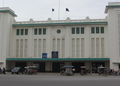
A short tuk-tuk ride from S-21, the National Museum houses some of the finest Khmer art ever excavated, including pre-Angkorian relics from the Funan and Chenla periods. The museum buildings themselves, constructed between 1917 and 1924 with inspiration from traditional Khmer temple architecture, are as worth admiring as the collections inside. For those who have already visited the Angkor temples, seeing these sculptures in a quiet, curated setting adds scholarly depth to the visceral experience of the ruins.

Battambang: Cambodia’s Creative Heartbeat
Cambodia’s second city surprises visitors with its mix of French colonial architecture, a thriving arts scene, and a surrounding countryside dotted with caves, vineyards — yes, Cambodia has a winery — and the endearingly rickety Bamboo Railway. But the real reason to come here is Phare Ponleu Selpak, the NGO art school that gave birth to Phare, The Cambodian Circus.
Founded by a group of young Cambodians who had survived the Khmer Rouge years in refugee camps, the school now educates over 1,200 pupils daily and trains 500 more in alternative arts programs. Battambang is where you see how art can become a tool for reconstruction — quite literally.
Phare, The Cambodian Circus (Siem Reap)
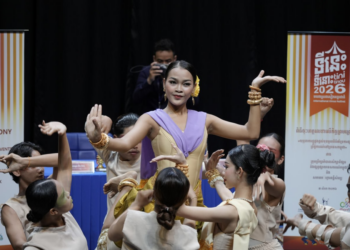
If Battambang is the school, Siem Reap is the stage. Since opening in February 2013, Phare, The Cambodian Circus, has performed nightly under a 330-seat big top, blending acrobatics, theater, and Khmer storytelling. Nearly 75% of profits go directly back to the Battambang school. It has been featured by CNN, the BBC, The Guardian, and ranked as a top attraction on TripAdvisor and Lonely Planet. More importantly, it gives graduates a decent wage, self-respect, and a future — things the Khmer Rouge tried to destroy. This is responsible tourism at its most exhilarating.
Kampot and Kep: Where Gastronomy Meets History
Kampot pepper has been cultivated for over a thousand years, with the first documented account by the Chinese emissary Zhou Daguan in the 13th century. Under French colonial rule, Cambodia exported around 8,000 tons of Kampot pepper annually — it was the only pepper used in France, known simply as poivre d’Indochine. Nearly wiped out during the Khmer Rouge era, production has been painstakingly revived. In 2016, Kampot pepper earned Protected Geographical Indication (PGI) status, placing it alongside Champagne and Parmesan. Visiting a plantation here is a lesson in resilience as much as in gastronomy.

A few kilometers down the coast, the sleepy seaside town of Kep offers Cambodia’s most famous crab market and some of the best seafood in the country. Pair it with a sunset, fresh Kampot pepper crab, and a cold beer — and you will have one of those moments that no temple can replicate.
Inscribed as a UNESCO World Heritage Site in September 2023, Koh Ker served as the capital of the Khmer Empire for a brief but extraordinary period under King Jayavarman IV in the 10th century. Its centerpiece, the Prasat Prang — a 35-meter stepped pyramid and the only one of its kind in Southeast Asia — towers over the surrounding jungle. Unlike the packed circuits of Angkor, Koh Ker offers solitude, mystery, and the thrill of discovery. Recent demining operations have cleared over 300,000 square meters of contaminated land within the site, a sobering reminder that Cambodia’s past is always closer than you think.
Tonle Sap: A Lake That Breathes
Southeast Asia’s largest freshwater lake is also one of its most extraordinary ecosystems. Designated a UNESCO Biosphere Reserve, the Tonle Sap expands up to five times its dry-season size when the Mekong overflows, creating a vast delta system that supports one of the world’s most productive freshwater fisheries. Floating villages like Kampong Phluk and Kampong Khleang offer a window into communities that have adapted their entire existence to the lake’s pulse. Visiting from Kampong Chhnang, rather than the tourist-heavy Chong Khneas near Siem Reap, provides a more tranquil and genuine experience. Contributing 60% of Cambodia’s inland fisheries production, the lake is quite literally feeding the nation.
Mondulkiri: Where Elephants Are Family
Cambodia’s largest province is also its most sparsely populated. Home to the indigenous Bunong people, Mondulkiri’s rolling green hills and pine forests feel more like the Scottish Highlands than tropical Southeast Asia. The Bunong have kept elephants for generations, treating them as family members rather than commodities. The Elephant Valley Project, employing 58 people — mostly Bunong — protects 1,500 hectares of forest where eleven elephants roam freely. Of Cambodia’s roughly 500 remaining elephants, about 250 wild elephants live in Mondulkiri’s forests. This is conservation with cultural roots, not a tourist spectacle.
Kampong Chhnang: Clay, Water, and Time
Often dismissed as a lunch stop between Phnom Penh and Siem Reap, Kampong Chhnang sits at the mouth of the Tonle Sap, on the edge of the only river on Earth that reverses its flow mid-year. The province is renowned for its traditional clay pottery — the name literally means “Port of Pottery” — and its floating villages receive a fraction of the visitors that flock to those near Siem Reap. If you want to see Cambodian rural life without a filter, this quiet town rewards the curious.
Takeo: The Cradle Before the Cradle
South of Phnom Penh, Takeo province is deep rice country — emerald paddies unrolling to the horizon, punctuated by sugar palms. Its archaeological site of Angkor Borei, dating back to 400 BC, contains the earliest known dated inscriptions in Khmer writing. These are the places that predate Angkor by centuries, the cultural bedrock on which the empire was eventually built. Takeo is for those who want to trace Cambodia’s story all the way back to its opening lines.
Cambodia beyond Angkor is not an alternative itinerary — it is the rest of the story. From the haunting classrooms of S-21 to the laughter under Phare’s big top, from the pepper-scented hills of Kampot to the floating schools of Tonle Sap, each of these places adds a chapter that Angkor alone cannot tell. Understanding Cambodia today means meeting the country where it lives, works, grieves, and reinvents itself.
Pascal Médeville is a writer and digital publisher based in Cambodia, where he runs several websites dedicated to Southeast Asian history, culture, and gastronomy — including Wonders of Cambodia. His work explores the intersections of Khmer heritage, culinary traditions, and the evolving identity of a country he has called home for years.