The history of Buddhism in Cambodia spans over two millennia and is deeply intertwined with the country’s cultural, political, and spiritual development. Buddhism arrived in Cambodia through multiple waves of Indian influence and regional interactions, evolving from early Mahayana forms to the Theravada tradition that dominates Cambodian religious life today.
Early Introduction and Indian Influence (3rd century BCE – 5th century CE)
Buddhism’s roots in Cambodia date back to at least the 3rd century BCE, when Indian missionaries, likely sent during the reign of Emperor Ashoka, began spreading Buddhist teachings across Southeast Asia, including the region that would become Cambodia. This early period saw Buddhism introduced alongside Hinduism and indigenous animist beliefs, creating a complex religious landscape.
The Funan Kingdom (1st to 6th century CE), one of the earliest recorded states in Southeast Asia located in parts of present-day Cambodia and southern Vietnam, became a crucial hub for trade and cultural exchange. Funan’s strategic location facilitated the introduction and spread of Buddhist philosophy, scriptures, rituals, and iconography via maritime trade routes connecting India, China, and Southeast Asia. During this time, Buddhism coexisted with Hinduism, the dominant religion of the ruling elites, and the two faiths influenced each other’s development.
The Chenla Kingdom and Early Buddhist Expansion (6th to 9th century CE)
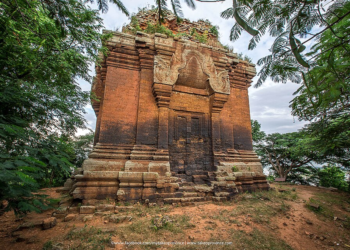
Following Funan, the Chenla Kingdom (6th to 9th century CE) continued to nurture Buddhism’s growth. This period saw the construction of some of the earliest Buddhist temples and monastic complexes in Cambodia, signaling a growing institutional presence of Buddhism. Buddhist teachings began to gain more followers among the Khmer people, although Hinduism remained influential in the royal court.
The Khmer Empire and the Golden Age of Buddhism (9th to 15th century CE)
The Khmer Empire, which flourished from the 9th to the 15th centuries, represents the zenith of Cambodia’s classical civilization and the flowering of Buddhist culture. During this era, Buddhism coexisted with Hinduism in a syncretic religious environment. The empire’s rulers often patronized both religions, reflecting a tolerant and pluralistic approach.
One of the most notable figures was King Jayavarman VII (reigned 1181–1218), a devout Mahayana Buddhist who declared Mahayana Buddhism the state religion. He commissioned grand temple complexes such as Angkor Thom and the Bayon, richly decorated with Buddhist iconography and bas-reliefs depicting Buddhist cosmology and teachings. Jayavarman VII’s reign marked a high point for Buddhism’s influence on Khmer art, architecture, and governance.
Despite Mahayana Buddhism’s prominence during this time, the 13th century witnessed a significant religious shift with the rise of Theravada Buddhism. This “Theravada revolution” was a grassroots movement among the Khmer people, who embraced Theravada Buddhism’s simpler, more accessible teachings in contrast to the elaborate rituals and priesthoods associated with Hinduism and Mahayana Buddhism. Theravada Buddhism emphasized personal piety, meditation, and monastic discipline, resonating deeply with the population.
Theravada Buddhism’s Ascendancy and Institutionalization (13th century onward)
By the 13th century, Theravada Buddhism became the dominant religion and was eventually established as the state religion, supplanting earlier forms. Unlike the previous religions that were imposed by the monarchy, Theravada Buddhism spread from the grassroots level, preached by humble monks who lived austere lives and maintained direct contact with ordinary people. This democratization of religion helped solidify Theravada Buddhism’s place in Cambodian society.
The collapse of the Angkor Empire in the 15th century, following invasions by the Siamese (Thai) and Vietnamese, led to the relocation of the Khmer royal court from Angkor to the area around present-day Phnom Penh. Phnom Penh’s founding is linked to a Buddhist legend involving Lady Penh, who discovered four Buddha statues inside a floating Koki tree trunk on the banks of the Tonle Sap River and established Wat Phnom to house it.
Buddhism under Foreign Influence and Regional Struggles (15th to 19th centuries)
During the post-Angkor period, Cambodia became a battleground between its powerful neighbors: Siam to the west and Vietnam to the east. These regional powers influenced Cambodian religious life in contrasting ways. The Vietnamese attempted to suppress Theravada Buddhism and promote Mahayana Buddhism, reflecting their own religious traditions, while the Siamese sought to protect and reinforce Theravada Buddhism in Cambodia. This tug-of-war over religious influence mirrored the political and military struggles of the era.
Despite these external pressures, Theravada Buddhism remained resilient and continued to be the spiritual foundation of the Khmer people. Monasteries served not only as religious centers but also as places of education and community cohesion.
Buddhism in the Modern Era and Contemporary Cambodia
Theravada Buddhism has remained Cambodia’s official religion since the 13th century, except for the Khmer Rouge period (1975–1979), during which religious institutions were brutally suppressed, and monks were forced to leave the monkhood and persecuted. The Khmer Rouge regime sought to eradicate Buddhism as part of its radical social engineering policies, leading to the destruction of temples and the near extinction of the monastic community.
Following the fall of the Khmer Rouge, Buddhism experienced a remarkable revival. Monasteries were rebuilt, and monastic ordination resumed, restoring Buddhism’s central role in Cambodian society. Today, approximately 97% of Cambodians identify as Buddhists, and the religion continues to shape cultural norms, festivals, art, and daily life.
Cultural and Social Role of Buddhism in Cambodia
Buddhism in Cambodia is not only a religion but also a cornerstone of cultural identity and social organization. Temples (wats) are community hubs where religious ceremonies, education, and social events take place. Buddhist festivals, such as Pchum Ben (Ancestor’s Day) and Khmer New Year, are deeply embedded in Cambodian culture and foster communal solidarity.
The monastic community plays a vital role in education and moral guidance. In the past, Novices often entered monasteries for short or long periods to learn Buddhist teachings and Khmer language and culture. Today, this practice still survives. The ethical principles of Buddhism influence social values, emphasizing compassion, non-violence, and respect for elders.
Summary
The history of Buddhism in Cambodia is a rich narrative of adaptation, resilience, and cultural synthesis. From its early introduction through Indian missionaries and trade routes, Buddhism evolved alongside Hinduism during the Funan and Chenla periods. The Khmer Empire’s golden age saw Mahayana Buddhism flourish, especially under King Jayavarman VII, before the widespread adoption of Theravada Buddhism in the 13th century reshaped Cambodian religious life.
Despite foreign invasions, political upheavals, and the catastrophic Khmer Rouge era, Theravada Buddhism has endured as the spiritual heart of Cambodia. It continues to influence the nation’s art, culture, social values, and identity, making it an indispensable part of Cambodia’s past and present.