(Estimated reading time: 8-9 minutes – long enough to enjoy a coffee and notice how “coffee” sneaked into Khmer as កាហ្វេ.)
Khmer looks ancient and proudly Cambodian, yet its vocabulary is a busy crossroads of Sanskrit, Pali, Thai, Chinese, Vietnamese, French and now English. From royal titles to Facebook chats, loanwords quietly shape how Cambodians think, pray, study and shop. In this article, we explore where these loanwords come from, how they are adapted, and what they reveal about Cambodia’s history and culture.
Introduction: Khmer, Proudly Local, Comfortably Multilingual
At first glance, Khmer looks like a very “self‑contained” language: its own script, its own grammar, and a long literary tradition going back to the early inscriptions of the Angkorian period. Yet the vocabulary tells a more cosmopolitan story. For over a millennium, Khmer has been quietly importing foreign words and making them sound perfectly at home.
If you speak or study Khmer today, you use Indic words when talking about religion and philosophy, Thai expressions in colloquial speech, Chinese and Vietnamese terms in certain social and regional contexts, French items for administration and modern life, and English loanwords every time you mention your computer or a Facebook post. These loanwords are not decoration. They are clues: to history, to power, and to how Cambodians see the world.
This article is for learners of Khmer, language enthusiasts, and anyone curious about how cultures mix through words. You will see where Khmer loanwords come from, how they are adapted into Khmer script and sound, and how you can start spotting them in everyday conversation, signs and social media.
A loanword is a word borrowed from another language and integrated into Khmer, often with some changes to pronunciation, spelling or meaning. Unlike short‑term code‑switching, these borrowed terms become part of the normal vocabulary, used by speakers who may not even know the original language.
In Khmer, loanwords can be:
- Very old, like many Sanskrit and Pali religious terms that entered the language more than a thousand years ago.
- Regional, such as words associated with Thai, Lao, Chinese and Vietnamese contact.
- Colonial‑era imports, especially from French, in administration, education and technology.
- Very recent, like English words for computers, social media and business concepts.
Linguists sometimes distinguish between “learned” loanwords, imported through formal education and religious or scholarly traditions, and more everyday borrowings that spread through daily contact, trade or pop culture. Khmer has a rich collection of both.
The Ancient Layer: Sanskrit and Pali Loanwords
Religion, Royalty and High Register
The oldest and deepest layer of loanwords in Khmer comes from Sanskrit and Pali, the classical languages of Hinduism and Buddhism. These words arrived with Indian religious and cultural influence and became central in royal inscriptions, religious texts and formal speech.
Many Sanskrit and Pali loanwords in Khmer relate to:
- Religion: terms for virtues, sins, rituals and cosmology
- Royal and court language: titles, honorifics and formal expressions
- Abstract concepts: philosophy, law, morality and scholarship
Because of their prestige, these Indic words often signal a higher register or “educated” tone, much like Latin and Greek words in English.
Orthography and Pronunciation Challenges
For learners, Indic loanwords are famously tricky. Their spelling often does not follow the “normal” patterns of Khmer orthography, because they try to reflect the original Sanskrit or Pali structure. Consonant clusters, silent letters and unusual vowel combinations appear more often than in native Khmer words.
The standard rules of Khmer spelling are seldom fully applicable to Indic loanwords, which creates an extra headache for students at beginner and intermediate level. At the same time, these words are extremely common in formal texts, so there is no escaping them.
A practical approach is to learn common roots and notice how they combine in compounds. Once you recognize recurring elements, you start seeing patterns instead of chaos. It feels a little like recognizing Latin roots inside English “big words.”
Regional Neighbors: Thai, Lao and Other Southeast Asian Sources
Mutual Influence with Thai and Lao
Because of geography and long political and cultural contact, Khmer has exchanged vocabulary with its neighbors, particularly Thai and Lao. The influence flows both ways. Historical sources show a large number of Khmer words in Thai and Lao, and conversely, modern Khmer includes Thai‑related terms, especially in colloquial speech and media.
Some items are hard to classify neatly because they may go back to Old Khmer, then re‑enter Khmer later via Thai, or be shared through the broader region. For a learner, the key takeaway is that you will occasionally encounter words that “feel” familiar if you know Thai, and vice versa.
Everyday Expressions and Style
Thai‑linked words in Khmer are often used in everyday conversation, TV dramas, music and informal speech. They can carry nuances of trendiness, comedy or emotional emphasis, much like slang borrowed from a popular foreign language in many societies.
For serious learners, it is useful to recognize that some expressions are regionally shared, while others mark specifically Thai or Khmer identity. That awareness helps you adjust your register depending on whether you are chatting with friends, teaching a class, or addressing a monk.
Other Asian Influences: Chinese and Vietnamese Loanwords
Chinese contact with Cambodia is long‑standing, but the number of clearly identifiable Chinese loanwords in everyday Khmer is smaller than in some neighboring languages. Most Chinese influence has passed through trade, urban life and food culture, so where you do find it, it is often in terms connected with markets, business and certain dishes or ingredients. In modern Phnom Penh, you also hear Chinese‑origin family names and community vocabulary among Sino‑Khmer families, but much of this remains socially or regionally specific rather than fully integrated into the national standard. For learners, Chinese loanwords in Khmer are an interesting side alley rather than the main road, yet they add another layer to the city’s linguistic Chinatown. Interestingly, if you know Chinese, you will quickly notice that some supposedly “Khmer” proverbs are actually literal translations of Chinese sayings.
Vietnamese loanwords in Khmer tend to be less visible in formal writing but can appear in border regions, in the speech of ethnic Vietnamese communities inside Cambodia, and in specialized domains such as certain foods, tools or items of everyday life. Because of complex historical and political relations, Vietnamese influence in Khmer vocabulary is often more localized and socially marked than the large, prestige‑laden Indic layer or the very public English loanwords of the digital age. That makes these words particularly interesting for sociolinguists: they highlight how power, migration and identity shape not only which foreign terms enter Khmer, but also where and by whom they are used.
Colonial Echoes: French Loanwords in Khmer
From Protectorate to Vocabulary
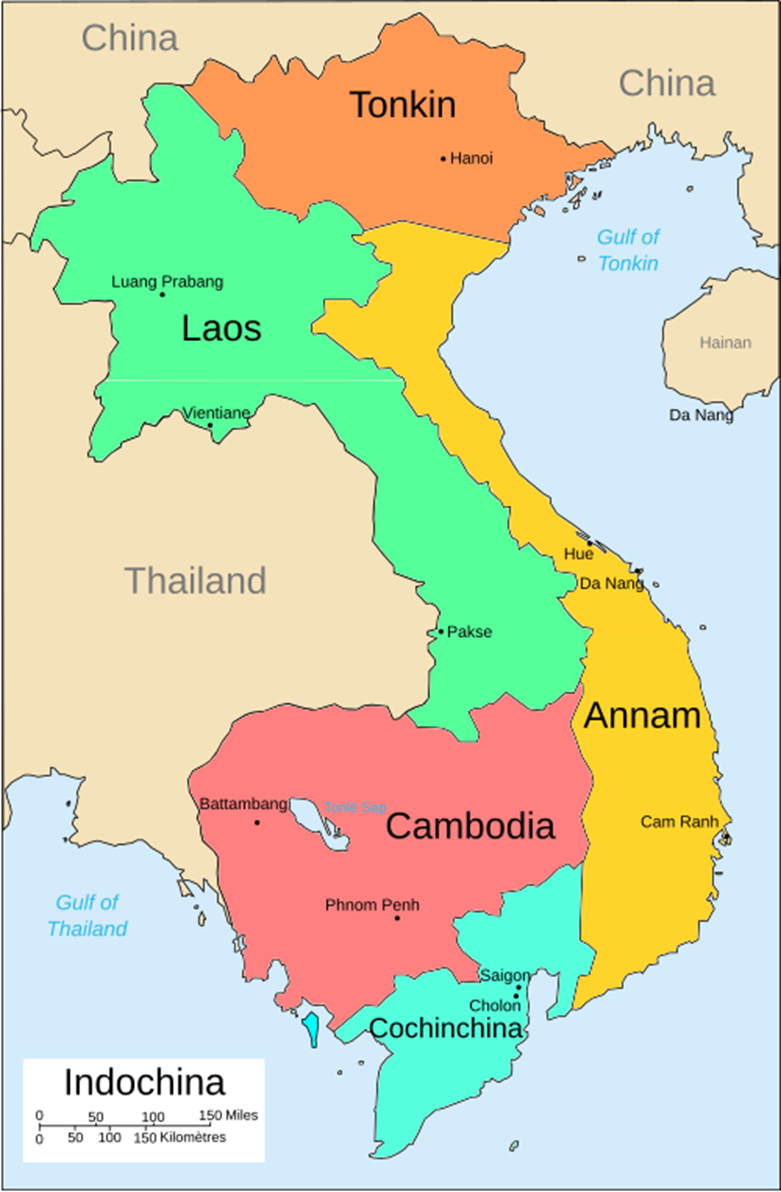
French loanwords entered Khmer primarily during the period when Cambodia was under French rule from the late 19th century until 1953. French became the language of administration, education and modernization, so new concepts often arrived with French labels attached.
French terms in Khmer are especially frequent in:
- Government and administration: words for ministries, commissions and bureaucratic structures
- Education: lycée, university and academic vocabulary
- Technology and infrastructure: trains, machines, engines, stations
- Daily life and food: café, butter, cheese and other culinary items
Today, many of these words are so integrated that young speakers may not realize they are French in origin.
Some typical French‑derived words in Khmer include:
- កាហ្វេ (ka‑fé) from “café” (coffee)
- ម៉ាស៊ីន (ma‑sin) from “machine” (machine)
- ប័រ (beur) from “beurre” (butter)
- ប៊ូតុង (bu‑tong) from “bouton” (button)
These words are usually written in Khmer script but keep a recognizable echo of French pronunciation once you train your ear. They often occupy semantic fields introduced or standardized during colonial modernity, which makes them miniature historical documents in everyday speech.
Globalization in Real Time: English Loanwords in Modern Khmer
Technology, Business and Pop Culture
In the last few decades, English has become the main foreign source for new loanwords in Khmer, driven by globalization, international business, tourism and the dominance of English in technology and higher education.
Common domains where English loanwords appear include:
- Technology: computer, internet, Facebook and smartphone vocabulary
- Business and economics: manager, marketing, bank and project
- Education and research: university, subject, technical disciplines
- Entertainment and lifestyle: movie, party, fashion and music genres
Many of these words are used freely in Khmer conversations, sometimes mixed with Khmer grammar, sometimes standing almost unchanged inside a sentence.
How English Words Adapt to Khmer
Despite their foreign origin, English loanwords are not simply pasted into Khmer. They go through a process of phonetic and graphic naturalization.
Several common features help you recognize them:
- Similar sound: The Khmer form stays close to English pronunciation but is adjusted for Khmer phonetics. For example, “computer” becomes កំព្យូទ័រ (kom‑pyu‑tœ).
- New concepts: Words for modern inventions and global trends are prime candidates for borrowing. If it relates to apps, social media or finance, suspect an English source.
- Unusual letter combinations: Some English loans show consonant clusters or vowel patterns rare in older Khmer, making them stand out on the page.
- Direct transcription: Many are written more or less phonetically in Khmer script.
Once you start spotting these patterns, you realize how bilingual urban Cambodia has become, even for people who do not speak much English.
How Khmer Makes Loanwords “Khmer”
Phonology and Script as Filters
Every borrowing passes through the filter of Khmer phonology and orthography. Consonant clusters may be simplified, final consonants adjusted, and vowels approximated using the closest Khmer equivalents. The goal is not perfect imitation of the original word, but a pronounceable Khmer form that fits smoothly into Khmer syllable structure.
Indic loans preserve traces of their original cluster‑rich shapes in conservative spellings, even if spoken forms are more streamlined. French and English borrowings tend to be more directly phonetic, but still limited by which sounds and combinations Khmer actually uses.
Once inside the language, loanwords behave like Khmer words. They can take Khmer grammatical markers, appear inside Khmer sentence patterns, and even combine with native elements to form hybrids.
For example:
- An English‑derived noun can take Khmer classifiers or prepositions.
- A Sanskrit root may form part of a compound with a native Khmer word, especially in formal or technical vocabulary.
Over time, these imported items stop feeling foreign and join the “normal” stock of Khmer vocabulary.
Why Loanwords Matter for Khmer Learners and Writers
Understanding History through Vocabulary
Loanwords are a concise history lesson. Indic words tell you about the spread of Hinduism and Buddhism and the prestige of Indian learning in classical Cambodia. French vocabulary reflects the colonial period and the push to modernize administration, infrastructure and education. English borrowings mark Cambodia’s current integration into global networks of trade, technology and tourism. Chinese and Vietnamese layers, meanwhile, point to trade diasporas, migration and regional politics.
For anyone studying Cambodian history and culture, paying attention to the origin of words offers a parallel narrative: a story of contacts, alliances, invasions, schools and smartphones.
Practical Benefits for Learners
From a practical point of view, recognizing loanwords can:
- Make new vocabulary easier to remember if you already know the source language.
- Help you guess meanings when you see unfamiliar words in signs, menus or official documents.
- Alert you to register: Indic terms often sound formal or religious; French and English loans may sound modern or technical; regional Chinese and Vietnamese borrowings may hint at social or geographic context.
Conversely, if you write in Khmer, understanding which words feel “foreign” or “scholarly” helps you calibrate the tone of your text for different audiences.
Loanwords in Khmer are not just linguistic passengers. They are markers of Cambodia’s religious conversions, political shifts and ongoing conversations with the wider world, from Sanskrit scholars to Chinese traders, Vietnamese neighbors, French bureaucrats and today’s English‑speaking tech companies. By learning to spot and understand these borrowed words, you gain both a clearer grasp of Khmer vocabulary and a richer sense of the history that shaped it.
Pascal Médeville is a writer and digital publisher based in Cambodia, where he runs the “Wonders of Cambodia” website and explores the many layers of Khmer language and culture. He writes about Cambodian history, linguistics, food and everyday life, with a fondness for the small details that reveal big stories hiding in plain sight. This article continues his ongoing series on how Khmer connects Cambodia to its neighbors and to the wider world.