The latest “Pictures of the Week” on Wonders of Cambodia drift from stormy provincial skies to steaming bowls of soup and plates of tropical fruit, tracing how Cambodians move through weather, hunger, and quiet moments of beauty. This week, the camera pauses on the small things that carry memory and comfort: a darkening sky over rice fields, the familiar depth of sour soup, and the glistening skin of rambutan and Burmese grapes on simple plates. Together, these images sketch a country where seasons, food, and belief are deeply entangled in everyday life.
“Stormy Evening Sky over Kampong Thom” sets the tone with towering storm clouds gathering over the flat expanse of central Cambodia. The last light of day filters through the clouds, turning the horizon into a narrow band of gold and reminding us how quickly the sky can change during the rainy season. It is the kind of view seen from a motorbike or a stilt house porch, when people quietly calculate whether they will reach home before the downpour arrives.
In “Alocasia Stem Soup with Tiny Fish Comfort”, a humble bowl of soup becomes a portrait of rural resilience. The pale stems of alocasia float alongside tiny fish, echoing a long tradition of making use of every edible thing from field and pond. It is not restaurant showpiece food, but the sort of everyday Khmer soup that anchors family meals, simple yet deeply nourishing.
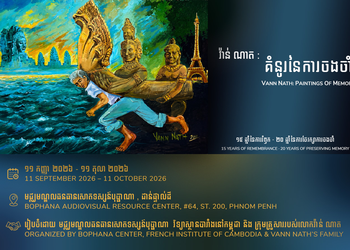
“Flying Toward Langka – Preah Ream’s Celestial Charge” lifts us from kitchen and field into the world of myth. The image captures a dynamic depiction of Preah Ream, the Khmer version of Rama, racing through the sky toward the fabled island of Langka, his posture full of purpose and divine urgency. This glimpse of the Reamker, Cambodia’s adaptation of the Ramayana, hints at how epic stories still shape temple art, festivals, and the moral imagination of the country.
“Samlor Machu Trey at Kraya Angkor, Phnom Penh” returns us to the table, now in the capital. The sour fish soup arrives bright with herbs and vegetables, its clear broth carrying the tang of tamarind and the savor of river fish. In a city restaurant like Kraya Angkor, an old favorite is plated with care but still feels like home, reminding Phnom Penh diners of childhood meals in the provinces.
“Rambutan Smiles, Sweet Cambodia on a Plate” captures a small hill of rambutan, their red shells and soft green spines curling like playful smiles. Peeled open, they reveal translucent white flesh, sticky and fragrant, a taste that immediately recalls roadside markets and family visits during fruit season. A simple plate like this brings the orchards of rural Cambodia onto an urban table.
“Kuy Teav Duck Noodle Soup in Battambang” invites us to a breakfast stall in the northwest. The bowl is crowded with rice noodles, slices of duck, and gentle aromatics, sending up steam in the cool of the early morning. Around it, one can almost imagine the clatter of chopsticks and the quiet rhythm of a Battambang day beginning.
Finally, “Burmese Grape on a Khmer Plate” focuses on a cluster of Burmese grapes, or phnheav, their pale yellow skins catching the light against a simple dish. This seasonal fruit, slightly tangy and sweet, reflects how Cambodia’s markets are filled with regional produce that travels across borders yet feels completely at home in Khmer kitchens. The image is quiet but suggestive, hinting at conversations over fruit, tea, and the slow passing of an afternoon.
Taken together, these seven scenes reveal a Cambodia where the drama of the sky, the comfort of soup, and the generosity of fruit all carry stories. From Kampong Thom’s storm clouds to Battambang’s noodle stalls and Phnom Penh’s refined sour fish soup, the week’s images show a country moving between weather and warmth, myth and mealtime. In small, attentive frames, they remind us that the heart of Cambodia is often found in what people cook, share, and quietly watch at the end of the day.