(Estimated reading time: 7-8 minutes – just enough to visit Wat Bo in your mind before your coffee gets cold.)
Tucked on the quiet east bank of the Siem Reap River, Wat Bo is one of the city’s oldest pagodas, famous for its evocative Reamker murals and peaceful atmosphere. Far from the Angkor crowds, this living monastery offers a rare glimpse of 19th century Khmer art, daily Buddhist practice and the slower rhythm of local life in Siem Reap.
Why Wat Bo deserves a place in your Siem Reap itinerary
Most visitors come to Siem Reap with one thing in mind: Angkor, Angkor, and perhaps… more Angkor. Wat Bo sits just a short walk from the tourist center, yet many travelers never cross the river to see it. Which is a pity, because this 18th century monastery is one of the oldest pagodas in town and offers exactly what the big temple circuit cannot provide anymore: quiet, shade and time to look closely.
This article is for curious travelers, photographers, and anyone who feels that temples are more interesting when monks actually live there. You will discover what makes Wat Bo special, why its 19th century murals fascinate art historians, and how to visit respectfully while still getting great photos and a deeper understanding of Siem Reap’s living Buddhist culture.
By the end, you should know how to get there, what to look for inside the vihara, when to come for chanting, and how to combine Wat Bo with a gentle walk through one of Siem Reap’s quieter neighborhoods.
A very old pagoda by Siem Reap standards
From 18th century foundations to modern Siem Reap
Wat Bo (Khmer: វត្តបូព៌), also known as Wat Raja Bo (Khmer: វត្តរាជបូណ៌) was founded in the 18th century, at a time when Theravada Buddhism was consolidating its role as the main religious tradition in Cambodia. That makes it one of the oldest surviving Buddhist temples in Siem Reap, older than most of the town itself as we know it today.
While Angkor’s stone temples go back to the Khmer Empire, Wat Bo represents a later layer of history: the wooden-and-brick monastic architecture of a Theravada kingdom that lived in the shadow of Angkor’s ruins. Remarkably, the pagoda survived the colonial period and the conflicts of the 20th century, keeping its murals and Buddha images largely intact.
Location in the “other” Siem Reap
Wat Bo lies on the east side of the Siem Reap River, along Street 22, a few minutes’ walk or tuk tuk ride from the Pub Street area. The whole “Wat Bo area” has become known as a relaxed backpacker and boutique-hotel neighborhood, with guesthouses and small restaurants tucked in among local homes.
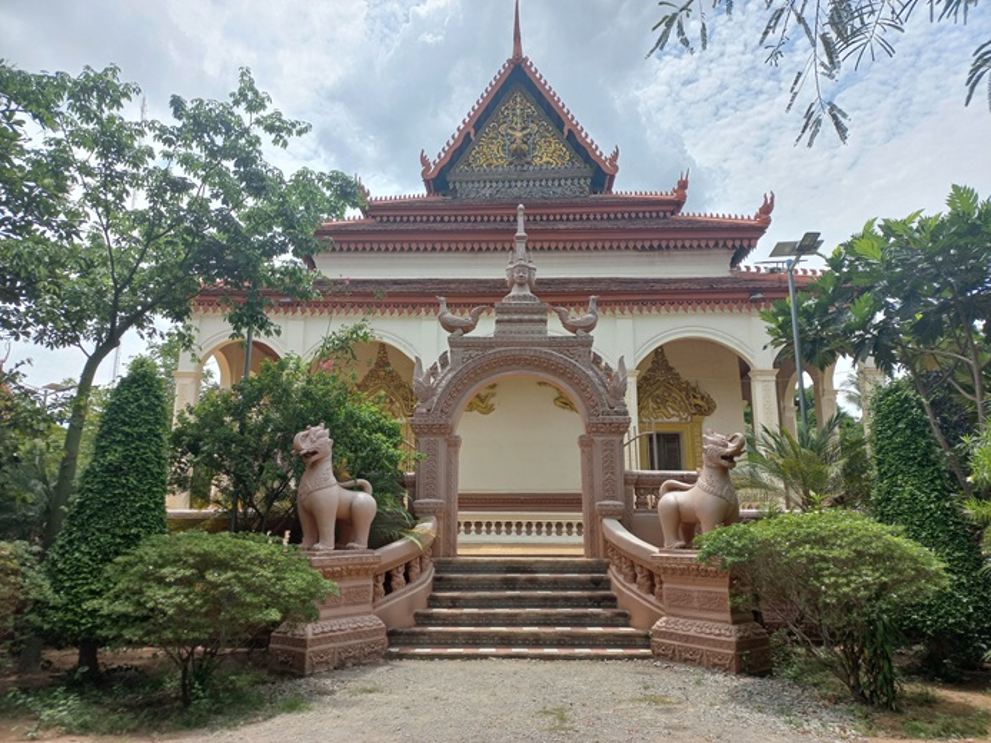
From the Old Market or Pub Street you simply cross the bridge, follow the river south, then turn toward Street 22 until you see the pagoda compound on your left, identifiable by its stupas and multi-tiered roof. It is easy to reach on foot, by bicycle or by tuk tuk, and many visitors appreciate being able to escape the main traffic arteries without committing to a long excursion.
Inside the vihara: Reamker, daily life and a few Europeans in hats
The Reamker murals and their Indian cousins
Wat Bo is famous for its 19th century wall paintings inside the main vihara, which depict scenes from the Reamker, the Khmer version of the Indian epic Ramayana. Rama, Sita, Hanuman and Ravana all appear, but they are dressed, armed and coiffed in unmistakably Khmer fashion, like characters from a royal ballet performance in Phnom Penh.
Art historians love these murals because they show a strong syncretism: a Hindu epic painted with enthusiasm inside a Buddhist temple, testifying to the long Indian influence on Cambodian religion and imagination. For travelers, they are a reminder that the Khmer world never drew neat borders between “Hindu” and “Buddhist” stories; the gods and heroes simply moved house when the doctrine changed.
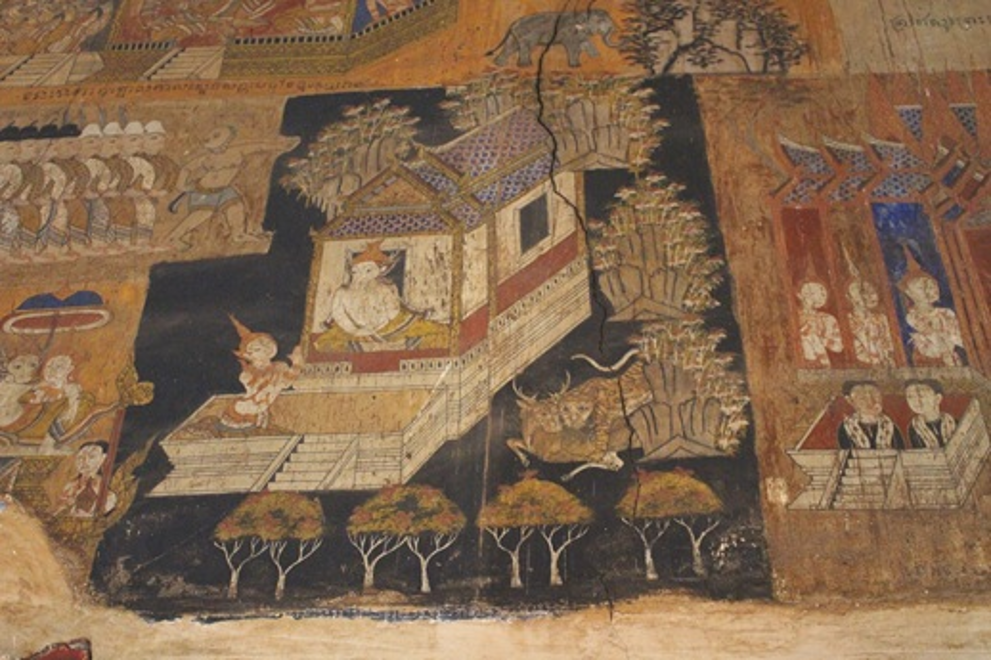
A 19th century Cambodian time capsule
What makes the murals even more precious is that they also include scenes of everyday Cambodian life from the late 19th to early 20th century. You can spot people in traditional clothing, scenes of markets and boats, and even “barangs” Europeans in hats and military outfits quietly inserted into the divine narrative. For social historians, these images are a rare visual record of how Cambodians lived, dressed and interacted during that period, at a time when photography was far from widespread. For the visitor with a bit of patience and a decent zoom, they turn the vihara walls into a kind of illustrated archive, where you can oscillate between cosmic war and someone quietly cooking rice.
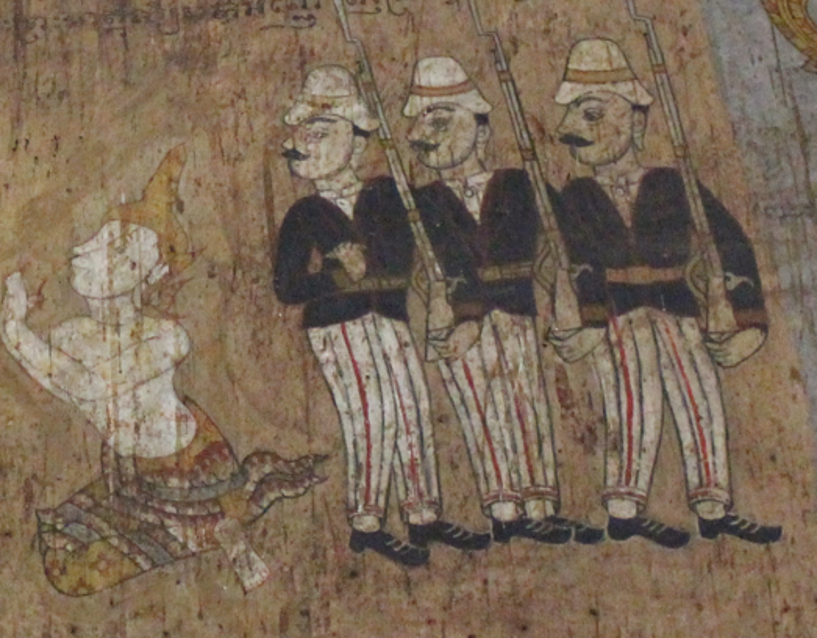
Note: The murals are currently under restoration (since 2023) and cannot be seen at the moment..
Monks, chanting and daily rhythm
Wat Bo is not just a historical museum; it is a functioning monastery with resident monks and regular religious activities. Monks here often gather for evening chanting between about 4.30 pm and 6 pm, and listening quietly from the back of the vihara can be one of the most atmospheric experiences in Siem Reap, especially at dusk when the light softens on the murals.
You will also see novices going about their tasks, lay people coming to make offerings, and the quiet choreography of daily monastic life: sweeping the courtyard, watering plants, arranging offerings in front of Buddha statues. This makes Wat Bo an excellent place to observe living Theravada practice rather than just reading an interpretive panel.
Behind and around the main Buddha inside the vihara you will notice a large collection of smaller Buddha statues, some older, some more recent, forming a dense devotional landscape in bronze, wood and gilded plaster. Outside, the compound is dotted with stupas, some modest, some more elaborate, which often contain the ashes of monks or prominent lay supporters.
Architecturally, Wat Bo displays classic Khmer monastic features: tiered roofs, richly decorated gables and naga finials, as well as standing Buddha images that reflect the graceful but slightly more relaxed style of later Cambodian art. Compared with Angkor’s stone mass, the effect here is lighter and more intimate, like walking through a garden rather than a fortress.
Practical tips for visiting Wat Bo
How to get there and when to go
From the Pub Street or Old Market area, you can simply walk to Wat Bo: cross the river, head south, then turn toward Street 22 and continue for about 500 meters until you see the pagoda compound. If you prefer wheels, every tuk tuk or rickshaw driver in town will know “Wat Bo” and the ride should take around 10-15 minutes, depending on traffic.
The pagoda is generally open during daylight hours, and mornings are ideal if you want soft light for photos and cooler temperatures. Late afternoon is perfect if you hope to catch monks chanting, but check the atmosphere first and be ready to remain discreet, especially if a ceremony or funeral is taking place.
Dress code, etiquette and photography
As in any Cambodian pagoda, you should dress modestly: shoulders covered, shorts or skirts at least to the knee for both men and women. Take off your shoes and hat before entering the vihara, avoid pointing your feet directly at Buddha images, and move slowly if monks or worshippers are present.
Photography of the murals is usually tolerated and even expected, but flash is not recommended, both for conservation reasons and for basic politeness toward people praying nearby. If you wish to take close portraits of monks or lay devotees, it is best to ask permission with a smile and a small bow; a few words in Khmer such as “som toh” (sorry / excuse me) go a long way.
Combining Wat Bo with a slow Siem Reap day
Wat Bo fits nicely into a “soft culture” day when you feel templed-out after Angkor but still hungry for context. You can start with a morning visit to the pagoda, spend time studying the murals, then explore the surrounding streets with their mix of guesthouses, cafés and local shops. From there, it is easy to follow the river back toward town, stop for an iced coffee and remind yourself that not all of Siem Reap revolves around sunrise over Angkor Wat.
Wat Bo is not the most spectacular site in Siem Reap, and that is precisely its charm: an 18th century riverside monastery where 19th century Reamker murals, everyday colonial-era scenes and today’s monastic routine all coexist under one slightly peeling painted roof. If you have half a day to spare beyond Angkor, crossing the river to meet this quiet old pagoda will reward you with shade, stories and a more intimate sense of how Buddhism is actually lived in Siem Reap.
Pascal Médeville is a writer and digital publisher based in Cambodia who spends an unreasonable amount of time in temples, libraries and WordPress dashboards. He writes mainly about Cambodian history, Southeast Asian culture and the small details that make places feel alive, from Reamker murals in Siem Reap to old Chinese inscriptions in Phnom Penh. When he is not squinting at wall paintings, he is probably editing another article for Wonders of Cambodia.