(Estimated reading time: 8-9 minutes, depending on how much coffee you need to face French colonial history.)
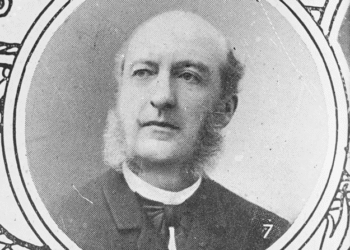
Albert Sarraut is one of those names that quietly haunt Cambodian history books without ever becoming a household name. Twice Governor-General of French Indochina and twice Prime Minister of France, he helped shape the colonial policies that transformed (and distorted) Cambodia’s modern trajectory. This article unpacks who Albert Sarraut was, what he did in Indochina, and why his legacy still matters today.
Introduction: Why Care About Albert Sarraut?
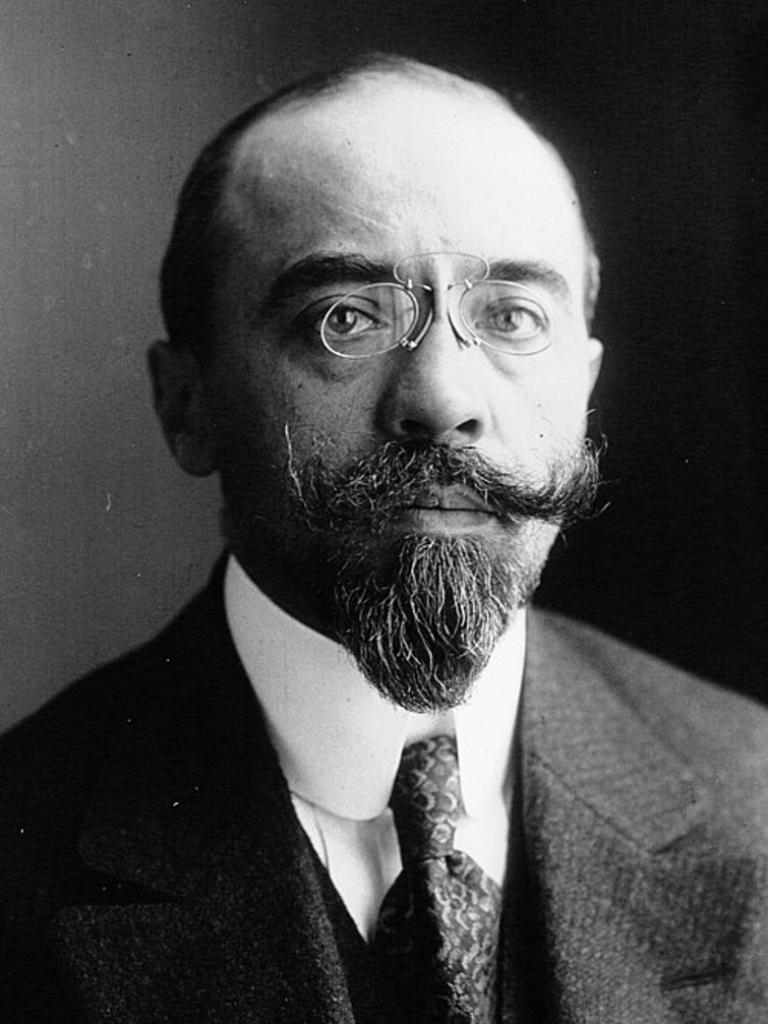
If you spend enough time in Cambodia, sooner or later the name “Albert Sarraut” pops up: on old school references, in urban plans, or in footnotes about colonial reforms. He is one of those French statesmen whose decisions were taken in Paris but felt quite tangibly in Phnom Penh, Saigon and Hanoi.
Albert Sarraut was a French Radical Socialist politician, twice Prime Minister of France, and a major architect of colonial policy in the interwar period. More importantly for our purposes, he served two terms as Governor-General of French Indochina in the 1910s, and later as Minister of Colonies, defining what became known as the “Sarraut program” for colonial development.
This article is for readers curious about Cambodian and Indochinese history, for students trying to decode that mysterious “Sarraut” in their sources, and for travelers who suspect there is more to colonial-era buildings than pretty façades. You will get a clear, practical overview of who Albert Sarraut was, how he viewed Indochina, what he changed on the ground, and how historians today interpret his legacy.
From Bordeaux to the Radical Party
Albert-Pierre Sarraut was born in Bordeaux in 1872 into a politically engaged Radical family connected with the newspaper La Dépêche du Midi. Trained in law, he began his career as a journalist before entering the French Chamber of Deputies in 1902, representing the Aude department in southern France.
He belonged to the Radical Socialist Party, a centrist to center-left force in the Third Republic that combined republican values, secularism, and a belief in the “civilizing mission” of France overseas. From this milieu, Sarraut built a long ministerial career, holding portfolios such as Public Instruction, Colonies, Interior and, eventually, the Presidency of the Council, which is to say Prime Minister, twice in the 1930s.
A Politician of the Third Republic
Sarraut was very much a typical product of the French Third Republic: parliamentary, talkative, fond of committees, and not allergic to long lunches. Over the course of his life, he served in more than thirty ministerial roles, moved between the Chamber and the Senate, and led the Radical Party at various moments.
For our Southeast Asian story, though, two words matter most: Indochina and colonies.
Governor-General of Indochina: Two Mandates, One Vision
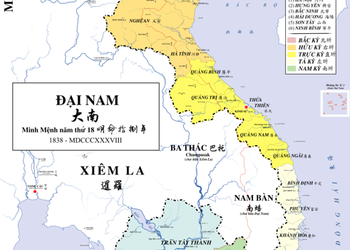
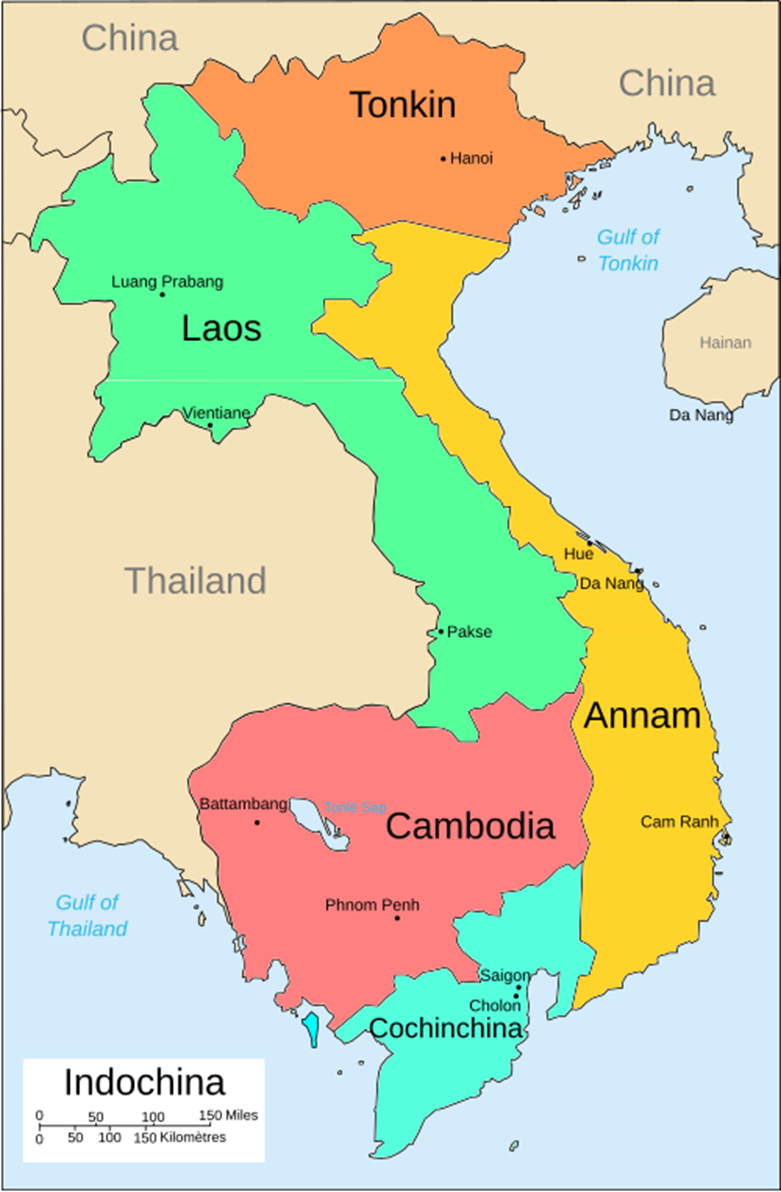
Albert Sarraut served as Governor-General of French Indochina twice: first from late 1911 to early 1914, and again from 1917 to 1919. Based in Hanoi, he oversaw a federation that included today’s Vietnam, Laos and Cambodia, with all the complexities and contradictions that implies.
His two mandates are often described as relatively “liberal” by colonial standards: he talked about improving education, widening access to the civil service for local elites, and introducing a touch more representation, all without abandoning the essential structure of French control. In Indochina, reform came with conditions.
Education, Elites and “Association”
Sarraut’s colonial thinking leaned towards “association” rather than outright assimilation. In theory, this meant working with local elites and cultures instead of trying to turn everyone into small replicas of provincial Frenchmen. In practice, it meant selectively educating and promoting an Indochinese elite that would help stabilize French rule.
During his time in Indochina, he pushed for the expansion of education, and he is linked with the development of schools that would later bear his name. He also advocated giving more room to local elites within the colonial administration and councils, although always under French supervision. For Cambodian history, this contributed to the gradual emergence of a Western-educated layer of officials and intellectuals, who would later play roles both within and against the colonial order.
The “Sarraut Program” and Colonial Development
If you remember just one thing about Albert Sarraut and colonial policy, let it be the “Sarraut program.” In the early 1920s, as Minister of Colonies, he presented an ambitious plan for economic development across the French empire, drawing heavily on his Indochinese experience.
Formally outlined around 1920-1921 in parliamentary speeches, the program argued that colonies should not just be tax farms or penal outposts, but integrated parts of the French economy, developed through coordinated investment, infrastructure, and what we would now call “modernization.” For Sarraut, roads, railways, ports, and plantations were a kind of civilizing therapy.
Of course, someone had to pay for all this development, and someone had to work on those plantations and rubber estates. The Sarraut program assumed that colonial subjects would provide both labor and raw materials for French industry, with “benefits” in return in the form of schools, hospitals, and a modest opening of administrative careers.
In places like Cambodia this translated into infrastructure that still shapes the landscape, but also into increased economic extraction and tighter integration into global commodity markets, particularly through neighboring Cochinchina and Annam. Development was real, but so was the imbalance.
Sarraut and Cambodia: Between Protectorate and Policy
A Protectorate Inside a Federation
Cambodia under the French was a protectorate within the broader Indochinese Union, which meant that many key decisions passed through the office of the Governor-General. Sarraut’s policies affected Phnom Penh through regional budgets, education policy, and the training and promotion of Cambodian officials.
While he is more visibly associated with Vietnam in most histories, his reformist line on administration and education contributed to the gradual formation of a Cambodian bureaucratic elite, often schooled in French or Franco-Khmer institutions. These were the people who would later occupy senior posts under the monarchy and, in some cases, join nationalist movements.
Preservation, Angkor and “Civilization”
Sarraut also operated at a time when the French were increasingly proud of their role in “discovering” and preserving Angkor, largely through the work of the École française d’Extrême-Orient. His brand of colonial rhetoric fit perfectly with this: France as guardian of Khmer civilization, protector of monuments, and guide towards a brighter, modern future.
From a Cambodian perspective, this translated into a curious duality. On the one hand, Angkor and Khmer art were celebrated and restored. On the other, the Khmer were expected to fit into a colonial hierarchy designed in Paris, under a governor whose vision of development served French interests first.
Twice Prime Minister, Always Colonial
Short-Lived Governments in Paris
Back in metropolitan France, Albert Sarraut twice reached the position of Prime Minister. His first government ran from late October to late November 1933, collapsing after just about a month over financial issues. His second term, from January to June 1936, coincided with social tensions and the rise of the Popular Front, and again did not last very long.
Yet even when he was not at the top, Sarraut remained influential in debates on colonial affairs and internal security as Minister of the Interior and Colonies.
During the Second World War, Sarraut’s complex position reflected the general confusion of the French elite. He withdrew from front-line politics after the collapse of the Third Republic and the advent of Vichy, and he was at one point arrested by the Germans and deported, being freed in 1945. After the war he held honorary and consultative roles, including in the French Union, as France tried to redefine its relationship with its colonies in the age of decolonization.
Albert Sarraut died in Paris in 1962 at the age of 90, having watched the colonial empire he helped shape enter its terminal crisis, including the wars in Indochina and Algeria.
How Historians See Albert Sarraut Today
Reformist or Just Polished Colonialism?
Historians often describe Sarraut as a “liberal” or “reformist” colonial administrator, particularly compared with some of his more brutally conservative contemporaries. He talked about partnership, education, and the need to co-opt local elites, which sounded rather enlightened in the 1920s vocabulary of empire.
Yet the basic structure of domination remained firmly in place, and his developmental vision relied heavily on unequal economic relations and French political control. In that sense, Sarraut represents a more sophisticated version of colonialism, one that replaced raw conquest with technocratic planning, statistics and speeches on mutual progress.
Why He Matters for Cambodian and Southeast Asian History
For anyone interested in Cambodian history, Albert Sarraut matters for three main reasons.
First, his time as Governor-General coincided with key steps in the institutionalization of the Indochinese Union, shaping how Cambodia was administered within a regional framework. Second, his emphasis on education and elites contributed, indirectly, to the emergence of Cambodian bureaucrats and intellectuals who would later navigate, question, or resist colonial rule. Third, his development agenda helped lock the region into patterns of infrastructure and economic extraction that still echo in today’s geography and economies.
In short, to understand the modern history of Cambodia and its neighbors, it pays to know who Albert Sarraut was, even if you are not planning to name a lycée after him.
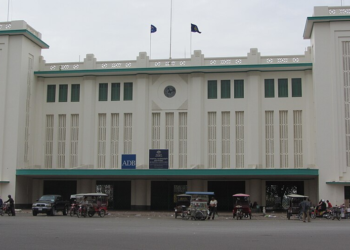
Albert Sarraut was not a minor footnote but a central figure in the story of French Indochina, from Hanoi’s governor’s palace to the corridors of power in Paris. His mix of reformist rhetoric and firm control helped shape the institutions, infrastructures and elites of Cambodia and its neighbors, leaving a legacy that is visible both in old colonial buildings and in the deeper structures of the region’s modern history.
Pascal Médeville is a writer and digital publisher based in Cambodia, where he runs the Wonders of Cambodia website and explores the tangled histories of Southeast Asia. He writes about Cambodian culture, colonial legacies, food, and folklore, with a special taste for the places where archival dust meets street-level reality. When not reading old French reports, he is probably documenting a market stall.