


The French protectorate of Cambodia was a pivotal era in the country’s history, lasting from 1863 to 1953. During this 90-year period, Cambodia was drawn into the web of French colonialism in Southeast Asia, becoming part of French Indochina. While the French protectorate offered Cambodia a degree of protection from neighboring powers and internal disorder, it also subjected the Khmer people to foreign rule and interference. This essay explores the historical context, political and administrative changes, cultural impacts, economic developments, resistance movements, and eventual independence of Cambodia under French colonial rule.
Historical Background: Cambodia in the 19th Century
In the mid-19th century, Cambodia was a weakened kingdom caught in the geopolitical crosshairs of Siam (modern-day Thailand) and Vietnam. Once a powerful empire during the Angkorian period (9th to 15th centuries), Cambodia had declined significantly due to internal strife, foreign invasions, and loss of territory. By the early 1800s, the country was under alternating influence and domination by Siam and Vietnam.
King Norodom, who came to the throne in 1860, inherited a fragile kingdom. In a bid to preserve Cambodian sovereignty and resist further encroachment by its powerful neighbors, he sought foreign assistance. In 1863, King Norodom signed a treaty with France, placing Cambodia under French protection. The treaty guaranteed the kingdom’s territorial integrity, but effectively made Cambodia a French protectorate.
Establishment of the Protectorate (1863–1884)
The initial 1863 agreement was limited in scope. France promised to protect Cambodia against external threats, while Cambodia retained internal autonomy. However, over the following decades, France gradually increased its control over Cambodian affairs. By 1884, under pressure and with a French gunboat anchored at the royal capital of Oudong, King Norodom was forced to sign a new treaty that granted the French greater administrative authority, including control over tax collection, customs, public works, and foreign relations.
The transition was not smooth. Cambodian officials, Buddhist monks, and peasants alike opposed French interference. A major anti-French rebellion erupted in 1885–1886, led by Prince Si Votha, a half-brother of the king. Though ultimately suppressed, this resistance reflected the widespread dissatisfaction with colonial rule.
Integration into French Indochina (1887–1954)
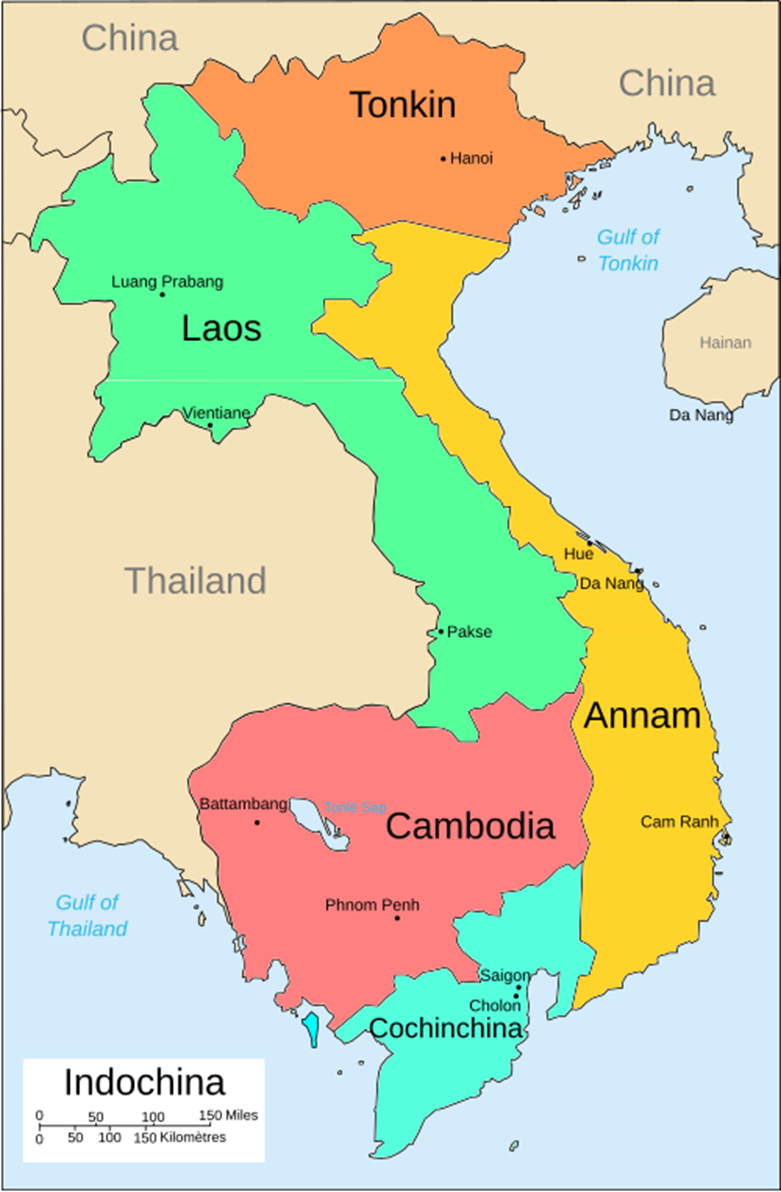
In 1887, the French established the Union of French Indochina, which included Vietnam (divided into Tonkin, Annam, and Cochinchina), Laos, and Cambodia. While Vietnam was the administrative and economic center of the federation, Cambodia was often treated as a peripheral province. French administrators, known as Residents, exercised significant power, with the Cambodian king functioning as a ceremonial figurehead.
French colonial policy in Indochina was characterized by a centralized bureaucratic system dominated by French officials. Traditional Khmer elites, including members of the royal family, were sidelined or co-opted into the colonial administration. The French promoted a system of indirect rule, preserving the monarchy and some indigenous institutions, but ultimately controlling all key decisions.
Economic and Infrastructure Development
Under French rule, Cambodia underwent limited modernization, especially in infrastructure. The French built roads, bridges, railways (notably linking Phnom Penh to Battambang and Saigon), ports (including the development of Phnom Penh as a major river port), and public buildings. Phnom Penh was transformed from a modest river town into a colonial capital with European-style architecture, wide boulevards, and a formal administrative layout.
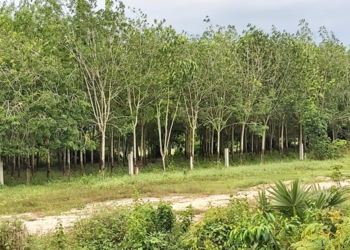
Economically, the French focused on exploiting Cambodia’s natural resources, especially rubber, timber, and rice. French companies acquired large tracts of land for rubber plantations, often displacing Khmer peasants. Much of the profit from these enterprises went to France or to French business interests in Indochina, with little benefit to the local population.
The colonial economy created a dual structure: a French-dominated urban sector with access to education and wealth, and a vast rural sector where most Cambodians lived in poverty. While the French introduced new crops and agricultural techniques, they did little to promote Cambodian economic self-sufficiency or industrial development.
Social and Cultural Impact
French colonialism had profound effects on Cambodian society and culture. The French promoted their language, culture, and values through schools and the press. The Lycée Sisowath in Phnom Penh, established in 1935, became a center of French-style education, producing a small elite fluent in French and exposed to Western ideas. However, most Cambodians remained illiterate and received little formal education.
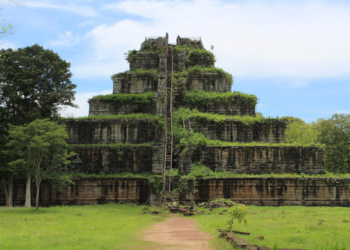
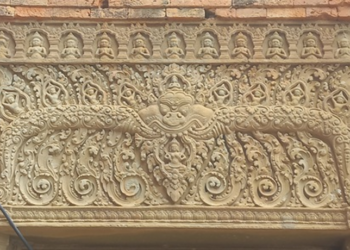
The French also played a significant role in preserving Cambodia’s cultural heritage. The École française d’Extrême-Orient (EFEO), a French archaeological institution, began systematic studies of Khmer history and architecture in the early 20th century. Scholars such as Étienne Aymonier and Henri Marchal led efforts to document and restore the Angkor temples, culminating in the rediscovery of Angkor Wat and Angkor Thom. While these efforts were often motivated by colonial pride, they also laid the foundation for modern Khmer archaeology and heritage preservation.
Buddhism, the dominant religion in Cambodia, was both supported and regulated by the French. The colonial government institutionalized the sangha (Buddhist monastic community) to ensure loyalty and reduce its potential as a source of resistance. Monks were required to register with the state, and certain political activities were prohibited.
Nationalism and Resistance
Despite colonial repression, nationalist ideas began to take root in Cambodia in the early 20th century. Influenced by developments in neighboring Vietnam and global anti-colonial movements, a generation of Khmer intellectuals and monks began to question French authority. Newspapers and journals, often written in French or Khmer, served as platforms for expressing discontent and advocating reform.
One of the first nationalist movements was the Nagaravatta group, founded in the 1930s by Son Ngoc Thanh and other Cambodian intellectuals. They promoted Buddhist reform, national pride, and a break from colonial control. During World War II, when Japan occupied Indochina (1941–1945), Cambodian nationalists saw an opportunity to assert independence.
In March 1945, with Japanese support, King Norodom Sihanouk proclaimed the independence of Cambodia. Son Ngoc Thanh became foreign minister and later prime minister. However, this independence was short-lived. After Japan’s defeat, the French quickly reasserted control. Son Ngoc Thanh was arrested and exiled.
The post-war period saw a revival of Cambodian nationalism. The Democratic Party, formed in 1946, called for full independence and democratic reforms. Led by figures like Ieu Koeus and Prince Sisowath Yuthevong, the party enjoyed significant popular support, winning the first elections in 1947. However, the monarchy, backed by the French, remained a conservative force.
Path to Independence (1945–1953)
By the late 1940s, the tide was turning against colonialism worldwide. France was facing growing resistance in Vietnam, culminating in the First Indochina War (1946–1954). Cambodia’s leaders began to push more aggressively for independence. King Norodom Sihanouk, initially seen as a compliant monarch, emerged as a key player in this struggle.
In 1952, Sihanouk dissolved the National Assembly, assumed full control of the government, and launched a diplomatic campaign known as the “Royal Crusade for Independence.” He traveled to France, the United States, and other countries to garner international support.
His efforts bore fruit. On November 9, 1953, France officially granted Cambodia full independence. The transition was relatively peaceful compared to Vietnam or Algeria, a testament to Sihanouk’s diplomacy and the changing international environment.
Legacy of the French Protectorate
The French protectorate left a complex legacy in Cambodia. On one hand, it preserved the Cambodian monarchy, protected territorial integrity, and introduced elements of modernization, such as infrastructure, legal institutions, and education. It also laid the groundwork for archaeological studies and the restoration of Angkor.
On the other hand, French rule marginalized the Khmer people from political and economic power, exploited natural resources, and created deep inequalities. The colonial education system created a narrow elite, while most of the population remained poor and illiterate. Efforts at political reform were often suppressed, and nationalist movements were curtailed until the late colonial period.
Perhaps the most enduring legacy was the rise of Norodom Sihanouk as a central figure in modern Cambodian history. His leadership during the independence movement shaped the nation’s early post-colonial years and set the stage for Cambodia’s turbulent journey through monarchy, republicanism, and revolution.
The French protectorate of Cambodia was a defining period that profoundly shaped the nation’s political, social, and cultural landscape. While it brought certain forms of modernization and preserved some aspects of Khmer identity, it also imposed foreign rule and fostered inequalities. The protectorate’s end in 1953 marked a new beginning for Cambodia, but the challenges rooted in the colonial experience—economic underdevelopment, elite dominance, and political instability—continued to haunt the country for decades. Understanding this colonial past is essential for grasping the complexities of Cambodia’s modern history.













Comments 1