In July 1942, Phnom Penh witnessed an unlikely political “accessory” become a symbol of resistance: the monks’ parasol. Often called the Umbrella War (Umbrella Uprising), this protest erupted after the arrest and controversial defrocking of the monk Achar Hem Chieu — then spiraled into a pivotal moment for Cambodian nationalism under French colonial rule.

Cambodia’s modern independence story is often told with big dates and bigger personalities. But if you’re the kind of reader who prefers history where ordinary people do extraordinary things — monks, students, journalists, and lay supporters walking the streets with nothing but discipline and umbrellas — then the 1942 Umbrella Uprising is your chapter.
This article is for travelers, Cambodia-lovers, history nerds, and anyone building a clearer timeline of Cambodian anti-colonial movements. You’ll come away with a grounded explanation of what happened in Phnom Penh in July 1942, why umbrellas mattered, and how this protest fits into the long arc of Cambodian nationalism.
What was the Umbrella Uprising?
The Umbrella Uprising (also known as the “Umbrella War” or “Revolt of the Parasols”) was a major anti-colonial protest in Phnom Penh in July 1942, during World War II-era French rule in Indochina. It became known for the striking image of Buddhist monks marching with their saffron-colored parasols — objects normally associated with religious dignity, not political defiance.
At its core, the uprising was triggered by the arrest of Achar Hem Chieu, a prominent monk linked to rising nationalist networks. The controversy intensified because Hem Chieu was reportedly defrocked through state action rather than by a monastic council, which many saw as a violation of Buddhist law and a direct insult to the sangha.
Cambodia in 1942: A tense colonial moment
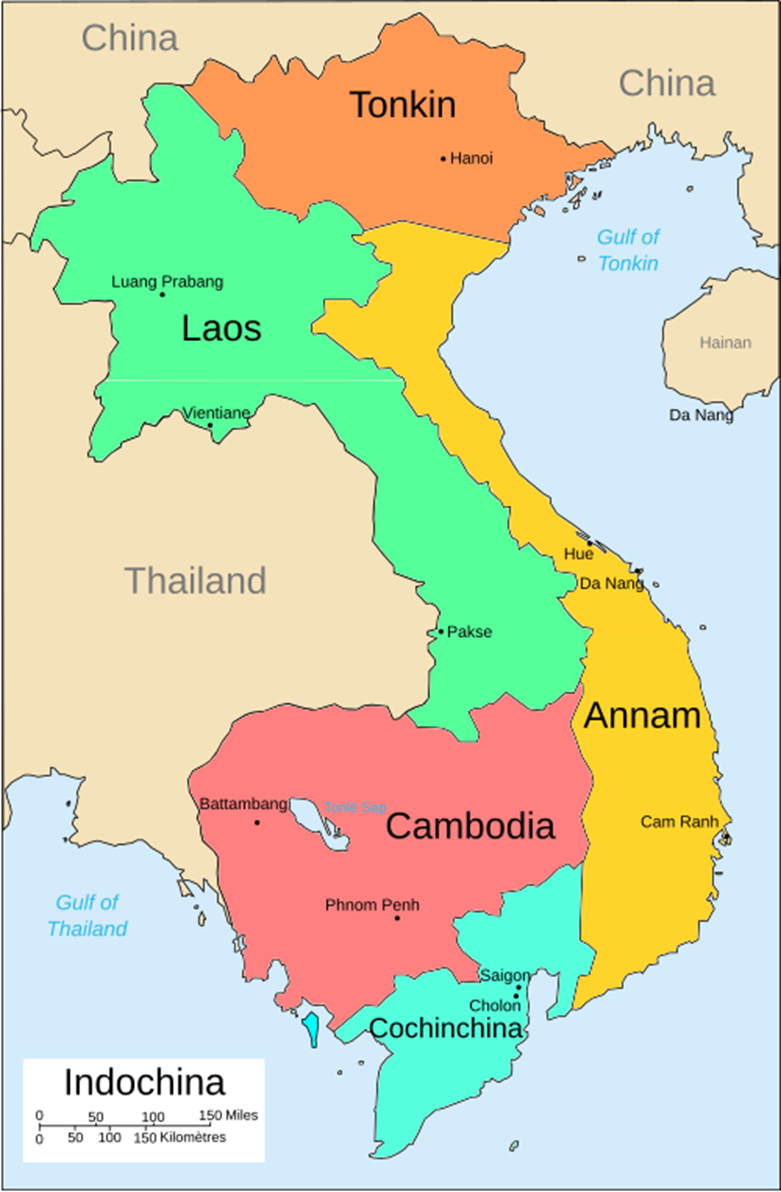
By 1942, Cambodia sat in a layered, awkward reality: French colonial administration still functioned, but Japan had a military presence in Indochina, and the global war reshuffled everyone’s confidence and paranoia. In Cambodia specifically, Japanese forces entered under arrangements that left French administrators in place, creating a “who’s really in charge?” atmosphere — always a recipe for political miscalculation.
Nationalism was also maturing intellectually. The Buddhist Institute and Khmer-language publishing helped create a public sphere where ideas could circulate beyond palace and administration channels, and nationalist figures used print and education to build influence. In that context, arresting a respected monk wasn’t just a police action — it was a spark thrown into dry rice husk.
The spark: Arrests, defrocking, and a public challenge
The immediate prelude to the Umbrella Uprising involved arrests that alarmed both monks and lay supporters, including Hem Chieu and Nuon Duong. The official accusations described a political ecosystem: agitation over wartime cost-of-living pressures, nationalist plotting, alleged contact with Japanese forces, and even rumors of “witchcraft” for invincibility — colonial files can be strangely imaginative when nervous.
In Cambodian Buddhism, legitimacy is not a minor detail; it’s the foundation of authority. The claim that Hem Chieu was defrocked by the state rather than by the sangha’s internal procedures inflamed outrage because it implied colonial power could rewrite religious law when convenient.
And once you convince a community that the rules are being changed mid-game, people stop playing politely.
The march: How umbrellas became a political symbol
A public call went out for a peaceful demonstration demanding the release of the arrested figures, with instructions to parade quietly and without weapons. On the morning of July 20, 1942, as many as 3,000 people gathered, including around 500 monks from major wats in Phnom Penh — many carrying parasols, which gave the event its famous name.
The march moved through the city toward the office of the Resident-Superior, with Pach Chhoeun identified as a leading figure at the front. A Japanese plane reportedly circled overhead, interpreted by the crowd as a sign of sympathy or protection — though symbolism, like weather, is easier to read in hindsight than in the moment.
From disciplined march to violence
The confrontation escalated when French forces arrested Pach Chhoeun after the crowd surged forward, leading to unrest and a riot. Protesters fought back with sticks and stones, and the monks’ umbrellas — normally markers of calm hierarchy — were suddenly part of street-level chaos.
Japanese soldiers arrived in trucks but did not intervene, an inaction that mattered: it suggested limits to French authority without offering Cambodians real protection. Afterward, organizers were quickly imprisoned, and the French shut down the Pali language school and the offices of first Khmer national newspaper Nagara Vatta, squeezing the movement’s educational and media infrastructure.

Key figures you’ll keep encountering
The Umbrella Uprising wasn’t a one-man story; it was a network moment. Here are names that appear repeatedly in accounts of the 1942 Umbrella Uprising and its nationalist context.
Hem Chieu’s arrest and defrocking were the direct triggers that mobilized monks and laypeople into a citywide protest.
Pach Chhoeun is described as leading the demonstrators and being arrested during the confrontation, a turning point that helped ignite the riot.
Son Ngoc Thanh and the nationalist ecosystem
Accounts describe Son Ngoc Thanh as helping organize the demonstration and seeking refuge to avoid arrest, with the broader nationalist movement operating amid factionalism and colonial surveillance.
Bun Chanmol and the new nationalist generation
Bun Chanmol also belongs in the constellation of figures around the Umbrella Uprising, embodying the young, literate Khmer nationalist generation shaped by the colonial school system yet increasingly critical of French rule. As a writer and later memoirist, he helped frame events like the 1942 protest as part of a broader moral and political awakening, linking monastic activism, urban youth, and the early nationalist press in one evolving narrative.
Nationalist monks: Louis Em, Khieu Chum, and others
Louis Em is described as a modernist monk who encouraged the 1942 Umbrella Revolution against the French protectorate. Khieu Chum is described as joining the Umbrella Revolution and later being imprisoned and deported to Poulo Condor island.
Why the Umbrella Uprising matters in Cambodian history
The Umbrella Uprising is often framed as the most significant protest against French rule in Cambodia during World War II, with monks at the forefront. Even though it failed to achieve its immediate aims — freeing detainees and forcing major reforms — it became a milestone: a first major organized effort tied to the independence movement and Khmer nationalism.
It also shows something practical about political change in Cambodia: religious institutions were not “outside” history. The sangha was capable of mass mobilization when moral legitimacy and community autonomy felt threatened. If you’re trying to understand later Cambodian politics — where legitimacy, tradition, and public order keep colliding — 1942 is an early, revealing rehearsal.
Visiting Phnom Penh with 1942 in mind
If you walk Phnom Penh today, the city won’t hand you a plaque saying “Umbrella Uprising happened here” every ten meters (Phnom Penh prefers to keep moving). But you can still use the 1942 Umbrella Uprising as a mental map for cultural travel.
Practical tips for historically curious visitors
- Visit major wats in Phnom Penh with awareness that monks once mobilized citywide from these institutions, not as an abstract “clergy,” but as a disciplined social force.
- When you see ceremonial parasols in religious contexts, remember they were also the visual signature of the 1942 protest — devotion and dissent, handled by the same hands.
- Treat Cambodian nationalism as a long timeline: 1942 sits between early colonial-era protests and the more dramatic political transformations that followed in the mid-1940s and beyond.
The 1942 Umbrella Uprising in Cambodia is memorable because it fused spiritual authority with public protest, turning the monks’ parasol into a symbol that colonial power couldn’t easily arrest. In a tense wartime protectorate, the march and its crackdown revealed the strength of emerging Cambodian nationalism — and how quickly ideas, institutions, and street politics could collide in Phnom Penh.
Sources & further reading / To know more
- David P. Chandler, A History of Cambodia (4th ed.). A clear scholarly overview of Cambodian history, including the wider nationalist context of the colonial period.
- Global Nonviolent Action Database: Cambodian “Umbrella War” of 1942.
- Wikipedia (biographical entries such as Louis Em and Khieu Chum). Useful starting points for identifying key monk intellectuals linked to the 1942 movement and their later trajectories.
Pascal Médeville is a writer and digital publisher based in Cambodia, focusing on Southeast Asian culture, history, and the everyday details that make big narratives feel human. He runs and contributes to content projects like Wonders of Cambodia, where he writes practical, research-driven articles for curious travelers and readers who like their history accurate — and alive.