Is Cambodia still a safe and sensible choice for your 2026 holiday despite the fighting on the Thai border? This in‑depth guide explains what is really happening, which areas are affected, and how to plan routes, insurance and itineraries that keep your trip safe, enjoyable and stress‑free.
Understanding the Thai-Cambodian Border Conflict in 2026
The current Thai-Cambodian border conflict is a renewed phase of a long‑running territorial dispute that escalated sharply from mid‑2025, with artillery, rocket fire and even airstrikes reported in remote frontier zones. The clashes are concentrated in rural districts along the land border, especially near some historic Khmer temples and sparsely populated forest areas, not in major cities.

For travelers, the key point is that this is a geographically limited conflict that primarily affects a 20-30 km strip on both sides of the border. It has serious humanitarian and economic consequences locally, but it does not mean the whole of Cambodia is unsafe or “at war.”
Is It Safe to Travel to Cambodia in 2026?
Most of Cambodia remains calm and open for tourism in early 2026, including Phnom Penh, Siem Reap (Angkor), Kampot, Kep, Battambang and the southern islands. Authorities and tourism boards have repeatedly stressed that the fighting is far from the main tourist hubs, which continue to operate normally with hotels, flights and attractions running as usual.

Where you must be cautious is any area close to the land border with Thailand, especially zones that governments and major tour operators classify as within roughly 30 km of active or potential military operations. In practice, this simply means avoiding border‑temple excursions and overland crossings, while enjoying the rest of the country by air and internal transport.
The Biggest Practical Change: Land Borders Closed
Can You Still Cross Overland Between Thailand and Cambodia?
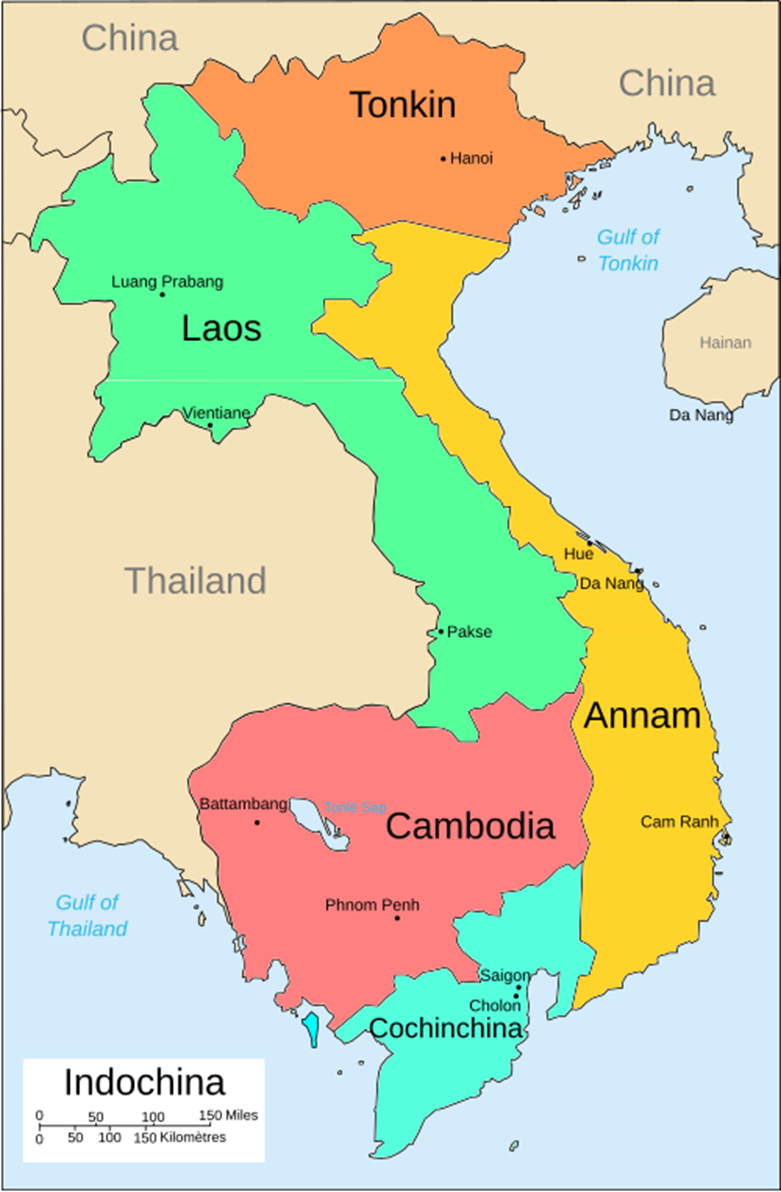
As of early 2026, all official land border checkpoints between Thailand and Cambodia have been closed since late June 2025 due to the conflict. This affects popular routes such as Bangkok-Siem Reap via Poipet, Bangkok-Phnom Penh via Aranyaprathet, and Trat-Koh Kong, which were once standard overland itineraries.
For now, the only realistic way to combine Thailand and Cambodia in one trip is to fly between major cities such as Bangkok and Phnom Penh or Bangkok and Siem Reap. Domestic travel inside each country remains possible and generally safe, with buses, trains and flights operating normally away from the border zone.

How This Affects Your Itinerary
If you had planned an Indochina loop by bus, you will need to adapt your route:
- Replace border crossings with short flights (Bangkok-Siem Reap, Bangkok-Phnom Penh, Kuala Lumpur-Siem Reap, Singapore-Phnom Penh).
- Remove visits to border‑area temples such as Preah Vihear and Banteay Chhmar while restrictions remain in place.
- Allow a little more budget for air tickets, but remember that hotel and food prices in Cambodia still offer good value overall.
This change actually simplifies logistics for many first‑time visitors: you spend less time in exhausting border queues and more time in destination cities.
What Is Happening in Siem Reap and Angkor?
On‑the‑Ground Situation in Siem Reap
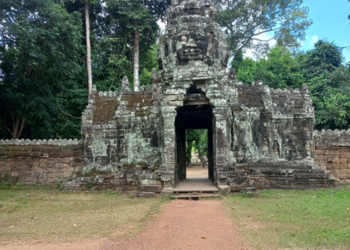
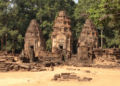
Despite alarmist headlines, Siem Reap city itself remains peaceful, with Angkor Wat and the main temple complexes open and operating as usual. Local officials and tourism authorities insist that the urban area is far from the border clashes and is not directly affected by the fighting.

However, the psychological impact of the conflict has led to a noticeable drop in visitor numbers, with cancellations and a decline in Angkor’s attendance reported in late 2025. For travelers, this means smaller crowds at famous sites, easier photo opportunities at sunrise, and often attractive hotel deals during what would normally be peak season.
Are the Temples Themselves at Risk?
International organizations have expressed concern about heritage sites near the frontier, such as Preah Vihear, which lie inside or close to militarized zones. These specific border temples are currently off‑limits to tourists and suspended from most itineraries.
By contrast, the Angkor Archaeological Park around Siem Reap is situated well away from the active conflict line. There have been no reported attacks on the main tourist zones, and authorities emphasize that security measures are in place to protect visitors and infrastructure.
Economic Impact vs. Everyday Reality for Tourists
Cambodia’s tourism sector has suffered substantial losses from the border closures and the drop in regional visitor flows, with some estimates putting potential losses at up to 1.25 billion US dollars. Thai visitor arrivals in particular have collapsed, disrupting cross‑border trade, coach traffic and budget overland packages.
Yet air arrivals to Cambodia have actually grown, underlining that international travelers continue to come when they understand that the conflict is geographically limited. For visitors on the ground in Phnom Penh or Siem Reap, daily life still features busy markets, functioning transport, and a tourism industry keen to welcome guests after a difficult period.
How to Plan a Safe Trip to Cambodia in 2026
1. Check Travel Advisories and Insurance
Before you travel, read the latest advisories from your own government, which usually highlight border areas to avoid and note the closure of land crossings. Pay close attention to maps or wording that mention restricted zones within a certain distance of the Thai border.
Make sure your travel insurance covers travel to Cambodia in general and that it does not exclude regions that are under “avoid non‑essential travel” or similar advisories, especially if your itinerary comes anywhere near the northwest. If in doubt, call your insurer and clarify coverage for Cambodia outside the conflict zone.
If it’s your first visit to the country, check our quick guide “First Time in Cambodia: Essential Guide for an Unforgettable Trip.”
2. Choose Destinations Away from the Conflict Zone
For a first or second trip to Cambodia in 2026, it is easy to build a rich itinerary that remains entirely outside sensitive areas, for example:
- Phnom Penh (riverfront, Royal Palace, museums)
- Siem Reap and Angkor (including Tonlé Sap excursions)
- Battambang (rice fields, colonial architecture, arts scene)
- Kampot and Kep (riverside chill, pepper farms, seafood)
- Southern islands (Koh Rong, Koh Rong Sanloem)
These destinations are far from the active border zone and continue to welcome visitors, with tour operators constantly reviewing programs to keep them aligned with safety updates.
3. Fly Instead of Crossing by Land
Book international flights directly into Phnom Penh or Siem Reap instead of trying to cross from Thailand by bus. Regional airlines offer frequent connections from Bangkok, Singapore, Kuala Lumpur and Ho Chi Minh City, and domestic links between Phnom Penh and Siem Reap are straightforward.
For multi‑country trips, think of Cambodia as an “island” in your itinerary: fly in, explore for a week or two, then fly out to your next destination rather than relying on cross‑border roads.
4. Work with Reputable Local Operators
Tour operators and DMCs in the region are continuously monitoring the security situation and adjusting their programs, often suspending excursions close to the border as a precaution. Booking at least part of your trip (airport transfers, long‑distance journeys, excursions) through established agencies gives you an extra layer of real‑time information and flexibility.
Ask specific questions before you book: which provinces are included, how far the tours go from the border, and what contingency plans exist if advisories change.
5. Stay Informed While in the Country
Once you are in Cambodia, it is sensible to:
- Follow local news in English via major outlets and tourism authorities.
- Register with your embassy or consular service if they offer that option.
- Listen to hotel staff, guides and expats, who usually hear quickly about any incidents or route changes.
In the unlikely event of sudden escalation, the main impact for tourists would be schedule changes (flight re‑timings, cancelled excursions) rather than direct physical danger in core cities.
Example 7–10 Day Itinerary for 2026
Here is a sample itinerary designed specifically for 2026 conditions, avoiding the Thai border but capturing Cambodia’s highlights:
- Day 1–3: Phnom Penh – museums, Royal Palace, riverside, Killing Fields and S‑21 for those comfortable with memorial sites.
- Day 4–7: Siem Reap – Angkor Wat, Bayon and Ta Prohm, floating villages, village‑based activities.
- Day 8–10: Kampot or Kep – river cruises, pepper farms, seafood, relaxed coastal atmosphere.
All segments are linked by domestic flights or well‑established road routes that do not approach the Thai frontier.
Who Should Consider Postponing?
Travelers whose main goal was to explore remote border temples like Preah Vihear, to do overland backpacking loops through Thai and Cambodian border towns, or to volunteer in frontier districts may wish to postpone until the situation normalizes. Similarly, highly risk‑averse visitors who feel anxious even about distant conflicts may simply enjoy their trip more if they wait.
For most cultural travelers, families, couples and solo visitors focusing on classic destinations, Cambodia remains a viable and rewarding trip in 2026 with a few route adjustments and some basic precautions.
Traveling to Cambodia in 2026 despite the Thai border conflict is possible, provided you avoid the land border zone, accept that overland crossings are suspended, and plan your route around Phnom Penh, Siem Reap and other interior or southern destinations. With good information, flexible planning and appropriate insurance, you can still enjoy Angkor, the capital and the countryside while staying well clear of the fighting.
Sources & further reading / To know more
- Cambodia’s tourism sector after the 2025 border conflict – Analysis of arrival data, economic losses and the asymmetric impact on air vs. land‑based tourism.
- Cambodia tourism assures safety as border conflict persists – Industry and official statements on safety in main tourist hubs like Phnom Penh and Siem Reap.
- Planning a Thailand trip in 2026? Here’s what the border conflict means – Practical explanation of land‑border closures and safe travel zones on the Thai side.
- Government travel advisories for Cambodia – Up‑to‑date official guidance on safety, border areas to avoid and consular support.
- Regional DMC travel updates on Thailand–Cambodia border issues – Tour operator perspective on closed sites, 50 km buffer zones and itinerary adjustments.
- Reporting on tourism in Siem Reap during the clashes – On‑the‑ground view of cancellations, Angkor visitor numbers and local reactions.
- First Time in Cambodia: Essential Guide for an Unforgettable Trip
Pascal Médeville is a writer and digital publisher specializing in Southeast Asian culture, history and travel. He regularly covers Cambodia’s tourism trends, regional geopolitics and on‑the‑ground practical advice for independent travelers. His articles aim to cut through sensational news and offer clear, nuanced guidance for planning real trips.