Introduction: The Soldier vs. The Diplomat
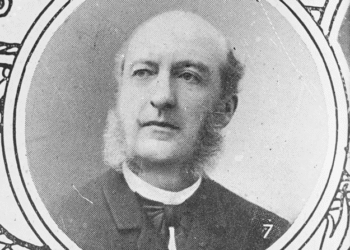
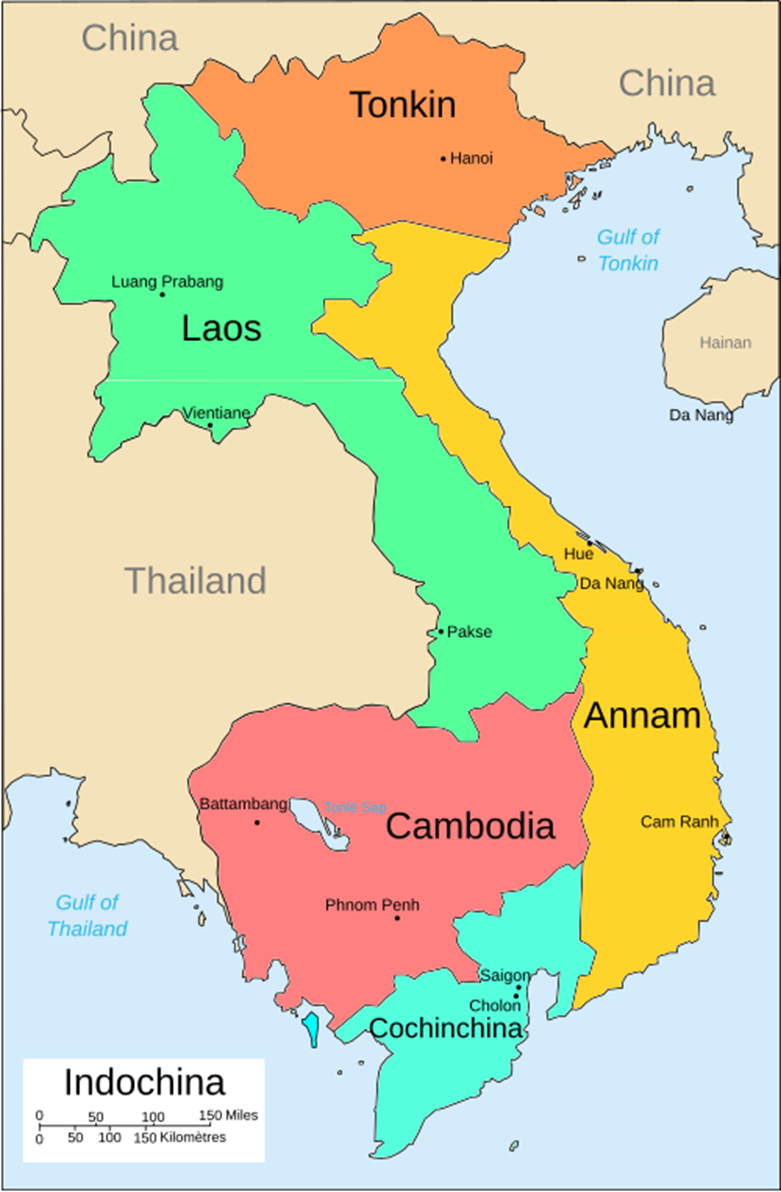
Published in 1933, A l’école des diplomates: La perte et le retour d’Angkor (At the School for Diplomats: The Loss and Return of Angkor) serves as both a memoir and a scathing polemic by Lieutenant-Colonel Fernand Bernard. As the President of the Franco-Siamese Delimitation Commission from 1904 to 1907, Bernard was the architect on the ground of the modern border between Thailand (then Siam) and Cambodia. His book documents the complex, often frustrating diplomatic maneuvers that ultimately led to the “return” of the northwestern provinces—Battambang, Sisophon, and Siem Reap (Angkor)—to Cambodia.

The title itself carries a heavy dose of irony. Bernard does not laud the professional diplomatic corps in Paris; rather, he indicts them. For Bernard, the “School for Diplomats” was not the hushed halls of the Quai d’Orsay, but the rugged, malaria-ridden terrain of the Dangrek Mountains and the tense negotiation tables in Bangkok. His central thesis is stark: the “loss” of Angkor in the 19th century was the result of metropolitan incompetence and abstract theories, while its “return” was the achievement of pragmatic soldiers and colonial administrators who understood the physical and human geography of Indochina.
Part I: The “Loss” — A Century of Diplomatic Failure
Bernard begins his account by dissecting the diplomatic failures of the late 19th century, specifically targeting the policies of the early French Third Republic. He characterizes this era as one of “inane diplomacy,” where French envoys, driven by “Legitimist” or “moderate Republican” ideologies, failed to grasp the realities of Southeast Asian statecraft.
The “Fool’s Bargain” of 1867
The narrative anchors the “loss” of Angkor in the Treaty of 1867. Bernard argues that French negotiators, eager to establish a protectorate over Cambodia, essentially traded away the kingdom’s heartland. By recognizing Siamese “rights” over Battambang and Angkor in exchange for the recognition of the French protectorate over the rest of Cambodia, France codified a territorial loss that had previously been ambiguous. Bernard describes this as a “fool’s bargain,” noting that the Siamese knew their legal titles were weak. He cites correspondence from Admiral Rigault de Genouilly, admitting that while Cambodia’s rights were reserved for other provinces, Battambang and Angkor were effectively abandoned to Siamese administration.
The Failure of Abstract Theory
Bernard identifies three root causes for these early diplomatic disasters:
- Total incomprehension of the reciprocal situations of France and Siam.
- Ignorance of positive interests, specifically the economic and strategic necessity of maintaining a contiguous Cambodia.
- Reliance on inapplicable general theories, which blinded diplomats to the “tit-for-tat” reality of colonial border-making.
He recounts the “De Montigny mission” as a case study in failure, where French representatives were outmaneuvered by Siamese officials who understood that delay and obfuscation were their best defenses against a European power that lacked local knowledge.
Part II: The “Return” — The Treaty of 1907
The core of the book details the grueling process leading to the Treaty of March 23, 1907. This section is not just history; it is a procedural thriller of cartography and coercion.
The Strategic Exchange
Bernard details the high stakes bargaining that defined the 1907 agreement. The French goal was clear: the retrocession of the “Inner Cambodia” provinces (Battambang, Siem Reap, Sisophon). However, France could not simply demand them. The solution was a territorial swap. France agreed to return the district of Krat (Trat) and the region of Dan Sai (Loei) to Siam—territories occupied or claimed by France under the previous 1904 convention—in exchange for the ancient Khmer provinces.
Panic in Bangkok
One of the most vivid passages recounts the negotiations of March 1906. Bernard proposed a border adjustment that would cede Krat but retain Koh Kong for Cambodia, based on ethnic and geographic logic. When this proposal was presented to Prince Damrong (the powerful Minister of the Interior) and Prince Devawongse (Minister of Foreign Affairs), it triggered panic. The Siamese court feared that the French boundary line would bring colonial troops within a few days’ march of Bangkok. Bernard describes the “emotion” of the Siamese princes, who saw existential threats in lines drawn on a map. This reveals the deep paranoia that defined Siamese foreign policy—a fear of “encirclement” that Bernard leveraged to secure concessions.
The End of Extraterritoriality
A crucial, often overlooked aspect of the “return” was the price France paid in judicial sovereignty. To regain Angkor, France agreed to modify the extraterritorial rights it held over “Asian subjects” in Siam. Bernard notes that France effectively relinquished protection over nearly a million people—Laotians, Cambodians, and others living in Siam—handing them over to Siamese jurisdiction. This was the realpolitik trade-off: land for people, the past glory of Angkor for the modern administrative control of the subject population.
Analysis: The War of Maps and the “Geo-Body”
While Bernard’s text is a memoir, modern analysis—as highlighted in the Angkor Database context—reads it through the lens of the “geo-body,” a concept coined by historian Thongchai Winichakul. Bernard’s work is a primary document of how this geo-body was constructed.
Topography vs. Allegiance
The book illustrates the clash between two worldviews. The Siamese and Khmer tradition defined power by allegiance—people belonged to a Lord, not a specific plot of land. Mapping was an alien technology. Bernard and the French surveyors imposed a Western concept: the nation-state defined by fixed, immutable borders (watersheds, mountain ranges).
Bernard mocks the earlier “Survey of Siam” by James McCarthy, an Irish surveyor employed by the Siamese court. He notes that McCarthy’s 1887 map “brazenly” claimed vast territories for Siam based on the maximum extent of tribute, ignoring the fact that these areas were often autonomous or ethnically non-Siamese. Bernard’s mission was to replace these “insolent claims” with “scientific” borders—lines that supposedly followed natural geography but conveniently placed Angkor inside French Indochina.
The Legacy of Ambiguity: Preah Vihear and Koh Kut
Bernard’s account is hauntingly relevant to contemporary geopolitics. He frankly admits the difficulties of drawing lines through the Dangrek Mountains and the maritime zones.
- The Maritime Trap: In 1907, Bernard drew the maritime border opposite the island of Koh Kut. He opted for “ethnic reciprocity,” giving the Khmer-speaking Koh Kong to Cambodia and the Siamese-speaking Krat to Siam. However, the resulting straight-line maritime boundary created the modern dispute over the resource-rich waters in the Gulf of Thailand—a “time bomb” of oil and gas claims that continues to strain Thai-Cambodian relations.
- The Mountain Temples: Similarly, the demarcation along the Dangrek watershed left temples like Preah Vihear in a precarious position. While the 1907 map placed Preah Vihear in Cambodia, the discrepancy between the watershed line and the map line fueled the century-long legal battle that culminated in the International Court of Justice rulings in 1962 and 2013.
The Human Dimension: Princes and Governors
Bernard’s narrative is elevated by his sketches of the key players. He describes Prince Damrong Rajanubhab not just as a stubborn adversary, but as a “budding archaeologist” and nation-builder who understood that losing Angkor was a blow to the Siamese historical narrative, but retaining the “geo-body” of Siam was essential for survival.
He also touches on the tragic figure of Phya Kathathorn, the Siamese governor of Battambang. A personal friend of Prince Damrong, Kathathorn was the last of a line of hereditary rulers who had governed the province as a semi-independent fiefdom under Siamese suzerainty. The retrocession was not just a transfer of land; it was the end of a dynasty. Bernard recounts giving assurances that Kathathorn’s “material and moral standing” would be preserved—a promise that highlights the personal costs buried under diplomatic treaties.
Conclusion: The Triumph of the “Colonial Mind”
A l’école des diplomates is a triumphant defense of the “colonial mind” over the “diplomatic mind.” Bernard argues that it was the soldiers and explorers—those who trekked through the mud, spoke the languages, and mapped the rivers—who secured France’s (and Cambodia’s) greatest prize.
George Coedès, the eminent historian of Southeast Asia, reviewed the book in 1933, calling it the “liveliest” account of the Siamese question. He affirmed Bernard’s thesis: the return of Angkor was not a triumph of Parisian negotiation but of colonial force and cartographic persistence.
For the modern reader, the book is a warning against the simplification of history. The “Return of Angkor” was not a predestined restoration of a lost kingdom. It was a calculated geopolitical transaction, paid for with the abandonment of ethnic minorities in Siam and the sowing of border disputes that remain unresolved today. Bernard’s “School” teaches that in the making of maps, the ink is often mixed with bad blood.
The book in French can be downloaded from Angkor Database website. The page also includes important material to explain the situation in depth.