
A Complex Legacy of Migration and Identity
The Vietnamese Cambodians represent one of Southeast Asia’s most intricate and historically intertwined minority groups. Descended from Vietnamese settlers who began arriving in Cambodia as early as the seventeenth century, their presence is both a testament to centuries of cultural exchange and a reflection of fraught regional politics. Today, there are estimated to be between 400,000 and 700,000 ethnic Vietnamese living across Cambodia, though exact figures vary widely due to issues of statelessness and lack of official documentation.
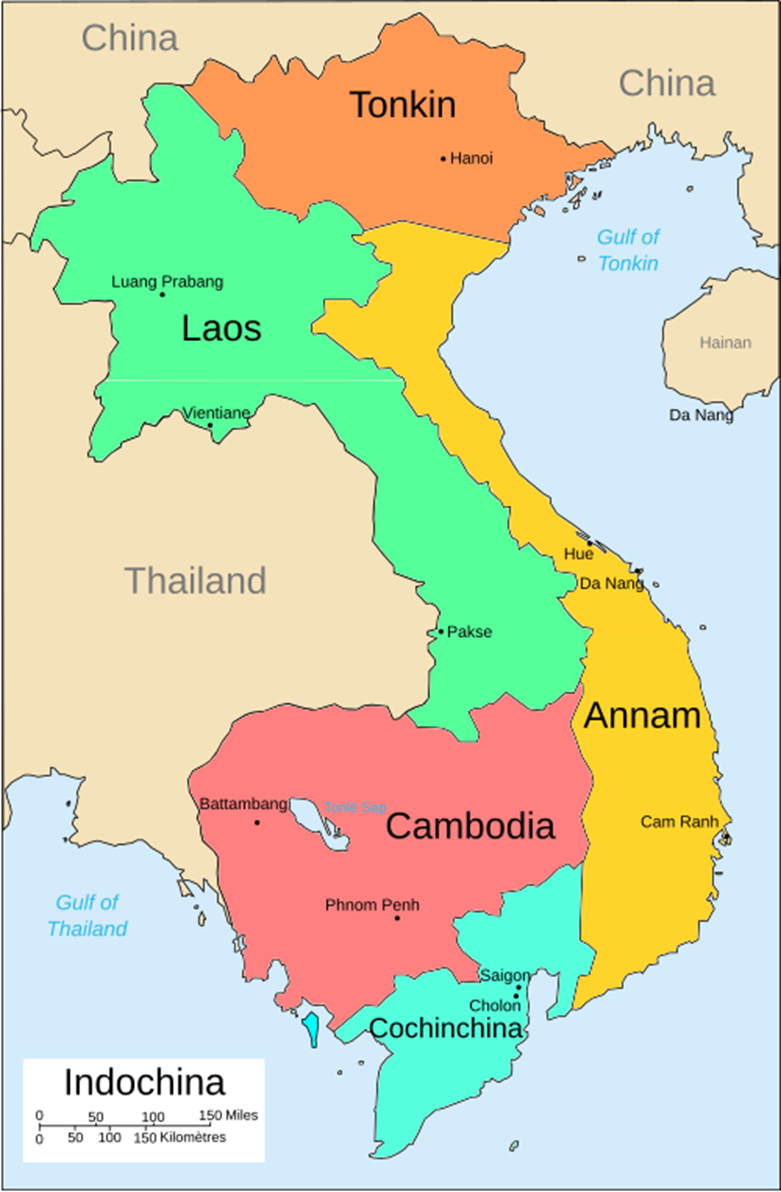
Early Vietnamese settlement in Cambodia dates to the reign of King Chey Chettha II in the 1620s, when he married a Vietnamese princess of the Nguyễn dynasty and granted her people permission to settle in areas such as Mô Xoài and Prey Nokor—modern-day Saigon and southern Vietnam. Over time, waves of settlers continued to move westward, particularly during the French colonial period, when Vietnam, Laos, and Cambodia were unified under French Indochina. The colonial authorities actively encouraged Vietnamese migration to Cambodia to fill administrative and labor positions. By the 1930s, nearly 200,000 Vietnamese were living in Cambodian territories.
War, Expulsion, and Return: The 20th Century Turmoil
The twentieth century brought both expansion and tragedy for the Vietnamese Cambodians. At independence in 1954, new citizenship laws excluded most Vietnamese from Cambodian nationality, effectively rendering them stateless. During General Lon Nol’s regime in the early 1970s, anti-Vietnamese propaganda fueled brutal pogroms that killed tens of thousands, while others fled to Vietnam. Under the Khmer Rouge (1975–1979), the violence escalated into full-scale ethnic cleansing: an estimated 20,000 to 30,000 Vietnamese Cambodians were executed, while most of the remaining population was expelled.
When Vietnamese forces overthrew the Khmer Rouge in 1979, they established the People’s Republic of Kampuchea (PRK). The new administration encouraged former Vietnamese residents to return. Yet many newcomers during this era were not returnees but migrants from southern Vietnam drawn by labor opportunities and open borders. The PRK formally recognized Vietnamese as an ethnic minority and issued identity cards, but anti-Vietnamese sentiment persisted after the Vietnamese military withdrawal in 1989.
Stateless Lives on the Margins
For a large number of Vietnamese Cambodians today, statelessness remains the defining element of their existence. Many live without legal recognition, birth certificates, or access to public services. Cambodian citizenship law still requires fluency in Khmer and proof of birth registration—criteria few in the floating Vietnamese villages around Tonlé Sap or the Mekong can meet. Consequently, most Vietnamese Cambodians cannot attend public schools, own land, or secure formal employment. They often reside in floating settlements built on improvised structures sustained by barrels and bamboo poles—communities excluded both geographically and socially from Cambodian civic life.
Their economic survival relies heavily on fishing, small-scale trade, and menial labor. Overfishing, environmental decline, and increasing restrictions from Cambodian authorities threaten these livelihoods. Public health crises are also common, as many families lack sanitation or access to clinics. NGOs and missionary groups sometimes provide aid, but the community’s vulnerability persists.
Religion and Cultural Identity
Religion among Vietnamese Cambodians adds another layer to their cultural distinctiveness. Most identify with Mahayana Buddhism, distinct from the Theravada tradition of the Khmer majority. Ancestor worship and animist practices, such as offering food or burning paper money for spirits, remain widespread. These customs preserve a cultural link to Vietnam even generations after settlement. Meanwhile, Cambodian society tends to view these practices with suspicion, deeming them foreign or threatening to Khmer identity.
Despite marginalization, the Vietnamese in Cambodia have managed to sustain their language and traditions. In areas with larger concentrations, particularly around Phnom Penh and southeastern provinces, Vietnamese-language schools and temples exist—though they operate privately and often unofficially. This layered cultural autonomy reinforces community cohesion but intensifies perceptions of separateness within broader Cambodian society.
Between Politics and Prejudice
Since the 1990s, anti-Vietnamese sentiment has become an enduring theme in Cambodian politics. Opposition parties frequently use accusations of “Vietnamese encroachment” to stoke nationalist resentment against the ruling government, which is viewed as being too close to Hanoi. Vietnamese Cambodians, despite being largely apolitical, often become targets of harassment or scapegoating during election cycles. These tensions stem not only from historical memory but also from unresolved border issues and unequal developmental dynamics along the Mekong.
Yet on an individual level, relations between ordinary Cambodians and Vietnamese can be surprisingly pragmatic. Daily commerce, intermarriages, and cooperative fishing ventures thrive along local waterways. The Vietnamese presence continues to shape Cambodia’s urban and rural landscapes—restaurant businesses, small shops, and river trading networks remain vital to local economies.
In recent years, some progress has been made regarding documentation and human rights. International NGOs, such as Minority Rights Group International and Human Rights Watch, have pressured Cambodian authorities to grant legal recognition to stateless Vietnamese. Pilot programs began issuing temporary identity documents in some provinces, yet bureaucratic obstacles and local resistance stall any large-scale reform. The younger generation—often fluent in Khmer and educated in bilingual settings—expresses mixed identities, identifying as both Vietnamese and Cambodian. However, without citizenship, their future prospects remain uncertain.
Modern Vietnamese migrants—students, investors, and workers—should not be confused with the stateless communities. These new arrivals legally hold Vietnamese citizenship and generally integrate into Cambodia’s growing urban economy with fewer barriers. In contrast, the Vietnamese Cambodians of Tonlé Sap or Kampong Chhnang live outside state protection, often for generations.
The story of Vietnamese Cambodians is one of endurance in the face of displacement, discrimination, and statelessness. From 17th‑century royal alliances to colonial labor migrations, from genocide to gradual reintegration, this community has been both a bridge and a mirror reflecting the complex relationship between Cambodia and Vietnam. Their identity—fluid, resilient, and deeply tied to water—is shaped by centuries of coexistence and exclusion.
Living between two nations and two rivers, the Vietnamese of Cambodia continue to seek the fundamental right that has eluded them for so long: the right to belong.