The modern armed forces of Cambodia, officially known as the Royal Cambodian Armed Forces (RCAF) (Khmer: កងយោធពលខេមរភូមិន្ទ), are at once a product of a long and difficult history and an institution that continues to evolve in the face of new challenges. The nation’s military, like Cambodia itself, is shaped by centuries of conflict, colonialism, civil war, foreign intervention, and finally national reconciliation. Today, the armed forces stand as a central pillar of state sovereignty, a symbol of Cambodian resilience, and a protector of both domestic security and national interests.

Historical Roots
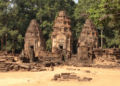
The roots of Cambodia’s military history reach back to the ancient Khmer Empire, when armies defended and expanded one of Southeast Asia’s most powerful kingdoms. The warriors of Angkor, skilled in elephant warfare and regional conquest, extended their influence over much of mainland Southeast Asia. Military power was essential to the glory of Angkor’s temples, cities, and economic networks.
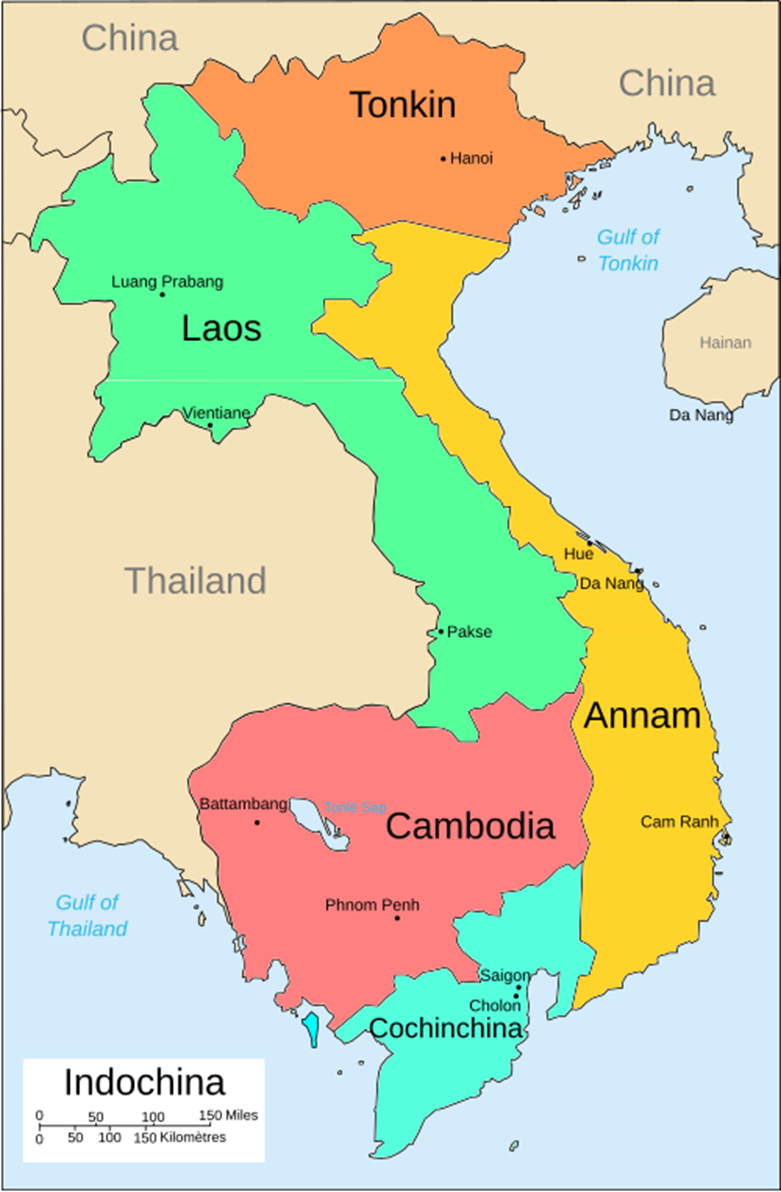
In subsequent centuries, Cambodia became weaker, caught between the rival powers of Siam (Thailand) and Vietnam. Military autonomy diminished as Cambodia fell under foreign domination or protectorate status. With the arrival of the French in the mid-19th century, a small indigenous military force was maintained under colonial supervision. Cambodian soldiers also served in the French army during conflicts such as the First Indochina War.
Yet it was only after independence in 1953 that Cambodia began to re-establish its own national armed forces. Prince Norodom Sihanouk built up the Royal Khmer Armed Forces during his neutralist regime, emphasizing loyalty to the monarchy. In the 1960s, Cambodia’s military faced internal dissent and the growing pressures of the Vietnam War, as North Vietnamese sanctuaries spread into Cambodian territory.
After the 1970 coup d’état led by General Lon Nol, Cambodia entered a devastating civil war. The Khmer Republic created its own armed forces to fight the communist insurgency, but these collapsed by 1975 under the pressure of the Khmer Rouge offensive. When Pol Pot’s Khmer Rouge seized power, they created the Revolutionary Army of Kampuchea, one of the most brutal institutions of the period. This was a force dedicated to ideological control as much as national defense, and it became deeply entwined with the terror of the regime.
In 1979, Vietnamese forces overthrew the Khmer Rouge and installed the People’s Republic of Kampuchea. The new government relied heavily on the presence of Vietnamese troops, though a Cambodian People’s Armed Force was also created. Throughout the 1980s, various resistance armies, including remnants of the Khmer Rouge, non-communist groups, and royalist fighters, waged a guerrilla struggle against the Vietnamese-backed state.
The peace process of the early 1990s transformed the military situation entirely. Following the Paris Peace Agreements in 1991 and the UN-supervised elections of 1993, Cambodia re-established the monarchy and created the Royal Cambodian Armed Forces by integrating four previously hostile factions into a single national military. This was an unprecedented act of reconciliation, though the process was not without tensions, violence, and political compromise.
Modern Structure
Today, the structure of the Royal Cambodian Armed Forces reflects both tradition and modernization. The RCAF is divided into four main branches: the Royal Cambodian Army, the Royal Cambodian Navy, the Royal Cambodian Air Force, and the Royal Gendarmerie. Each branch operates under the direct command of the Ministry of National Defense, with the King serving as nominal Commander-in-Chief, a symbolic reminder of the monarchy’s restored role. Since 2018, General Vong Pisen has been the Commander-in-Chief of the RCAF.
The largest component is the Royal Cambodian Army, with ground troops deployed across the provinces. Their duties include guarding borders, suppressing insurgency, and providing security in rural areas. The Cambodian Navy, though modest, has a critical mission in protecting the long Mekong River system and Cambodia’s small but strategically significant coastline on the Gulf of Thailand. The Air Force maintains limited aviation assets, primarily transport aircraft and helicopters, though plans for modernization are ongoing. The Gendarmerie functions as a paramilitary police force, dealing with internal security, crime control, and riot management.
The RCAF also relies on a system of regional commands, ensuring that troops remain embedded within different provinces. Many units maintain historical ties to the factions from which they were originally drawn, though over time integration and loyalty to the central state have grown stronger.
Internal Role and Domestic Security
Unlike larger militaries in the region, Cambodia’s armed forces have often been more engaged in internal security than in foreign wars. The memory of decades of civil conflict has left the military deeply entwined with politics. The armed forces are seen not just as defenders of the nation’s borders but also as guarantors of stability in times of political tension.
During periods of unrest or demonstrations, the RCAF and the Gendarmerie have been mobilized to ensure order. Critics argue that the military remains too closely linked to political elites, particularly the ruling Cambodian People’s Party, yet it is undeniable that the army provides a sense of authority that many Cambodians see as necessary for national unity.
The military is also deeply involved in non-combat roles. Soldiers are frequently deployed for disaster relief during floods, storms, or epidemics. In rural areas, they participate in road construction, demining operations, and public health campaigns. The demining effort has been one of the RCAF’s most visible contributions, as Cambodia remains one of the most heavily mined countries in the world. Thousands of square kilometers have been cleared thanks to the combined work of the armed forces and humanitarian organizations.
Training, Modernization, and International Cooperation
Since the 1990s, Cambodia has sought to modernize its armed forces while maintaining cost efficiency. The country’s defense budget remains modest by global standards, but selective investment in professionalization and improved equipment has taken place. Training partnerships with neighboring countries, as well as international peacekeeping cooperation, have become important pathways for development.
Cambodia has also contributed troops to United Nations peacekeeping missions abroad, from Africa to the Middle East. These deployments provide valuable experience, expose Cambodian soldiers to multinational cooperation, and offer the government a chance to demonstrate responsibility in global affairs. For a country once torn apart by war, the sight of Cambodian peacekeepers abroad carries a profound symbolic weight.
The Armed Forces and National Identity
The Cambodian Armed Forces are more than a state institution; they are part of how Cambodia sees itself. After centuries of disunity, foreign control, and internal strife, the existence of a unified national military is a reassuring expression of sovereignty. The uniforms, parades, and ceremonies evoke national pride and create a direct connection to the monarchy, particularly in moments of remembrance such as Independence Day.
Yet the role of the RCAF is complex. Ordinary Cambodians often respect soldiers as protectors, but they also view them through the lens of political power. Veterans of past struggles, from the resistance days of the 1980s to the integration of the 1990s, hold important positions in government and local society. The military is therefore not only a defense apparatus but also a social force with deep connections to rural communities.
Challenges Ahead
Cambodia’s armed forces continue to face significant challenges. Modernization requires funding and investment in technology, yet economic constraints limit how fast this can progress. Training and professionalization must also keep pace with regional developments, as neighboring militaries expand their capabilities.
Border issues with Thailand and Vietnam occasionally flare, underscoring the importance of defense readiness. At the same time, Cambodia is confronted with non-traditional threats: illegal logging, human trafficking, cross-border crime, and the impacts of climate change. The military must adapt its role to confront these dangers, working in cooperation with civilian institutions and international partners.
Another challenge is balancing loyalty to the state with neutrality in politics. The military’s credibility will rely on its ability to serve as a professional, national institution rather than a party-based organization. As Cambodia develops and society changes, pressure for accountability and transparency in the armed forces is bound to grow.
Conclusion
The story of the Cambodian Armed Forces mirrors the greater journey of the nation: survival, adaptation, and the pursuit of unity. From Angkor’s ancient warriors to the modern RCAF, Cambodia’s soldiers have always carried the heavy burden of defending a small but resilient nation caught between larger powers. The present military remains both a protector of sovereignty and a reminder of a history marked by division and reconciliation.
In times of peace, the RCAF continues to stand as a symbol of national pride, contributing not only to defense but also to the reconstruction and daily life of Cambodia. In their evolving mission, Cambodia’s armed forces express the nation’s determination to preserve independence, safeguard stability, and shape a future of greater confidence in the region.