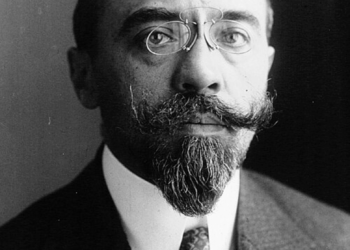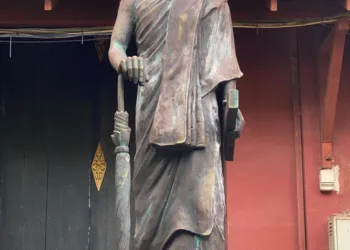

Auguste Pavie, born on May 31, 1847, in Dinan, France, and passing away in 1925, stands as a pivotal figure in the history of Southeast Asia. Best remembered as a French explorer, colonial civil servant, and diplomat, Pavie’s career left an indelible imprint on Cambodia and the broader region of French Indochina. His legacy in Cambodia is particularly significant, not just for his role in French expansion but also for his approach to exploration, administration, and his remarkable sensitivity to local cultures[1][2][3].
Early Life and Path to Cambodia
Pavie’s journey began in 1869 when, as a sergeant in the French marines, he was assigned to Cochinchina — colonial southern Vietnam at the time. His talents soon shifted him to the Post and Telegraphic Department, an institution at the heart of France’s expanding communication network in Southeast Asia. He played an instrumental role in constructing telegraph lines, connecting Phnom Penh, the Cambodian capital, with major cities such as Saigon and Bangkok by 1882. This practical assignment would bring him to travel extensively through Cambodia, Siam (now Thailand), and Vietnam, endowing him with firsthand knowledge of the region’s geography and ethnic mosaic[1][3][4].
Immersion in Cambodian Culture
Unlike many colonial agents of his era, Pavie gained notoriety among his French compatriots for his willingness to “go native.” Posted in the remote telegraph station at Kampot, southern Cambodia, he immersed himself in local customs and languages. This period marks the genesis of his admiration and profound respect for Cambodian culture, which would shape his subsequent work and writings. Pavie collected local folktales, manuscripts, and ethnographic notes, providing rare glimpses into Cambodian traditions for French and Western audiences[3][5].
His immersion went beyond passive appreciation — he actively collaborated with Cambodians, building trust not only with local workers and informants but also with the broader communities that would become central to his diplomatic missions.
The “Missions Pavie” and Geographic Contributions
The so-called “Missions Pavie,” a series of major exploratory and diplomatic ventures conducted between 1879 and 1895, were launched under Pavie’s leadership. The first of these — occurring from 1879 to 1885 — focused specifically on Cambodia and southern Siam. During this time, Pavie traveled thousands of kilometers by foot, raft, and elephant, recording topographical, botanical, archaeological, and ethnographic data[2][6][7].
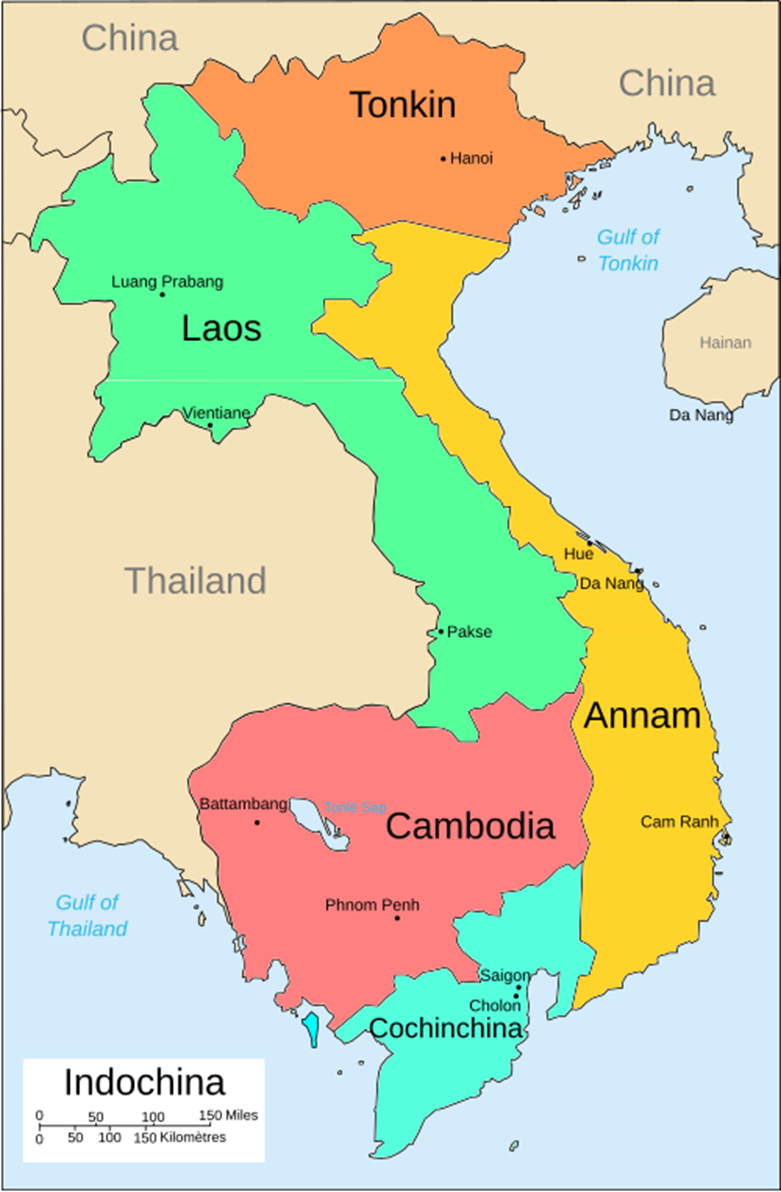
His efforts enabled the French to create the first comprehensive map of Indochina, an achievement of significant geopolitical value. Through his explorations, Pavie solidified the geographical understanding necessary for France’s colonial ambitions but also generated considerable scientific knowledge, training a cadre of local and French assistants who would become experts in their own right[3][7].
Cultural Preservation and Folklore
Pavie’s Cambodian legacy extends into the realms of folklore and anthropology. He actively collected stories, such as Khmer folktales, leading to their preservation, study, and ultimate publication. One famous collection, “Vorvong & Saurivong,” was directly attributed to Pavie’s fieldwork in Cambodia in the early 1880s[5]. His published mission reports — eleven volumes released between 1898 and 1919 — represent a trove of evidence on Cambodian cultural and social life at the end of the 19th century.
Infrastructure and Diplomatic Work in Cambodia
While his explorations were notable, Pavie’s impact on Cambodian infrastructure was no less significant. He oversaw the construction of the telegraph line from Phnom Penh to Bangkok, a 1,200-kilometer endeavor that connected the Cambodian capital to regional power centers and laid the groundwork for modern communication in the country[2][3][4].
Pavie’s success in this technically and logistically daunting project earned him significant recognition, prompting his transfer into the diplomatic corps and eventual leadership in the most sensitive regions of Indochina, including Laos.
Relationships with Cambodian Elites and the Local Population
Pavie’s approach to diplomacy has often been called “la conquête des cœurs” or the “winning of hearts.”[2][6] Unlike many contemporaries, Pavie did not impose French rule by brute force or arrogance, but through alliance-building, respect for local customs, and the gradual negotiation of Cambodian and Lao allegiance. Many Cambodian notables and future elites were acquainted with Pavie and even traveled with him to France to receive training — a practice that contributed to the creation of the École Cambodgienne in Paris, which he founded in 1885. This institution was purposely designed to train both French and indigenous students in administration and the sciences necessary for colonial governance[3].
Pavie’s Transition to Laos and Broader Indochina
By the mid-1880s, Pavie’s career shifted north to Laos, where he became the first French vice-consul in Luang Prabang, and later a critical player in the Franco-Siamese crisis of 1893. However, his legacy in Cambodia continued as he remained influential in networks that bridged Cambodian, Lao, and Vietnamese communities[1][2][8].
His method of indirect rule — relying on local elites and administrative continuity — would later be replicated by other colonial administrators throughout French Indochina. This model allowed indigenous structures to persist under a French umbrella, creating a distinctive, hybrid colonial culture[4].
Lasting Influence and Published Legacy
After his return to France in 1895, Pavie dedicated himself to editing and publishing the records of his expeditions. These include the expansive “Mission Pavie Indochine, 1879–1895,” influencing generations of historians, geographers, and ethnographers interested in Cambodia and its neighbors. The volumes stand as foundational works for the study of Cambodian history, folklore, and social organization at a critical moment of colonial transition[3][7].
His ethnographic photographs, including early images of Cambodian minorities such as the S’aoch, also constitute some of the earliest visual records of these communities[9].
Conclusion
Auguste Pavie’s work in Cambodia forms a remarkable chapter in the annals of colonial exploration and administration. While indelibly tied to the imperial ambitions of nineteenth-century France, Pavie distinguished himself by his empathy, scholarly curiosity, and respect for the peoples of Cambodia. His efforts helped lay the foundations for Cambodia’s integration into wider regional and global networks while also providing some of the first systematic studies of its culture and society. Today, his writings and photographs remain invaluable resources for understanding Cambodian history and the complexities of early globalization in Southeast Asia[2][3][5][7][9].
- https://www.britannica.com/biography/Auguste-Pavie
- https://en.wikipedia.org/wiki/Auguste_Pavie
- https://angkordatabase.asia/authors/auguste-pavie
- https://www.luangprabangculture.com/the-french-period.html
- https://angkordatabase.asia/books/vorvong-saurivong-a-cambodian-tale
- https://www.wikiwand.com/en/articles/Auguste_Pavie
- https://catalogue.nla.gov.au/catalog/3262736
- https://www.lamaisonpavie.com/en/history-house-auguste-pavie-dinan-france/
- https://cambodianess.com/article/the-saoch-the-story-of-a-minority-in-cambodia-as-old-as-the-khmers-who-have-faded-away