This week’s Pictures of the Week offer a particularly Cambodian mix: street-side modernity, distinctive local dishes, river delicacies, seasonal plants, and royal history. From Phnom Penh to Kampong Thom and beyond, these images show how Cambodia’s past and present continue to sit comfortably beside each other.
“EV Charging Station Near Wat Phnom” captures a small but telling sign of change in Phnom Penh. Near one of the capital’s oldest and most recognizable landmarks, an electric vehicle charging station quietly represents Cambodia’s growing embrace of cleaner urban transport.
“Snail Curry at Bai Sor Restaurant” takes us straight into the adventurous side of Khmer cuisine. Snails may surprise visitors unfamiliar with Cambodian food, but their appearance in a curry reflects the country’s long tradition of turning locally available ingredients into flavorful, comforting dishes.
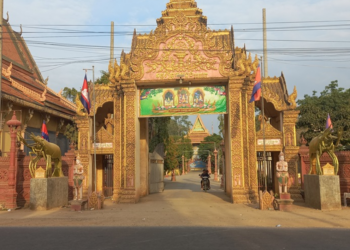
“Wat Prek Bangkang’s Giant Mekong Lobsters” presents an unexpected sight at Wat Prek Bangkang pagoda: enormous lobster statues standing in front of the pagoda. More than a curious piece of decoration, these sculptures evoke the importance of the Mekong and Cambodia’s rich aquatic world while adding a playful touch to the temple grounds.
“Tamarind Leaves in Traditional Khmer Cuisine” reminds us that Cambodian cuisine begins long before the cooking pot. Young tamarind leaves bring a distinctive sour note to traditional dishes, illustrating the Khmer talent for finding flavor in ordinary plants growing around villages, gardens, and fields.
“Oy Moy Tree in Bloom in Cambodia” shifts the mood from the kitchen to the countryside. The delicate blossoms of this Cambodian tree offer a fleeting seasonal spectacle, showing how even familiar roadside vegetation can become a source of quiet beauty when seen at the right moment.
“Beef Innards Salad from Kampong Thom” brings us back to the communal pleasures of Cambodian food. With its combination of beef offal, fresh herbs, vegetables, and bold seasoning, the dish reflects a culinary culture that values texture, strong flavors, and the generous use of every part of an ingredient.
“King Sisowath Statue at RUFA in Phnom Penh” closes the week with a reminder of Cambodia’s royal past. The image of King Sisowath adds a historical dimension to this collection, linking contemporary Phnom Penh with the monarchy and the political and cultural transformations of the early twentieth century.
Taken together, these seven images reveal a Cambodia that is impossible to reduce to a single postcard. Electric vehicles and royal statues, river lobsters and sour tamarind leaves, flowering trees and boldly seasoned salads all belong to the same living landscape. That mixture of continuity and change is perhaps one of the most interesting things to notice when looking at Cambodia closely.