This week’s Pictures of the Week from Wonders of Cambodia move gently between kitchen, garden, and street, revealing how daily life is shaped by taste, memory, and place. From simmering broths to rooftop greens and fading architecture, each image offers a small but vivid window into Cambodian life.
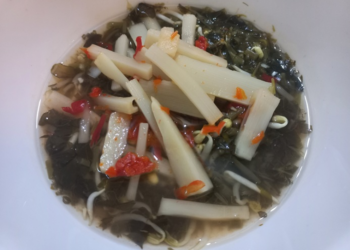
In “Ngam Ngov Chicken Soup: Comforting Cambodian Lime Broth”, a humble bowl becomes a story of balance and care. The clear broth, lifted by lime and herbs, reflects a cuisine that values freshness and restraint, where comfort is found in clarity rather than richness.
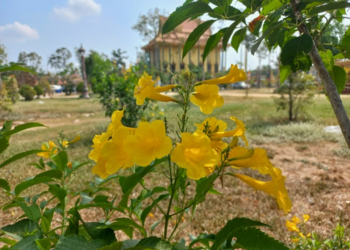
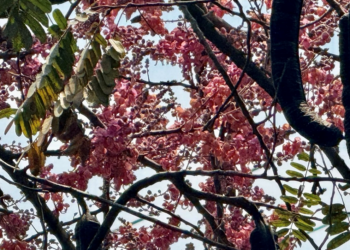
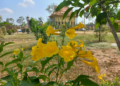
A softer, quieter beauty appears in “Moss Rose Blooms in Cambodia’s Morning Light”. These delicate flowers, opening with the sun, echo the rhythms of tropical mornings, where even the smallest plants add color and calm to everyday surroundings.
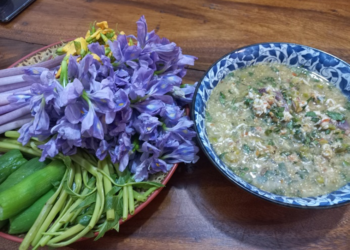
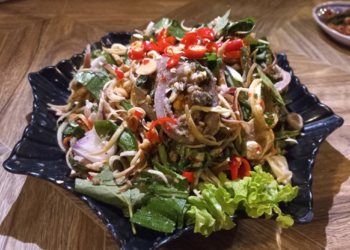
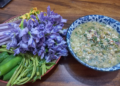
Food turns sociable in “Prahok Khtis, Creamy Cambodian Dip with Fresh Garden Vegetables”. The rich, savory dip paired with crisp vegetables speaks of shared meals, where bold flavors are balanced by freshness and where eating is as much about gathering as it is about taste.
Urban life finds its own form of cultivation in “Malabar Spinach Thrives on Phnom Penh’s Urban Rooftop”. Against a backdrop of concrete and sky, green vines climb and flourish, showing how even dense cities make room for small, personal agriculture.
Tradition and ritual come forward in “Cooking Ansam for Pchum Ben in Rural Cambodia”. Wrapped carefully and prepared in batches, these sticky rice cakes carry deep spiritual meaning, linking food with remembrance and the honoring of ancestors.
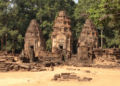
A different kind of memory lingers in “Fading Colonial Villa in Historic Angkor Borei”. Weathered walls and quiet decay tell a story of layered history, where past eras remain visible, not as monuments but as part of the lived landscape.
Finally, in “Stuffed Khmer Wax Gourd with Pork and Vermicelli”, the harmony of ingredients reflects the Khmer approach to cooking: practical, seasonal, and deeply tied to what grows nearby. The dish feels both nourishing and rooted, a continuation of everyday culinary knowledge.
Together, these images trace a gentle arc through Cambodian life, where food, plants, and places are inseparable from memory and identity. Whether in a rural kitchen, a city rooftop, or a quiet historical corner, each scene shows a culture grounded in care, continuity, and subtle beauty.