Each week, these pictures capture a different face of Cambodia – what the lens notices when it pauses between the temples and the traffic. This week in May, the camera turned its attention to blossoms, bowls, and the quiet interplay between the human and natural worlds – a week of gardens, meals, and moments etched in stone.
“Rangoon Creeper Blossoms in a Cambodian Garden” opens the week with star-shaped blooms shifting from pale to vivid pink as the day heats up. The vine threads over fences and walls, bringing gentle fragrance to tropical evenings, a patient rhythm that belongs to the everyday life of Cambodian gardens.
“Bavette Steak Bliss at O’Fun Phnom Penh” offers a different kind of comfort – golden fries beside a well-seared steak in the capital. French influence still lingers on Cambodian plates, proof that honest food needs no fuss, just the right heat and timing.
“White Guava Blossom in Cambodia – Nature’s Delicate Star” reveals the architecture of fruit in the making. Hundreds of cream-white stamens radiate outward from the center, each filament precise and delicate, appearing in late spring when the heat coaxes the trees into bloom.
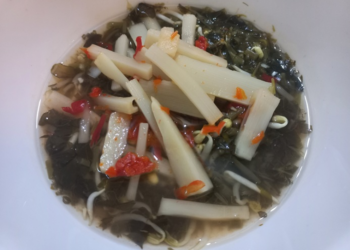
“Cantonese Pickled Vegetable Pig Stomach Soup in Phnom Penh” brings the week back to the table with a clear broth, ginger, lotus seeds, and tender offal. The gentle tang of pickles balances clean sweetness, the kind of understated comfort that Cantonese families carry across borders and rebuild in new kitchens.
“Bright Purslane Blossoms in a Cambodian Garden” spills color over cement edges in quiet Phnom Penh corners. Common purslane, known locally as ផ្កាម៉ោងប្រាំបី, thrives in the smallest spaces, its bright petals a reminder that beauty doesn’t wait for formal gardens.
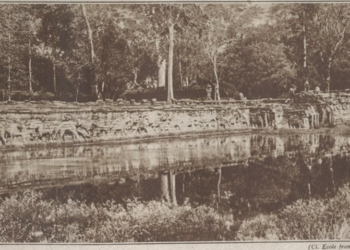
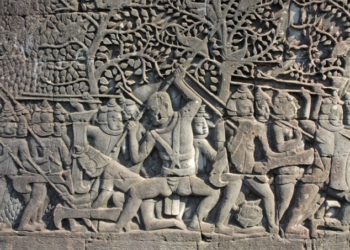
“Khmer Archers and Crossbowmen at Bayon” shifts the frame to carved stone, where warriors advance in tight formation across a bas-relief. The detail in their weapons and posture speaks to the storytellers who worked sandstone centuries ago, preserving military history in temple walls.
“Bilimbi Tree in Phnom Penh’s Royal Palace” closes the week within palace grounds, where a bilimbi tree stands heavy with sour green fruit. Used in Khmer cooking for its sharp tang, the tree bridges ornamental royal gardens and the practical flavors of everyday Cambodian kitchens.
Together, these seven images map a week that moved between wild vines and cultivated grounds, between ancient carvings and contemporary kitchens. They remind us that Cambodia reveals itself not only in grand monuments but in the small dailiness of blossoms opening, soups simmering, and fruit ripening in the afternoon heat.