“Weaving a Straw Mat near Phnom Penh, Cambodia” opens this week’s journey with the rhythm of patience and tradition. The weaver’s hands move steadily across pale reeds, forming neat, sun‑colored patterns that echo Cambodian resilience and rural beauty. Each mat tells a story of home life, of evenings spent close to the earth.
From there, city life comes alive in “Street Fruit Cart in Phnom Penh – A Colorful Daily Market Scene”. Mangos, pineapples, and dragon fruit burst with tropical light against a backdrop of scooters and laughter. The image captures Phnom Penh’s informal economy at its most charming — mobile, friendly, and full of scent.
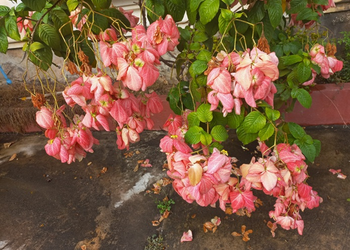
In contrast, “African Tulip Tree in Bloom, Phnom Penh” shows how nature brings its own carnival to the capital. The flame‑orange blossoms spill over rooflines, softening the city’s edges and reminding us that Cambodia’s urban spaces still pulse with green life and tropical rhythm.
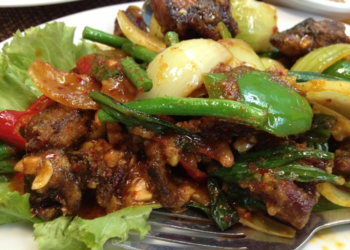
Heading south, “Grilled Mekong Lobster Feast in Takeo Province” evokes the rustic pleasure of riverside cooking. The smoky sheen of the grilled lobsters speaks of community meals, of afternoons by the water where food is both sustenance and celebration.
A gentler mood follows in “Mekong Lobster Soup – A Comforting Cambodian River Feast”. The bowl’s golden broth mirrors the tones of sunset over the Mekong — warmth, generosity, and quiet pride in local ingredients. Together, these two river dishes form a portrait of Cambodia’s culinary heritage: refined in flavor, humble in spirit.
Turning northward, “Khmer Warrior vs Demon at Banteay Chhmar” recalls the grandeur of the Angkorian past. The stone figures, locked in eternal combat, reflect moral and cosmic struggles carved deep into Khmer imagination — strength through balance, and beauty through endurance.
Finally, “Screw Press of King Ang Duong, 1853” brings us into the 19th‑century age of renewal. This delicate relic of metalwork and invention links Cambodia’s royal craftsmanship to emerging technological awareness, bridging artistry and modernity before the colonial era.
Taken together, this week’s images thread through past and present — from woven straw and grilled lobster to Angkorian carvings and royal machinery. They remind us that Cambodia’s wonders lie not only in temples or monuments but also in food, foliage, and the enduring creativity of its people.