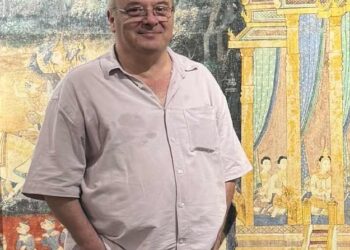
In this exclusive Khmer-language interview with Thmey Thmey, Pascal Médeville shares his experience as contributor and translator to the collective book «អង្គរក្នុងការចងចាំ» (“Angkor in Our Memories”), and discuss how Angkor continues to live in Cambodian minds and everyday life.
In this Khmer-language interview with Cambodian news outlet Thmey Thmey, Wonders of Cambodia founder Pascal Medeville speaks about his participation in the book «អង្គរក្នុងការចងចាំ» (“Angkor in Our Memories”). The conversation unfolds entirely in Khmer, offering viewers a direct window into how Angkor is discussed within Cambodian society today.
«អង្គរក្នុងការចងចាំ» is a collective work bringing together several authors who explore Angkor’s role in Cambodia’s memory, identity, and daily life. Rather than being the main author, Pascal contributes a selection of articles and translations, adding his voice alongside Cambodian and other contributors. His pieces help connect historical and cultural perspectives with observations drawn from time spent in and around the Angkor temples.
During the interview, the discussion focuses on the central idea of Angkor as a living presence, not just an archaeological site or a tourist icon. The interviewer and Pascal touch on themes such as how Angkor appears in family stories, local rituals, and contemporary public debates about heritage and identity. By presenting these reflections in Khmer, the book and the interview aim first of all at Cambodian readers and viewers, who carry Angkor as part of their own collective experience.
This dialogue fits closely with the mission of Wonders of Cambodia: to go beyond postcard images and highlight the depth of Cambodia’s cultural conversations. Sharing a Khmer-only interview about a Khmer-language book also underlines a simple but important point: some of the richest insights about Angkor are expressed within Cambodia itself, in Khmer.
If you understand Khmer, we invite you to watch the full interview and explore «អង្គរក្នុងការចងចាំ», paying attention to the variety of voices gathered in the volume. For readers who do not yet read Khmer, Wonders of Cambodia will continue to share key ideas and themes in English and French, while always keeping Cambodian perspectives at the heart of the story.