A cunning rabbit tricks a lovestruck gecko with promises of an Angkor bride in this sharp and humorous Khmer folktale.
Khmer folklore is filled with clever animal tales where wit often triumphs over strength. Among them, the story of the rabbit and the gecko stands out for its humor, symbolism, and its subtle warning about desire and gullibility.
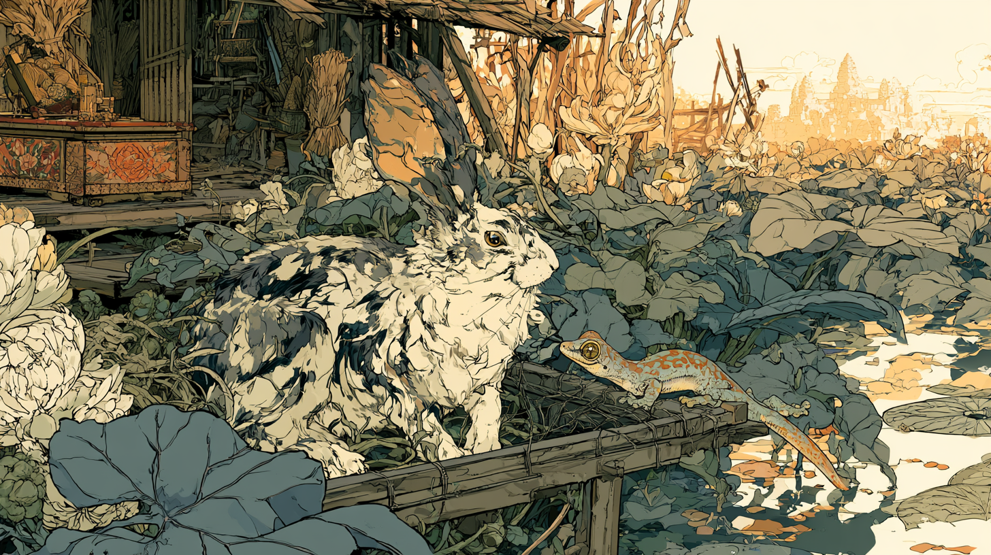
One morning, an old man rose early, prepared his betel quid, and hurried to inspect his cucumber field. To his frustration, the crops had been eaten – again – by a rabbit. Regretting his missed chance at a rabbit stew, he set a trap and waited.
That night, the rabbit returned, driven by hunger. Forgetting the danger, it slipped into the field and stepped straight into the trap. Its leg was caught. Panic followed.
Nearby, the gecko noticed the struggling rabbit. Delighted, it clapped and mocked it: “You always trick others – now look at you! Who will save you this time?”
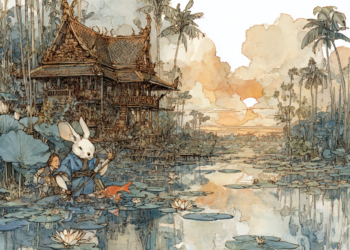
Though angered, the rabbit stayed composed. With calculated calm, it replied, “Before, I tricked you because I lacked knowledge. But this time, I speak the truth. I have found a beautiful young woman – her cheeks like blooming roses – and I can arrange for her to marry you.”
The gecko froze. A bride?
The rabbit continued smoothly: “I have already spoken to her family. They agreed. Just free me from this trap, and I will go finalize everything.”
The gecko hesitated. “Do not deceive me again,” it warned.
“Not this time,” said the rabbit. “In Angkor, there are countless maidens. Even without me, you could find one yourself. Brides are plentiful – ‘ten maidens for a measure,’ as people say.”
This phrase, still remembered in Khmer oral tradition, evokes abundance – though here it serves as bait.
Overcome by desire, the gecko released the trap.
The moment it was free, the rabbit leapt away and shouted back, “You foolish gecko! With your rough skin, who would give you a bride? I deceived you!”
The gecko was humiliated and furious. It nearly dashed itself against the ground in despair. Yet the dream of an Angkor bride persisted. Determined, it set off on a journey.
Along the way, it met a dung beetle, who asked where it was going. “To Angkor, to find a wife,” the gecko replied proudly. The beetle, amused, hinted at the absurdity of the idea. But the gecko pressed on, blinded by its ambition.
It crossed waters and marshes, telling every creature it met about its quest. Eventually, it encountered a large fish. Without hesitation, the fish swallowed the gecko whole. And so ended its journey.
This tale reflects a familiar structure in Khmer storytelling. The rabbit plays the role of the clever trickster – resourceful, quick-thinking, and morally ambiguous. The gecko, in contrast, represents impulsive desire and susceptibility to illusion.
The reference to Angkor is significant. In folklore, Angkor often symbolizes abundance and opportunity, sometimes exaggerated into a near-mythical place where anything seems possible. Here, it becomes the setting of a promise too good to be true.
The expression “kramom dop muoy sleng” (maidens by the dozen) survives as a humorous saying in Khmer culture, often used to mock unrealistic expectations or exaggerated claims.
Beneath its humor, the story offers a clear lesson: deception succeeds when desire overrides judgment. The gecko is not merely a victim of the rabbit’s trick – it is undone by its own willingness to believe in an illusion.
As with many Cambodian folktales, the message is delivered not through solemn instruction, but through wit, exaggeration, and a touch of cruelty – making the lesson all the more memorable.