Introduction
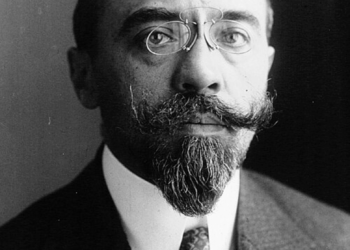
Étienne Edmond Lunet de Lajonquière (1861–1933) was a multifaceted French figure—military officer, archaeologist, ethnographer, explorer, and historian—who played a pivotal role in the early exploration, documentation, and preservation of Southeast Asian monuments and cultures. His contributions are foundational to the understanding of the archaeological and ethnographic tapestry of Indochina and Southeast Asia, and his meticulous work remains crucial for contemporary researchers and heritage conservationists[1][2].
Early Life and Military Career
Born on August 8, 1861, in Rodez, France, Lunet de Lajonquière was the son of Jean Baptiste François Régis Lunet Lajonquière and Rose Elisabeth Rossignol[1]. From a young age, he exhibited a strong inclination towards public service, ultimately embarking on a military path. He entered the French Marine Infantry and attended the École d’Infanterie de Saint-Maixent, a prominent French military academy. Beginning his professional journey in the early 1880s, he successively rose through the ranks:
- 1883: Appointed Sous-lieutenant of Marine Infantry
- 1885: Promoted to Lieutenant
- 1892: Elevated to Captain in the 7th Marine Infantry Regiment
He served both in France and in the expanding French colonial territories, spending significant time in Annam, Tonkin, and the broader Indochinese region[1].
Transition to Exploration and Research
Lunet de Lajonquière’s military career soon intersected with his burgeoning interest in Southeast Asian cultures and antiquities. His expertise and leadership led to assignments in regions rich with archaeological wonders, soon making him an integral part of several exploratory missions.
The Indochina Mission
In 1893, Lunet de Lajonquière joined the archaeological mission in Indochina that would ultimately evolve into the École française d’Extrême-Orient (EFEO), the prestigious French School of the Far East. His involvement was pivotal from the outset; he collaborated closely with Louis Finot, the first director of EFEO, and developed friendships and professional ties with other key figures dedicated to the study and preservation of the region’s heritage[1].
During his time at the EFEO, Lunet de Lajonquière became renowned for his rigorous and systematic approach to documenting monuments, peoples, and customs. He is remembered as a “nomad of the ruins”, tirelessly charting, photographing, and describing countless sites throughout Vietnam, Cambodia, Siam (Thailand), and Malaya[1][2].
Major Contributions
Archaeological Surveys and Inventories
Lunet de Lajonquière is perhaps most celebrated for his comprehensive monuments inventories:
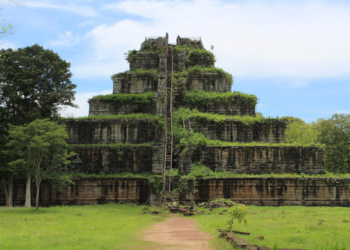
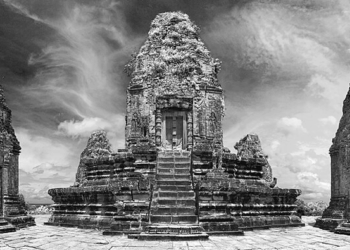
- Cambodia: He conducted—and published—one of the first systematic descriptive inventories of Cambodian monuments. His Inventaire descriptif des monuments du Cambodge (1902–1911) became a reference point for generations and was instrumental in guiding conservation priorities at Angkor and other Khmer sites[1][3][4].
- Champa and Annam: Equally significant were his efforts in the former Cham kingdom (central Vietnam), producing detailed atlases and descriptions of monuments.
- Siam (Thailand): At the request of the Siamese government, Lunet de Lajonquière conducted fieldwork and research, expanding the known geography of early cultures such as Dvāravatī, and produced illustrated diaries and analytical reports on Siam’s archaeological landscape. He was among the first Europeans authorized to systematically record and classify Siamese sites, under the supervision of Siamese authorities and with the support of Prince Damrong Rajanubhab[2].
His dedication was such that he often worked under harsh conditions, braving monsoon rains, jungle terrain, and political uncertainties. His inventories typically included:
- Detailed site descriptions and classifications
- Architectural plans and illustrations
- Inscriptions and translations
- Condition assessments and conservation recommendations
- Proposals for museum acquisition and artifact curation
Ethnographic Research
Commissioned by the French colonial administration, Lunet de Lajonquière also made significant contributions to the ethnography of the region’s peoples:
- He produced two seminal works, the Ethnographie des Territoires militaires (1904) and Ethnographie du Tonkin Septentrional (1906), both of which are considered foundational texts for the study of the mountain peoples of North Vietnam[1][5].
- His ethnographic methodology combined direct observation with the use of local administrative and military reports, resulting in a layered depiction of social life, languages, customs, and rituals.
Conservation and Institutional Leadership
As organizer of the conservation of Indochina’s historic monuments, Lunet de Lajonquière was central to the earliest efforts to preserve Khmer and Cham sites. He worked closely with fellow EFEO luminaries such as Henri Parmentier and Jean Commaille, prioritizing structural stabilization, removal of invasive vegetation, and protection against looting[1].
He participated in the earliest works at Angkor after the sites were placed under French protection and jurisdiction in 1907, collaborating with Commaille and later Henri Marchal to guide restoration efforts at Angkor Vat, Angkor Thom, the Terrace of the Elephants, and Phimeanakas[1].
Key Publications
Lunet de Lajonquière’s oeuvre is extensive, reflecting his dual interests in archaeology and ethnography. Some of his most important works include:
| Title | Field | Year | Description |
| Atlas archéologique de l’Indo-Chine: monuments du Champa et du Cambodge | Archaeology | 1901 | Foundational atlas documenting monuments across the region[1] |
| Dictionnaire français-siamois | Linguistics | 1904 | Early dictionary and grammar notes of the Siamese language[1] |
| Ethnographie des Territoires militaires | Ethnography | 1904 | Detailed ethnographic study of military territories in North Vietnam[1] |
| Ethnographie du Tonkin septentrional | Ethnography | 1906 | Influential ethnographic monograph on Tonkin’s mountain populations[1][5] |
| Inventaire descriptif des monuments du Cambodge | Archaeology | 1902–1911 | Multi-volume survey and inventory of Cambodia’s monuments[1][3][4] |
| Le Siam et les Siamois | Ethnography/Travel | 1906 | Study of Siam and its people during his missions there[1] |
His publications remain valuable for their empirical data, plans, and critical introductions, many of which were pioneering in concept and method.
Recognition and Later Life
Lunet de Lajonquière retired from active colonial service in 1910, but was recalled to serve during World War I, distinguishing himself in the Vosges. For his military valor and scholarly contributions, he received:
- Chevalier (1895), Officier (1910), and Commandeur (1921) of the Légion d’honneur
- Croix de Guerre 1914–1918
- Officier d’Académie (1902)
- French and regional medals, such as the Médaille du Tonkin and the Ordre royal du Cambodge[1]
He was awarded the prestigious Prix J. Garnier by the Société de géographie de Paris and the Prix Bordin by the Académie des inscriptions et belles-lettres for his work on Cambodian monuments[1].
After the war, Lunet de Lajonquière retired to Charente-Maritime, France, where he continued to correspond with scholars and institutions until his death on December 23, 1933[1][6]. He is remembered not only for his scholarship but also for his dedication to the fieldwork and preservation of cultural heritage.
Legacy
Étienne Lunet de Lajonquière’s meticulous research and fieldwork laid the foundation for the study and conservation of Indochina’s historic monuments and ethnic cultures. His documentation methods and inventories not only informed the priorities of his era but remain meticulously cited and referenced by today’s archaeologists and historians[1][2][5].
His life’s work demonstrates a profound respect for the complexity and dignity of Southeast Asian cultures at a time when European attitudes often veered toward paternalism or exploitation. Scholars recognize him among the founders of French archaeology in Indochina, and his publications, particularly those on Cambodian and Cham monuments as well as Northern Vietnamese ethnography, remain essential reading for specialists[1][2][4].
He is commemorated not only for the content and quality of his output but also for his example as an explorer-scholar, whose curiosity, discipline, and humanity continue to inspire those working to understand and preserve the world’s cultural heritage.
Selected Bibliography
For further reading, among Lunet de Lajonquière’s most influential works:
- Inventaire descriptif des monuments du Cambodge (3 vols., 1902–1911)
- Ethnographie des Territoires militaires (1904)
- Ethnographie du Tonkin septentrional (1906)
- Atlas archéologique de l’Indo-Chine (1901)
- Le Siam et les Siamois (1906)
- Dictionnaire français-siamois (1904)[1][3][4][5]
As a soldier, explorer, ethnographer, and guardian of Southeast Asian heritage, Étienne Lunet de Lajonquière’s impact is indelibly etched into the history of both France and Southeast Asia. His detailed research, fieldwork, and advocacy for preservation have safeguarded invaluable cultural treasures for posterity, and his spirit of inquiry exemplifies the ideal of the scholar-explorer[1][2][4].
- https://fr.wikipedia.org/wiki/Étienne_Lunet_de_Lajonquière
- https://thesiamsociety.org/wp-content/uploads/2010/03/JSS_098_0c_Hennequin_FrenchContributionToDvaravatiArchaeolog.pdf
- https://catalogue.nla.gov.au/catalog/1715613
- https://archive.org/details/inventairedescr01lajogoog
- https://books.google.com/books/about/Ethnographie_Du_Tonkin_Septentrional.html?id=IbK7wgEACAAJ
- https://www.proantic.com/en/1283473-archaeological-atlas-of-indochina-champa-and-cambodia-lunet-de-lajonquiere-1901.html