Wonders of Cambodia
  • Home
  • Culture
  • Cuisine
  • Tourism
  • Business
  • Life in Cambodia
  • 中文
  • ខ្មែរ
  • Français
  • Tiếng Việt
  • e-Books
No Result
View All Result
  • Home
  • Culture
  • Cuisine
  • Tourism
  • Business
  • Life in Cambodia
  • 中文
  • ខ្មែរ
  • Français
  • Tiếng Việt
  • e-Books
No Result
View All Result
Wonders of Cambodia
No Result
View All Result
Home Khmer notes

Khmer Note: Why Are There Khmer Temples in Thailand?

Pascal Medeville by Pascal Medeville
September 15, 2026
in Khmer notes
Reading Time: 4 mins read
0
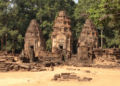
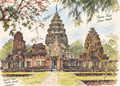
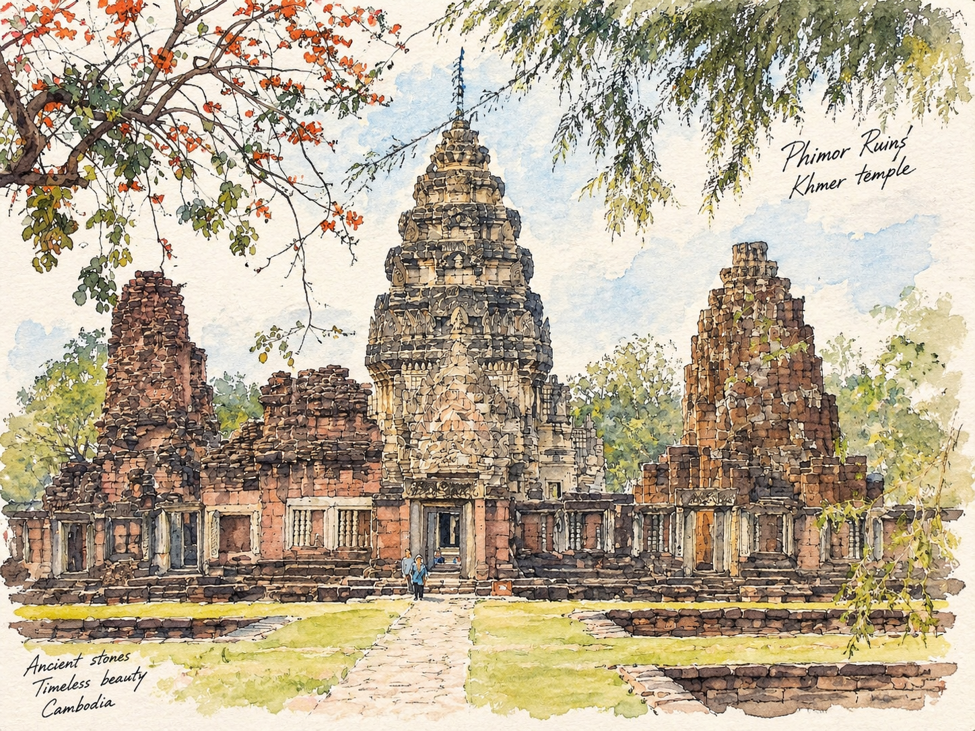
Central sanctuary of Prasat Phimai temple (Original picture: Billbeee, CC BY-SA 3.0)

Walk through northeastern Thailand and you may encounter something slightly puzzling: enormous stone temples that look unmistakably Khmer. Their towers, lintels, naga balustrades, Sanskrit and Old Khmer inscriptions, and architectural details seem to belong somewhere else.

They do. Or, rather, the modern border does.

The Khmer temples of Thailand are reminders that the political map of Southeast Asia has changed considerably over the centuries. When these temples were built, there was no Thailand-Cambodia border running across the landscape. Parts of what is now northeastern Thailand were deeply connected to the Khmer world, particularly during the Angkorian period.

The border came much later

The simplest answer is also the most important one: the temples are older than the modern borders. Between roughly the ninth and thirteenth centuries, the Khmer Empire controlled or exerted influence over large parts of mainland Southeast Asia. Its political and cultural networks extended well beyond the area of present-day Cambodia.

Places such as Phimai, Phanom Rung, and Muang Tam were part of this wider Khmer cultural and political landscape. They were not Cambodian temples mysteriously transported across a border. The border simply did not exist in its present form when they were constructed.

Prasat Phimai, for example, became an important center connected to Angkor, while the temple’s southern orientation may reflect its relationship with the Angkorian heartland.

Khmer kings, local rulers and regional networks

The picture is more complicated than simply saying, “The Khmer Empire occupied Thailand.” Ancient political authority in Southeast Asia did not always resemble the modern nation-state. Power could radiate outward from royal centers through roads, religious institutions, local rulers, tribute relationships and shared religious traditions. Temples could therefore serve several purposes at once: religious centers, political symbols, places of pilgrimage, and nodes in regional networks.

Phanom Rung is a particularly good example. Built mainly during the Angkor Wat period, it was a Shaivite sanctuary associated with the Mahidharapura dynasty, whose members included several rulers of the Khmer Empire.

The stones speak Khmer

One of the most fascinating clues is linguistic. A number of inscriptions found in present-day Thailand are written in Old Khmer. They provide evidence of the extensive geographical reach of Khmer writing and administration. Research on Khmer inscriptions in Thailand covers material ranging from the pre-Angkorian period through the post-Angkorian era. Even some place names preserve ancient Khmer connections.

The name Phanom Rung, for instance, derives from Old Khmer terminology associated with a mountain. An inscription at the site records an ancient form of the name. So when you see an Old Khmer inscription in northeastern Thailand, you are not looking at an archaeological curiosity that somehow wandered north. You are looking at evidence of a historical cultural landscape that was considerably larger than today’s Cambodia.

Not every Khmer temple is identical

There is another interesting detail. Khmer temples in present-day Thailand are not simply copies of temples in Cambodia. Local traditions and craftsmen developed their own variations.

Phanom Rung and Phimai, for example, display architectural characteristics that distinguish them from Khmer monuments farther south. Scholars describe this as a distinct local expression of ancient Khmer art. And religion could vary too. Phimai was associated with Mahayana Buddhism, while Phanom Rung was a major Shaivite sanctuary.

That is perhaps the most useful way to understand these monuments: they are Khmer, but they are also products of the particular places where Khmer culture took root.

A map can hide as much as it reveals

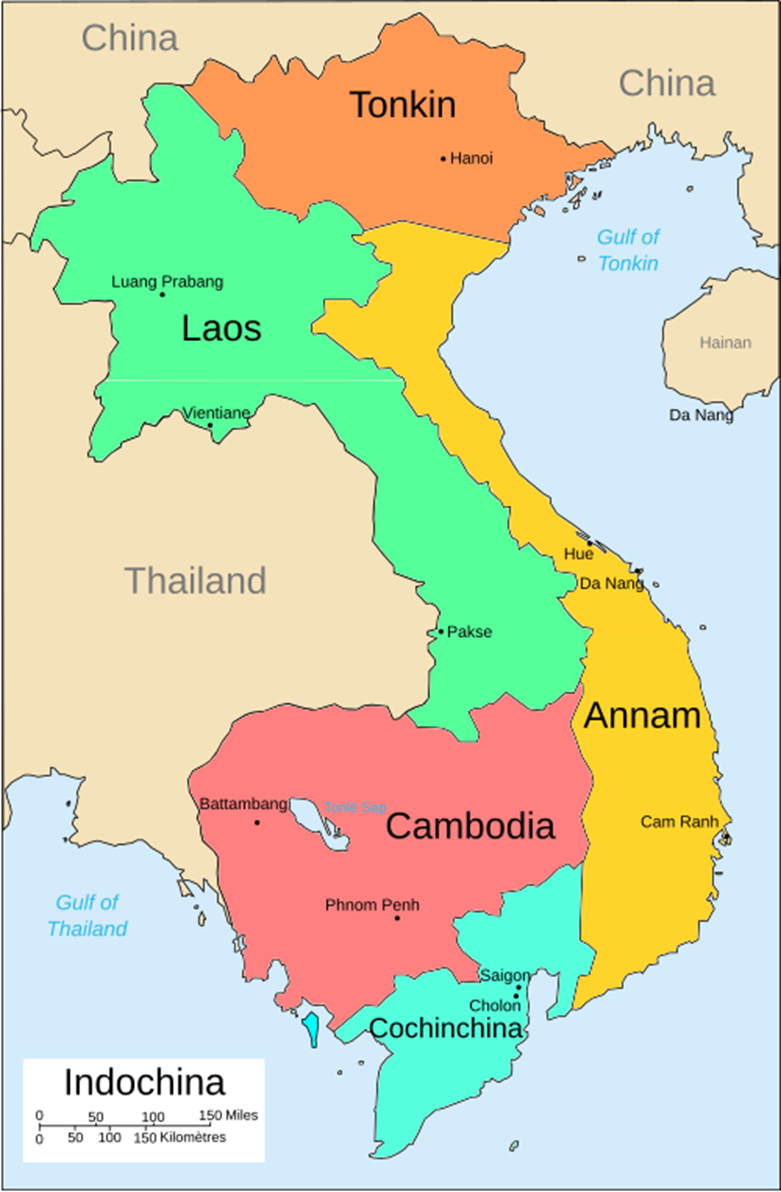
Today, we instinctively associate Khmer heritage with Cambodia. That makes perfect sense on a modern map, but history is rarely so tidy. The Khmer cultural world once crossed landscapes that are now divided among several countries. Temples in Thailand, Laos and Vietnam preserve traces of that older geography.

So the next time someone asks why there are Khmer temples in Thailand, the answer is not simply that Cambodia once extended farther north. It is that the people who built these temples lived in a world where today’s national boundaries had not yet been drawn. The stones have survived the borders. In some cases, they have survived kingdoms, languages, religions and political systems too.

And perhaps that is why a Khmer temple in Thailand can feel strangely familiar. It is not necessarily standing in the “wrong” country. We may simply be looking at an old landscape with a modern map in our hands.

Don’t miss our upcoming articles!

We don’t spam!

Check your INBOX or SPAM folder to confirm your subscription.

Tags: Ancient CambodiaAngkorian ArchitectureIsanKhmer CultureKhmer EmpireKhmer HeritageKhmer historyKhmer temples ThailandOld Khmer inscriptionsPhanom RungPhimai
ShareTweet
Previous Post

Picture of the day: White Frangipani Blossoms in Phnom Penh

Pascal Medeville

Pascal Medeville

Author of the blog Wonders of Cambodia, I share my passion for Cambodia through stories, cultural insights, and personal reflections on the country. I'm also the founder of Simili Consulting, where we provide high-quality, professional translation services to international clients.

Related Posts

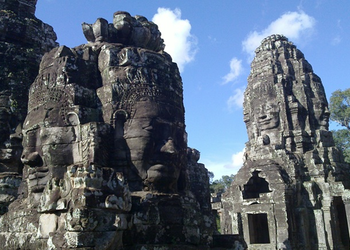
Khmer Note: Why Are There Smiling Faces at Bayon?
Khmer notes

Khmer Note: Why Are There Smiling Faces at Bayon?

September 14, 2026
Khmer Note: Why Do Cambodians Eat Mooncakes?
Khmer notes

Khmer Note: Why Do Cambodians Eat Mooncakes?

September 13, 2026
Khmer Note: Why Can’t You Find Salt on Khmer Tables
Cuisine

Khmer Note: Why Can’t You Find Salt on Khmer Tables

September 12, 2026
Khmer Note: Why Cambodian Homes Often Have Spirit Houses
Khmer notes

Khmer Note: Why Cambodian Homes Often Have Spirit Houses

September 11, 2026
Khmer note: Why Cambodian Parents Draw Cats on Children’s Necks
Khmer notes

Khmer note: Why Cambodian Parents Draw Cats on Children’s Necks

September 3, 2026
Khmer Notes: Small Stories, Big Cambodia
Khmer notes

Khmer Notes: Small Stories, Big Cambodia

September 1, 2026

Leave a Reply Cancel reply

Your email address will not be published. Required fields are marked *

  • Trending
  • Comments
  • Latest
The French Protectorate of Cambodia (1863–1953): An Overview

The French Protectorate of Cambodia (1863–1953): An Overview

July 13, 2025
The Franco-Siamese Treaty of 23 March 1907: Borders, Politics, and the Return of Angkor

The Franco-Siamese Treaty of 23 March 1907: Borders, Politics, and the Return of Angkor

February 11, 2026
Cambodian-Vietnamese War (1978-1989)

Cambodian-Vietnamese War (1978-1989)

July 13, 2025
The Legend of Preah Ko Preah Keo: Guardians of Cambodia’s Lost Treasures

The Legend of Preah Ko Preah Keo: Guardians of Cambodia’s Lost Treasures

February 23, 2026
Kampot Province

Takeo Province: A Cradle of Cambodian History and Culture

3
Kratié Town on the Mekong: Colonial Echoes, River Life, and Irrawaddy Dolphins

Kratié Town on the Mekong: Colonial Echoes, River Life, and Irrawaddy Dolphins

3
Banteay Meanchey Province: A Gateway to Cambodia’s Rich Heritage

Banteay Meanchey Province: A Gateway to Cambodia’s Rich Heritage

2
Stung Treng Province: The Gateway to Cambodia’s Northern Wilderness

Stung Treng Province: The Gateway to Cambodia’s Northern Wilderness

2
Khmer Note: Why Are There Khmer Temples in Thailand?

Khmer Note: Why Are There Khmer Temples in Thailand?

September 15, 2026
White Plumeria alba frangipani flowers blooming among green leaves in Phnom Penh, Cambodia

Picture of the day: White Frangipani Blossoms in Phnom Penh

September 15, 2026
Vann Nath: Paintings of Memory in Phnom Penh

Vann Nath: Paintings of Memory in Phnom Penh

September 14, 2026
Khmer Note: Why Are There Smiling Faces at Bayon?

Khmer Note: Why Are There Smiling Faces at Bayon?

September 14, 2026

Recent News

Khmer Note: Why Are There Khmer Temples in Thailand?

Khmer Note: Why Are There Khmer Temples in Thailand?

September 15, 2026
White Plumeria alba frangipani flowers blooming among green leaves in Phnom Penh, Cambodia

Picture of the day: White Frangipani Blossoms in Phnom Penh

September 15, 2026
Vann Nath: Paintings of Memory in Phnom Penh

Vann Nath: Paintings of Memory in Phnom Penh

September 14, 2026
Khmer Note: Why Are There Smiling Faces at Bayon?

Khmer Note: Why Are There Smiling Faces at Bayon?

September 14, 2026
Wonders of Cambodia

Exploring Culture, Nature, and Spirit in the Land of Wonder.

Follow Us

Browse by Category

  • Architecture
  • Architecture
  • Art
  • Books
  • Business
  • Business
  • Cinema
  • Costume
  • Costume
  • Cuisine
  • Culture
  • Defense
  • Du lịch
  • e-Books
  • Education
  • Entertainment
  • Expat life
  • Fauna
  • Festival
  • Flora
  • Food providers
  • Français
  • Geography
  • Handicraft
  • Health
  • Histoire
  • History
  • Hotels
  • Khmer notes
  • Khmer stories
  • Khmer Stories
  • Knowledge
  • Language
  • Last posts
  • Latest posts
  • Lịch sử
  • Life in Cambodia
  • Literature
  • Loisirs
  • Meet the neigbhors
  • Music
  • Personnalités
  • Pictures
  • Politics
  • Population
  • Press review
  • Professional services
  • Proverbs
  • Reference
  • Reference
  • Religion
  • Restaurants
  • Temples
  • Textile
  • Tiếng Việt
  • Tourism
  • Tourisme
  • Transport
  • Transport
  • Uncategorized
  • Video
  • Vidéo
  • Vie quotidienne
  • Who's who
  • ខ្មែរ
  • ទេសចរណ៍៖
  • បគ្គលល្បី
  • ប្រវត្តិសាស្ត្រោ
  • សៀវភៅ
  • 中文
  • 书籍
  • 交通
  • 历史
  • 商业
  • 旅游
  • 生活

Recent News

Khmer Note: Why Are There Khmer Temples in Thailand?

Khmer Note: Why Are There Khmer Temples in Thailand?

September 15, 2026
White Plumeria alba frangipani flowers blooming among green leaves in Phnom Penh, Cambodia

Picture of the day: White Frangipani Blossoms in Phnom Penh

September 15, 2026
  • About Us
  • Advertise
  • Privacy & Policy
  • Contact Us

© 2025 - Made with 💫 by TechFlow.

No Result
View All Result
  • Home
  • Culture
  • Cuisine
  • Tourism
  • Business
  • Life in Cambodia
  • 中文
  • ខ្មែរ
  • Français
  • Tiếng Việt
  • e-Books

© 2025 - Made with 💫 by TechFlow.