Wonders of Cambodia
  • Home
  • Culture
  • Cuisine
  • Tourism
  • Business
  • Life in Cambodia
  • 中文
  • ខ្មែរ
  • Français
  • Tiếng Việt
  • e-Books
No Result
View All Result
  • Home
  • Culture
  • Cuisine
  • Tourism
  • Business
  • Life in Cambodia
  • 中文
  • ខ្មែរ
  • Français
  • Tiếng Việt
  • e-Books
No Result
View All Result
Wonders of Cambodia
No Result
View All Result
Home Architecture

Video: Bayon Temple’s Eastern Façade at Angkor

Pascal Medeville by Pascal Medeville
August 23, 2026
in Architecture, Video
Reading Time: 5 mins read
0

Across the quiet water of Angkor Thom, the eastern façade of Bayon reveals a remarkable blend of stone, sky, and Khmer history.

The eastern façade of Bayon Temple has a quieter character than the famous maze of towers and smiling faces within. Seen across the moat, its weathered stone rises behind lawns, trees, and reflective water, creating a scene in which architecture and landscape seem almost inseparable. Watch the video and take a closer look at one of Angkor’s most extraordinary monuments.
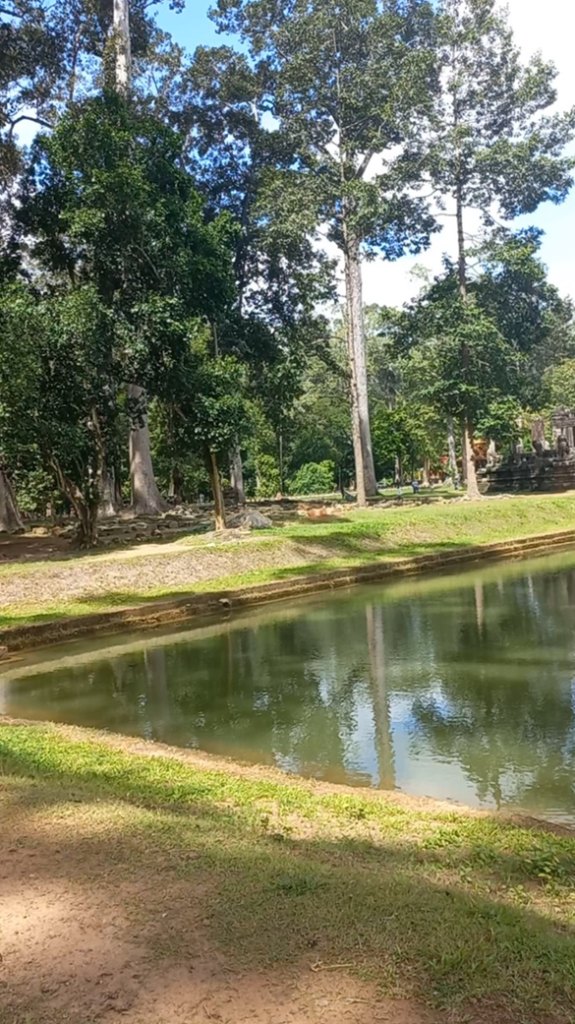
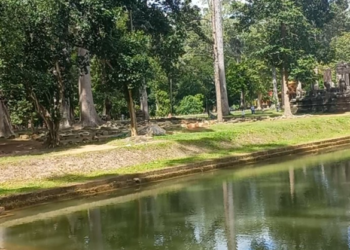
Bayon Temple reflected in the eastern moat

Introduction

Bayon Temple’s eastern façade appears almost serenely detached from the bustle of Angkor. In the video, the monument stretches across the water, its weathered towers and stone galleries framed by broad lawns, mature trees, and an immense Cambodian sky.

There is something particularly attractive about seeing Bayon from this distance. The moat provides a natural mirror, while the movement of the camera gradually reveals the relationship between the temple and the surrounding landscape. Rather than confronting the visitor with an overwhelming mass of stone, this view allows the monument to breathe.

The atmosphere is peaceful, almost contemplative. Water, grass, trees, clouds, and ancient sandstone occupy the same frame. It is a reminder that Angkor was never simply a collection of temples. It was a vast cultural landscape in which architecture, water management, religion, royal power, and everyday life were closely connected.

Discover the Place

Bayon stands at the heart of Angkor Thom, the great fortified capital associated with King Jayavarman VII. The city covers roughly 900 hectares and was enclosed by massive laterite walls and a broad moat. Its present layout largely took shape during the late 12th and early 13th centuries, following Jayavarman VII’s establishment of Angkor Thom as his capital.

Built during Jayavarman VII’s reign, Bayon was originally associated with Mahayana Buddhism. The temple occupies the center of Angkor Thom and was conceived within a religious and political landscape shaped by Buddhist cosmology. UNESCO describes it as the culmination of Jayavarman VII’s monumental and religious ambitions.

The eastern side is particularly significant for visitors because it provides the traditional approach to the temple. Entering from the east leads toward a complex world of galleries, terraces, passages, towers, and sculptures. The interior can feel almost labyrinthine, a striking contrast with the spacious view presented in this video.

And then there are the faces.

Bayon’s famous towers once carried hundreds of monumental faces, creating the extraordinary visual identity for which the temple is known. Their precise symbolism remains the subject of scholarly discussion. They have been associated with Buddhist figures, particularly Avalokiteshvara, and have also been interpreted in relation to royal power and the person of Jayavarman VII. UNESCO notes that the surviving faces have been classified into several groups, reflecting the complexity of the temple’s iconography.

From the eastern approach, however, these famous faces are not necessarily the first thing that captures the eye. The larger impression comes from the relationship between the temple and the surrounding space.

Hidden Details

One easily overlooked feature of Bayon is how unusual its architectural organization is. Unlike many major Khmer temples, it does not have a conventional enclosing wall of its own. Instead, it sits within the much larger enclosure of Angkor Thom.

The temple also changed over time. What visitors see today is the result of several building phases and later transformations. Originally Buddhist, Bayon was subsequently modified during periods of religious change, including the Hindu revival under Jayavarman VIII, before Buddhism returned to an important place at the site.

The eastern façade itself has also required careful conservation. UNESCO notes that restoration work has included the East façade, alongside other structures at Bayon. This is a useful reminder that the monument we admire today is not simply surviving by luck. It is also the result of decades of research, conservation, and painstaking work.

For photographers, the eastern side offers another advantage: water. On calm mornings, the moat can produce beautiful reflections, particularly when the light is soft and the sky carries a few clouds. The scene changes considerably with the seasons, from greener surroundings during the wetter months to warmer, drier tones during the dry season.

Travel Tips

The Angkor Archaeological Park is best explored early in the day, when temperatures are more comfortable and the light is generally gentler. Bayon is open from 7:30 a.m. to 5:30 p.m., according to the APSARA National Authority.

Allow enough time to see Bayon from several perspectives. The eastern approach is worth appreciating before entering the temple itself. Once inside, take time to examine the bas-reliefs, galleries, decorative details, and face towers rather than simply searching for the most famous photographs.

Bayon is also conveniently located near several major monuments of Angkor Thom, including the Baphuon, the Royal Enclosure, the Terrace of the Elephants, and the Terrace of the Leper King.

Watch the Video

Experience the atmosphere of Bayon’s eastern façade for yourself by watching the video below. Bayon Temple’s Eastern Façade | Angkor, Cambodia

For more videos exploring Cambodia’s temples, landscapes, history, and everyday life, follow the Wonders of Cambodia YouTube channel.

Conclusion

Bayon is often remembered for its mysterious stone faces, but the temple has other moods as well. Seen from the east, across the quiet water, it becomes part of a much larger landscape of trees, sky, reflections, and ancient Khmer engineering.

That quieter perspective is perhaps one of the pleasures of Angkor. The monuments reveal themselves differently depending on where you stand, when you arrive, and how long you are willing to look.

Continue exploring Cambodia with Wonders of Cambodia, where every temple has another story waiting just beyond the obvious.

Information Box

Location: Angkor Thom, Angkor Archaeological Park
Province: Siem Reap
Category: Khmer architecture, temples, history, travel
Filmed by: Pascal Médeville for Wonders of Cambodia
YouTube Video: Bayon Temple’s Eastern Façade | Angkor, Cambodia

Don’t miss our upcoming articles!

We don’t spam!

Check your INBOX or SPAM folder to confirm your subscription.

Tags: Angkor Archaeological ParkAngkor CambodiaAngkor ThomBayon templeBayon Temple eastern façadeCambodia travelJayavarman VIIKhmer architectureKhmer templesSiem Reap
ShareTweet
Previous Post

Parvati in Cambodia: Why the Goddess Is Better Known as Uma

Pascal Medeville

Pascal Medeville

Author of the blog Wonders of Cambodia, I share my passion for Cambodia through stories, cultural insights, and personal reflections on the country. I'm also the founder of Simili Consulting, where we provide high-quality, professional translation services to international clients.

Related Posts

Historic photograph of Angkor Wat surrounded by trees and vegetation, from the nineteenth-century photographic record.
Video

Angkor in Pictures: Stone, Sculpture and Early Photography

August 19, 2026
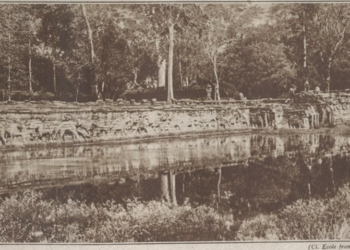
Historic ca. 1938 photograph of the Terrace of the Elephants in Angkor Thom, Cambodia, showing Khmer carvings, trees, and reflected water.
Architecture

Picture of the day: Terrace of the Elephants, Angkor Thom in 1938

August 18, 2026
Tree-lined pavement and blue modern building on Norodom Boulevard in Phnom Penh.
Video

Video: A Glimpse of Norodom Boulevard

August 15, 2026
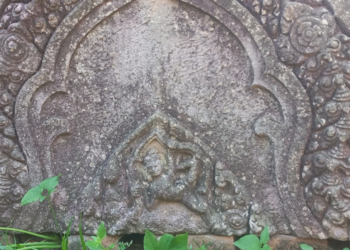
Close-up of an intricately carved sandstone decorative panel at Phnom Chisor Temple in Takeo Province, showcasing the craftsmanship of ancient Khmer artisans.
Architecture

Video: Inside Phnom Chisor Temple, Takeo Province

August 7, 2026
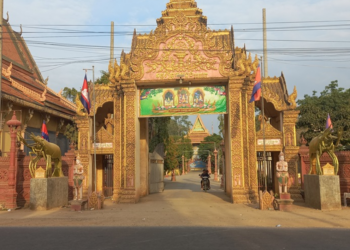
Entrance gate of Wat Prek Bangkang in Kandal Province, Cambodia, featuring two large golden Mekong lobster statues instead of traditional elephant or lion guardians.
Architecture

Picture of the day: Wat Prek Bangkang’s Giant Mekong Lobsters

August 5, 2026
Traditional Khmer-style building at the Royal University of Fine Arts old campus in Phnom Penh.
Architecture

Video: Phnom Penh in a glance, #4 – RUFA Old Campus in Phnom Penh: A Living Heritage

August 1, 2026

Leave a Reply Cancel reply

Your email address will not be published. Required fields are marked *

  • Trending
  • Comments
  • Latest
The French Protectorate of Cambodia (1863–1953): An Overview

The French Protectorate of Cambodia (1863–1953): An Overview

July 13, 2025
The Franco-Siamese Treaty of 23 March 1907: Borders, Politics, and the Return of Angkor

The Franco-Siamese Treaty of 23 March 1907: Borders, Politics, and the Return of Angkor

February 11, 2026
Cambodian-Vietnamese War (1978-1989)

Cambodian-Vietnamese War (1978-1989)

July 13, 2025
The Legend of Preah Ko Preah Keo: Guardians of Cambodia’s Lost Treasures

The Legend of Preah Ko Preah Keo: Guardians of Cambodia’s Lost Treasures

February 23, 2026
Kampot Province

Takeo Province: A Cradle of Cambodian History and Culture

3
Kratié Town on the Mekong: Colonial Echoes, River Life, and Irrawaddy Dolphins

Kratié Town on the Mekong: Colonial Echoes, River Life, and Irrawaddy Dolphins

3
Banteay Meanchey Province: A Gateway to Cambodia’s Rich Heritage

Banteay Meanchey Province: A Gateway to Cambodia’s Rich Heritage

2
Stung Treng Province: The Gateway to Cambodia’s Northern Wilderness

Stung Treng Province: The Gateway to Cambodia’s Northern Wilderness

2
Eastern façade of Bayon Temple reflected in the moat at Angkor Thom, Cambodia

Video: Bayon Temple’s Eastern Façade at Angkor

August 23, 2026
Parvati in Cambodia: Why the Goddess Is Better Known as Uma

Parvati in Cambodia: Why the Goddess Is Better Known as Uma

August 23, 2026
A bowl of Cambodian chap chay with vegetables, pork, tofu skin, and wood ear mushrooms.

Picture of the day: Chap Chay, A Cambodian New Year Dish

August 23, 2026
Historic Phnom Penh Railway Station with its distinctive Art Deco architecture, central clock, green accents, and busy street scene.

History of Cambodia’s Railway System: From Colonial Rails to Modern Revival

August 22, 2026

Recent News

Eastern façade of Bayon Temple reflected in the moat at Angkor Thom, Cambodia

Video: Bayon Temple’s Eastern Façade at Angkor

August 23, 2026
Parvati in Cambodia: Why the Goddess Is Better Known as Uma

Parvati in Cambodia: Why the Goddess Is Better Known as Uma

August 23, 2026
A bowl of Cambodian chap chay with vegetables, pork, tofu skin, and wood ear mushrooms.

Picture of the day: Chap Chay, A Cambodian New Year Dish

August 23, 2026
Historic Phnom Penh Railway Station with its distinctive Art Deco architecture, central clock, green accents, and busy street scene.

History of Cambodia’s Railway System: From Colonial Rails to Modern Revival

August 22, 2026
Wonders of Cambodia

Exploring Culture, Nature, and Spirit in the Land of Wonder.

Follow Us

Browse by Category

  • Architecture
  • Architecture
  • Art
  • Books
  • Business
  • Business
  • Cinema
  • Costume
  • Costume
  • Cuisine
  • Culture
  • Defense
  • Du lịch
  • e-Books
  • Education
  • Expat life
  • Fauna
  • Festival
  • Flora
  • Food providers
  • Français
  • Geography
  • Handicraft
  • Health
  • Histoire
  • History
  • Hotels
  • Khmer Stories
  • Khmer stories
  • Knowledge
  • Language
  • Last posts
  • Latest posts
  • Lịch sử
  • Life in Cambodia
  • Literature
  • Meet the neigbhors
  • Music
  • Personnalités
  • Pictures
  • Politics
  • Population
  • Press review
  • Professional services
  • Proverbs
  • Reference
  • Reference
  • Religion
  • Restaurants
  • Temples
  • Textile
  • Tiếng Việt
  • Tourism
  • Tourisme
  • Transport
  • Uncategorized
  • Video
  • Vidéo
  • Vie quotidienne
  • Who's who
  • ខ្មែរ
  • ទេសចរណ៍៖
  • បគ្គលល្បី
  • ប្រវត្តិសាស្ត្រោ
  • សៀវភៅ
  • 中文
  • 书籍
  • 历史
  • 商业
  • 旅游
  • 生活

Recent News

Eastern façade of Bayon Temple reflected in the moat at Angkor Thom, Cambodia

Video: Bayon Temple’s Eastern Façade at Angkor

August 23, 2026
Parvati in Cambodia: Why the Goddess Is Better Known as Uma

Parvati in Cambodia: Why the Goddess Is Better Known as Uma

August 23, 2026
  • About Us
  • Advertise
  • Privacy & Policy
  • Contact Us

© 2025 - Made with 💫 by TechFlow.

No Result
View All Result
  • Home
  • Culture
  • Cuisine
  • Tourism
  • Business
  • Life in Cambodia
  • 中文
  • ខ្មែរ
  • Français
  • Tiếng Việt
  • e-Books

© 2025 - Made with 💫 by TechFlow.