In a quiet corner of Takeo province, an abandoned vihara still carries the scars of salt, war and time. Wat Khnar Kokaoh’s old sanctuary is crumbling, yet its murals glow with unexpected life, offering visitors a rare glimpse into Cambodia’s layered, painful and resilient history.

The old vihara of Wat Khnar Kokaoh (Khmer: វត្តខ្នារកកោះ) is not the kind of place that appears in glossy tourism brochures. It leans, it cracks, it sheds pieces of itself with every rainy season. Yet for anyone interested in Cambodia’s recent past — and in the stubborn endurance of Buddhist culture — this half-forgotten building in Takeo is a small, silent archive in bricks, salt and paint.
This article is for curious travelers, amateur historians, heritage lovers and, why not, the occasional architecture geek who wonders how a religious building survives being turned into a salt warehouse and a field hospital. You will discover where this old vihara is, what happened to it during the Khmer Rouge era, and why it still matters today — even as a new, shiny vihara rises just a few steps away.
By the end, you will have a better sense of how one provincial temple complex, founded in 1806, condenses more than two centuries of Cambodian history: from royal-era piety to ideological madness, then back (slowly) to daily Buddhist practice.
Where on Earth Is Wat Khnar Kokaoh?
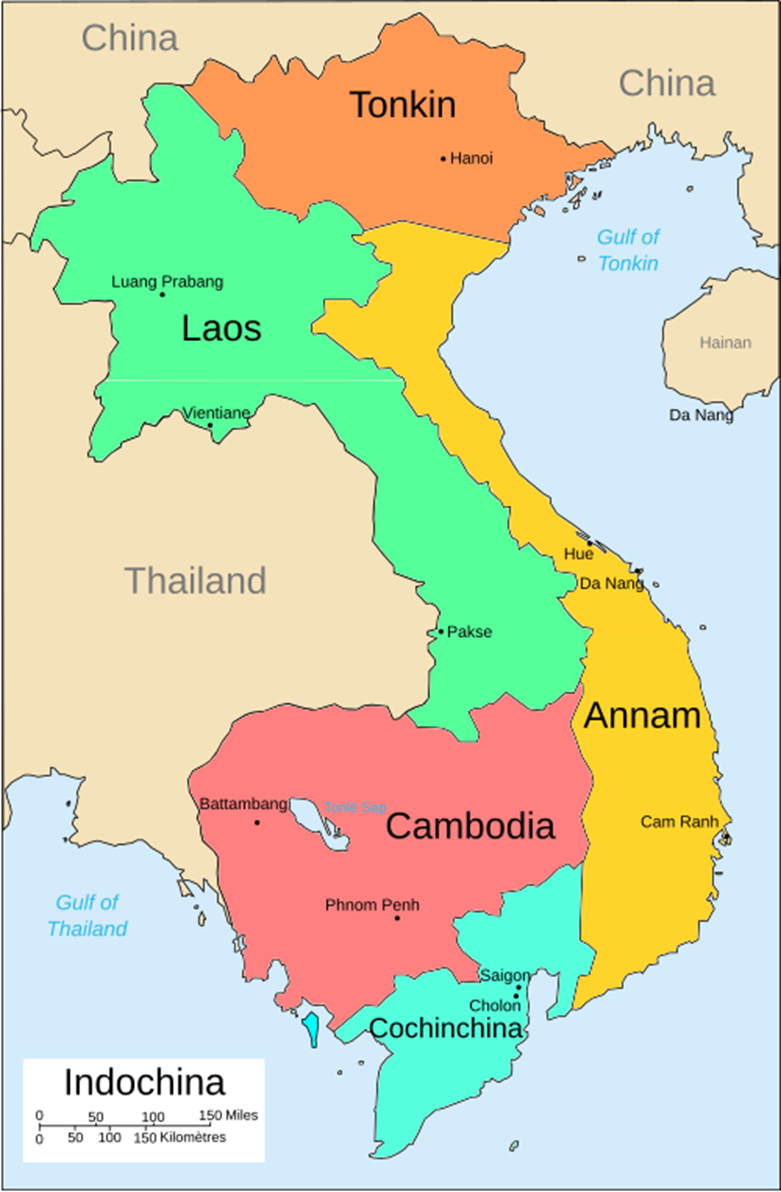
Wat Khnar Kokaoh is located in Ta Sai village, Doung Kpus commune, Borei Cholsar district, in Takeo province, southern Cambodia. The temple stands on a slightly raised mound — typical for older pagodas built to stay above seasonal flooding — and has been part of the local landscape since the early 19th century.
According to the temple’s own historical record, the monastery grounds were first established in 1806, which gives Wat Khnar Kokaoh a respectable age of around 217 years. Over that time, it has been administered by no fewer than 15 successive abbots, each leaving their own intangible layer of influence: buildings added, ceremonies organized, students trained, ghosts appeased (one hopes).
Today, the monastery compound includes both the old vihara — abandoned, cracked, but still standing — and a new vihara built about 20 meters away. The coexistence of these two buildings, one fading and one rising, is visually striking: it feels as if the past has refused to leave before the future is fully ready to take over.

The Old Vihara: Beauty in Ruin
A building that everyone loves… from a safe distance
Locals, lay Buddhists and the temple committee have essentially retired the old vihara from active duty. No more large ceremonies inside, no more crowds, and certainly no one eager to sit under its ceiling during a thunderstorm. The fear of structural collapse is real, and if you look at the pillars, you immediately understand why.
The entire building shows advanced signs of decay. The support columns that once held up the structure with quiet confidence are now deeply cracked, eroded and flaking into separate pieces. Walking around them, one has the distinct feeling that gravity has started to renegotiate the terms of the contract.
Inside the vihara, the atmosphere is both solemn and slightly eerie. A large cement Buddha image still sits on the main platform, presiding over the emptiness. Behind the Buddha’s throne, you can see the broken remains of a wooden funeral bier — a stark reminder that the building was always connected with life’s final rituals, long before politics barged in.
Curiously, while the bricks crumble, the paintings resist. The murals on the walls and the images on the ceiling remain surprisingly vivid, with sharp lines and bright, harmonious colors. They depict the usual scenes of Buddhist cosmology and Jataka stories, but in this devastated setting their persistence feels almost defiant.
If you enjoy paradoxes, here is a good one: the most fragile part of the building, the paint, is what has best withstood the assaults of time and ideology. Salt, humidity, war, abandonment — yet the stories on the walls continue to glow quietly in the half-light.

Salt, War and Medicine: The Khmer Rouge Years
From sacred space to salt warehouse
During the Khmer Rouge regime under Pol Pot, the old vihara lost its religious function and gained a new one: it became a salt storage facility. In itself, this would already be bad news for a building, but in this case the salt did not stay politely inside sacks.
Over time, the salt penetrated the porous materials of the walls, pillars and floor. The present state of severe cracking and disintegration is largely due to that intense and prolonged exposure to salt. What we see today is essentially the slow-motion collapse of a structure chemically attacked from the inside.
The irony is sharp: a building meant to preserve the Dharma ended up preserving salt, and the salt, in return, made sure the building would not last very long.
A makeshift hospital among murals
The old vihara was not just a salt depot. The Khmer Rouge also used it as a kind of improvised hospital and holding area for patients. People were treated here, or at least kept here, under conditions that were, to put it delicately, far from modern medical standards.
Relatively few patients actually died inside the vihara itself. Those who did were not cremated according to traditional Buddhist practice within the pagoda. Instead, their bodies were taken outside and buried in an area not very far from the temple grounds. The landscape around the pagoda, like so many places in Cambodia, carries these quiet, unmarked layers of trauma beneath the grass.
When you stand there today, you are spatially very close to where people both prayed and suffered, meditated and received injections, listened to sermons and waited for news of war. It is a dense place, even if half the roof is missing.
After 1979: Buddhism on Reconstruction Mode
After the fall of the Khmer Rouge in 1979, Cambodia began the long and complex process of rebuilding its religious life. Wat Khnar Kokaoh was no exception. Parts of the old vihara were repaired and reinforced to serve the revived Buddhist community. This was less about architectural perfection and more about spiritual triage: make it usable, make it safe enough, resume the rituals.
Those post-1979 repairs are still visible: mismatched patches of masonry, fresher concrete meeting older bricks, and small structural interventions that tell of limited budgets but strong determination. The result is a vihara that is neither fully restored nor fully abandoned — a liminal building between function and memory.
Over time, however, it became increasingly clear that the old vihara was losing its long-term battle with salt and gravity. The pillars worsened, the walls cracked further, and the risk of collapse during large gatherings became too serious to ignore.
The solution, chosen by the villagers, lay followers and temple committee, was to start building a new vihara about 20 meters away from the old one. This new structure is meant to host ceremonies safely, welcome future generations, and ensure that Buddhist practice at Wat Khnar Kokaoh does not depend on the goodwill of crumbling masonry.
For visitors, this creates a striking juxtaposition: the old vihara, haunted and fragile, and the new one, fresh and confident, rising in the same sacred space. Buddhism moves forward, but it does not entirely erase the traces of what happened.
Why Wat Khnar Kokaoh Matters Today
A local story with national echoes
On paper, Wat Khnar Kokaoh is just one more provincial temple in Takeo. In reality, it is a compact illustration of Cambodia’s broader history over the past 200 years:
- A monastery founded in 1806 on a small mound.
- More than two centuries of religious life, under 15 abbots.
- A violent interruption in the 1970s, with the vihara turned into a salt depot and hospital.
- A fragile, partial repair after 1979.
- A new vihara now rising beside the old one.
You don’t need a big museum to understand history. Sometimes, one cracked pillar and a stubborn mural can do the job quite well.
Visiting with respect (and a bit of caution)
If you decide to visit Wat Khnar Kokaoh’s old vihara, a few practical notes:
- Ask permission from the monks or the temple committee before entering the old structure.
- Be careful where you step: parts of the floor, roof and pillars may be unstable.
- Take time to observe the murals — they are the quiet stars of the building.
- Remember that this is both a religious site and a place marked by suffering during the Khmer Rouge era.
If you are lucky, the abbot or a member of the committee may share additional stories about the pagoda’s history, adding personal color to the official dates and facts.
The old vihara of Wat Khnar Kokaoh in Takeo is more than a decaying building. It is a fragile witness of Cambodia’s turbulent 20th century, a former salt warehouse and makeshift hospital slowly returning to its original role as a Buddhist sanctuary — albeit one now too fragile for daily use. Standing between ruin and renewal, it invites us to see how faith, history and architecture intersect in the quiet corners of the Cambodian countryside.
Here is a short video showing the interior of this vihara, published on Wonders of Cambodia’s Youtube channel:
Sources & further reading / To know more
- General works on pagodas in Takeo province
Overview of the main temples in Takeo, with historical notes and basic visitor information. - Studies on Khmer Rouge use of religious buildings
Research on how pagodas were repurposed during the 1975–1979 regime, including storage and medical facilities. - Articles on post-1979 Buddhist revival in Cambodia
Analyses of how monasteries were rebuilt and religious practice resumed after the fall of the Khmer Rouge. - Heritage preservation guidelines for Cambodian temples
Documents outlining best practices for conserving old viharas and murals in rural pagodas. - Local histories collected from monks and villagers
Oral accounts that add context, anecdotes and personal memories to the written record of provincial temples.
Tith Veasna (b. 1984) is a Cambodian textile artist, curator, and educator based in Phnom Penh, whose work with traditional materials and contemporary narratives informs her writing on sites such as Wat Khnar Kokaoh.