Every February, Phnom Penh and beyond shimmer under red lanterns as Cambodia welcomes the Chinese New Year. A celebration both ancient and delightfully local, it blends centuries-old Chinese tradition with Khmer warmth. From temple smoke to roast pork platters and pineapple offerings, here’s how the Kingdom greets the Lunar New Year—with fireworks, fortune, and fragrant fish!
If you happen to stroll through Phnom Penh’s Chinese quarters in late January or February, you’ll notice an immediate shift in the air. The markets glow red, the sound of firecrackers ricochets between shopfronts, and incense clouds curl through narrow streets. It isn’t merely another festival—it’s Chinese New Year in Cambodia, one of the liveliest and most hybrid holidays in the country.
This article explores how this ancient celebration, known locally as Chhol Chhnam Chin, finds its Cambodian flavor. Whether you’re a traveler curious about local culture, an expat planning to join a lion dance, or a heritage-minded reader tracing ancestry through Teochew, Hokkien, or Hainanese roots, you’ll find here both insight and inspiration. Expect history, flavors, rituals—and a pinch of humor between the dragons.
A Brief History of Chinese Roots in Cambodia
Chinese migration to Cambodia has centuries of history, flourishing especially during the Angkor and early post-Angkor periods through trade routes across the South China Sea. By the 19th century, communities of Hokkien, Teochew, Cantonese, and Hainanese settlers had become firmly woven into Cambodian society. Today, most Cambodian Chinese families are thoroughly Khmer in identity—but still honor their ancestral festivals with affection and fine cooking.
Chinese New Year, or Chol Chhnam Chin (ចូលឆ្នាំចិន), remains one of their most cherished occasions. Even many Khmer families with distant Chinese ancestry join the festivities. Think of it as Cambodia’s unofficial “third New Year,” following the international one and preceding Khmer New Year in April. It’s the Kingdom’s most fragrant prelude to spring.
The Countdown: Preparations before the New Year
Cleaning, Decorating, and Remembering Ancestors
A week before the New Year, families sweep out bad luck—literally. Houses are cleaned, debts settled, and altars refreshed. Red paper cut-outs bloom on doorways with auspicious phrases promising happiness (福 fú), prosperity (祿 lù), and longevity (壽 shòu). Phnom Penh’s markets, such as Orussey and Central Market, brim with red envelopes, gold effigies, and mountains of mandarins.

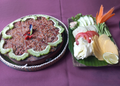
On the last day before the New Year, families prepare food for their ancestors: roasted ducks, whole fish, noodles, , and Chinese pastries. This ancestor ceremony isn’t solemn — it’s a family reunion across generations, with incense smoke serving as the timeless messenger.
The Lucky Colors of the Season
Forget pastel tones—Chinese New Year thrives on brilliance. Red dominates for luck, gold for wealth, and the occasional sprig of green for vitality. In Phnom Penh’s Chroy Changvar peninsula or Battambang’s Chinese streets, homes glow like miniature temples of fortune. Even motorbikes sport lucky ribbons.
The Big Day: Welcoming the Lunar Year
A Kingdom Painted in Red and Gold
When midnight strikes, Cambodia erupts. Firecrackers crackle across Phnom Penh’s skyline (with variable legality), and neighborhood altars flicker with candles. The first breakfast of the year is symbolic — often noodles for longevity or dumplings for wealth. Expect to see offerings not just to ancestors but to Tuk Ta, the household spirits shared with Khmer tradition. It’s a subtle sign of how Cambodian-Chinese life blends.
The Art of Greeting and Gifting
From early morning, one hears a cheerful “Happy New Year!” Khmer pronunciation gently bends the Chinese greeting, giving it a distinctly Cambodian melody. Red envelopes (ang pao) are distributed to children and elders alike, though more with affectionate teasing than solemn ritual. One common Cambodian twist: small (or big) bills are in the envelopes, a reminder that generosity should also taste sweet.
Senses of the Celebration: Food, Sound, and Spirit
Food, naturally, is the star. In Cambodia, Chinese New Year tables marry Cantonese flair with Khmer comfort. Pork belly glazed in soy and honey sits alongside somlor machu, the sour Khmer soup. The fish is never entirely eaten — leaving a portion symbolizes surplus for the year ahead. Dumplings and spring rolls abound, but you might also spot sticky rice rolls that mirror the pyramidal zongzi yet taste distinctly Cambodian.
In family restaurants around Phnom Penh and Kampot, special menus appear — often featuring symbolic dishes like braised sea cucumber, roasted chicken, and sausage fried with cashews. The faint jangle of gold bangles and the lively chop of cleavers set the festival’s rhythm.

Lion dances surge back to life from early morning. Drums thunder, cymbals clash, and the papier-mâché lions — often with an extra flourish of Khmer sparkle — parade past homes and businesses. Each dance promises to sweep away evil spirits. Children squeal in delight as the lion “eats” its envelope reward. In a corner, someone always whispers: “Careful—the lion knows who’s stingy.”
Beyond the Chinese Quarter: National Participation
Chinese New Year is not an official public holiday in Cambodia, but it almost feels like one. Schools thin out, shops shorten hours, and pagodas hum with offerings. Even Khmer Buddhists take advantage of the mood to visit temples, lighting incense for good fortune. Many families of mixed heritage practice both Khmer and Chinese New Years — proof that culture here does not divide but dances together.
In provincial towns like Battambang or Takeo, Chinese-style temples become lively hubs of devotion. In Phnom Penh, Wat Phnom’s nearby shrine to Ma Zu, the sea goddess, attracts lines of worshippers. The city itself slows, caught between celebration and reverence.
When Fireworks Fade: The Days After
Traditionally, Chinese New Year celebrations last fifteen days, though in Cambodia, most of the action wraps up within the first three. On the second or third day, families visit relatives, exchange pastries, or spend time at the park or pagoda. Some also join the sending off of the spirits ritual, burning paper effigies of gold bars and houses — a poetic (and rather smoky) gesture of generosity to the ancestors.
By mid-February, Phnom Penh returns to its usual rhythm. Yet traces of celebration remain: faint scorch marks on sidewalks from firecracker trails, strings of red decorations still fluttering on balconies, and, most importantly, the unshakable sense that fortune has once again found its way to the door.
Chinese New Year in Cambodia is more than a borrowed celebration — it’s a symphony of cultural coexistence. The blending of Chinese elegance and Khmer warmth has produced a festival both radiant and inclusive. Whether you’re savoring roast duck in Battambang or watching lion dancers leap through the alleys of Phnom Penh, you’re witnessing the Kingdom at its convivial best: where ancient ritual meets tropical joy, and the Year of the Dragon — or whichever creature reigns — arrives with delicious optimism.
- Asia Society: Lunar New Year Across Southeast Asia – Comparative guide to how the New Year is celebrated from Vietnam to Singapore.
- Khmer Times (Festival Features) – Annual features on Chinese New Year events in Phnom Penh and provincial towns.
- Lonely Planet Cambodia – Up-to-date travel tips for visiting during major Cambodian festivals, including Lunar New Year.
Pascal Médeville is a writer and digital publisher based in Cambodia. He explores Asian cultures, traditions, and the intersections between local and diasporic identities. Through his projects, he enjoys uncovering how history, cuisine, and ritual continue to shape contemporary life in Cambodia.