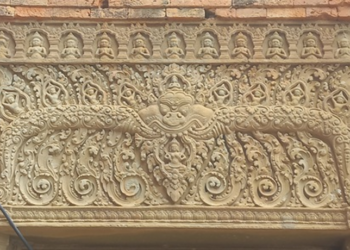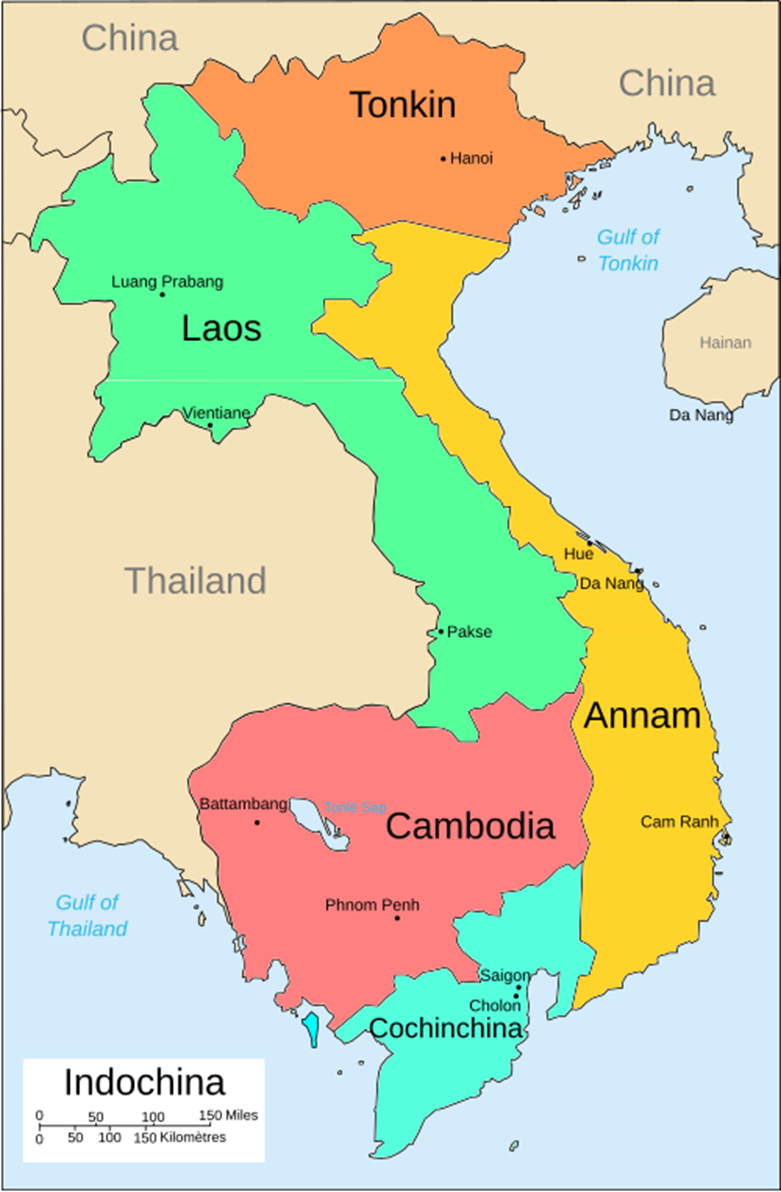
From the mythic Himalayas to the plains of Cambodia, Ganesha — the elephant-headed god of wisdom — journeyed across centuries and faiths. His memory endures here not through rituals but through quiet echoes of art, philosophy, and humor.
Every culture needs a god who can laugh. In India, that role belongs to Ganesha (Khmer: ព្រះគណេស préah koneh) — the elephant-headed son of Shiva and Parvati, patron of beginnings, and remover of obstacles both practical and metaphysical. Born from divine imagination and a dash of parental misunderstanding (his beheading and rather creative reconstruction are well-known), Ganesha has presided for millennia over the delicate art of starting things well — something even immortals find difficult.

Beloved across South and Southeast Asia, Ganesha’s charm comes not from thunderbolts or dramatic rescues, but from balance. He embodies intelligence without arrogance, wisdom without gloom, and an unshakable calm that suggests he’s seen far too many human mistakes to be surprised anymore.
When he reached Cambodia — carried eastward by merchants, sages, and poets — the god with the elephant’s face found fertile spiritual ground. Here too people knew that the world’s obstacles are best faced with patience and a smile.
When Ganesha Came to the Khmer World
In the first millennium, Cambodia’s early kingdoms stood at the crossroads of India and China, absorbing influences with characteristic ease. Ideas traveled then as gently as rivers — through stories, rituals, and images sculpted in stone. Among those who crossed the seas of commerce and myth was Ganesha, already one of the most adored figures in Indian devotion.
For the Khmer rulers and scholars of that period, he was irresistible: a scholar’s deity who valued knowledge, prosperity, and a certain cosmic pragmatism. He symbolized the notion that intellect and success depend not merely on divine will but on human clarity. To a people who revered symmetry, proportion, and philosophical order, Ganesha’s round belly and knowing gaze fit perfectly into the aesthetic of harmony.
He came not as a stranger but as a teacher — earnest yet humorous, wise but accessible. And so he settled comfortably in Khmer culture, as if he had merely taken a new seat at an old table.
The Spirit of the Elephant-Headed God
Ganesha is many things at once: philosopher, scribe, gourmand, and mischief-maker. He is revered for removing obstacles, though always with a touch of irony — after all, he sometimes places them there himself, just to keep mortals humble.
In Cambodia, as elsewhere, his figure represented a harmony of opposites. His large ears remind believers to listen; his small eyes to see with concentration; his curved trunk to adapt; and his elephant head to think big but tread lightly. The Khmer have long prized such balance — between intellect and emotion, earth and sky, solemnity and humor.
It is, perhaps, no coincidence that Ganesha’s grin — half knowing, half playful — suits Cambodia perfectly. Like monks smiling at wayward novices, or elders telling moral stories that end in laughter, he carries wisdom with warmth.

As the centuries turned and Buddhism became Cambodia’s guiding faith, Ganesha gradually stepped aside. Yet he never stormed off the stage; he merely leaned back, content to let the spotlight move. The transformation was gentle, not abrupt. Hindu gods, after all, are masters of adaptation — they prefer reincarnation to retirement.
Today, the average Cambodian may not invoke Ganesha by name, but his imprint endures. Scholars marvel at old inscriptions bearing his image; artists still sketch his serene outline in notebooks; museum visitors pause before him with curiosity and affection, sensing perhaps that the old god is smiling for reasons far deeper than marble can express.
Rather than vanish, Ganesha dissolved quietly into Cambodia’s broader spiritual atmosphere — less a figure of devotion than an enduring whisper of reflection: “Be wise, but stay amused.”

Ganesha in the Modern Imagination
Modern Cambodia, like the rest of Southeast Asia, has rediscovered Ganesha as an icon of art and philosophy rather than strict religion. Painters, sculptors, and designers are drawn to his blend of play and profundity. To them, he embodies creativity unburdened by dogma — a thinker with a sense of humor, which is a rare species in any age.
You may find his likeness reproduced in exhibitions, academic settings, or artworks that reinterpret ancient spirituality through contemporary eyes. Ganesha’s image travels well; it morphs yet remains unmistakable. His patient, amused expression seems to reassure artists that imperfection is not failure but the essence of creation.
In a way, he has found the perfect second life: still inspiring, still smiling, no longer worshiped but warmly remembered by those who value thought as much as belief.
The Lesson Ganesha Leaves Behind
Ganesha’s Cambodian journey illustrates a truth shared by all lasting ideas: wisdom survives by changing shape. He began as a god of memory and good beginnings; he remains as a symbol of balance, broad-mindedness, and intellect tempered with humor.
There is something profoundly Cambodian about that. The Khmer have endured wars, kingdoms, and revolutions, yet their sense of humor endures, as does their capacity to blend reverence with realism. Ganesha would approve. One imagines him seated under a frangipani tree somewhere, nodding sagely at how beautifully the country turned his lessons into lived philosophy.
He reminds us that laughter and learning are twins — and that removing obstacles often requires a little creativity, a little patience, and occasionally, a trunk.
“If wisdom had an accent,” one might say, “Ganesha speaks it with a smile.”
- National Museum of Cambodia: Collections featuring premodern Cambodian sculpture, including depictions of Hindu influence in Khmer art.
- George Coedès, The Indianized States of Southeast Asia: A classic exploration of India’s cultural and spiritual diffusion to ancient Cambodia.
- Angkor Heritage Publications: Studies on the evolution of Hindu-Buddhist syncretism in Khmer religious life.
- APSARA Authority Archives: Research essays on the preservation of early Cambodian religious iconography.
- Academic works on Southeast Asian religions: Comparative studies of Ganesha’s imagery across Asia.
- Modern Cambodian Art Journals: Discuss how traditional symbols like Ganesha are being reinterpreted in contemporary creative fields.
Ganesha may no longer stand in the heart of Cambodia’s temples, but he resides quietly in its character. His ancient lessons — about thought, patience, humor, and humility — seem to echo naturally in the Khmer spirit. Gods, it turns out, don’t retire when forgotten; they simply become part of the laughter and wisdom of the people who once remembered them.
Pascal Médeville is a writer and digital publisher based in Phnom Penh, fascinated by the intersections of spirituality, history, and imagination. He often writes about Southeast Asian heritage and the enduring presence of ancient ideas in modern life, always with an eye for irony and insight.