Henri Mouhot is often introduced as the man who “discovered” Angkor, yet the truth is far more nuanced and more interesting than the cliché. This article explores who Henri Mouhot really was, what he did in Siam (Thailand), Cambodia and Laos, and how his writings helped shape Western ideas about Angkor and the Khmer civilization. It is written for readers curious about Southeast Asian history, Angkor Wat enthusiasts, and anyone who wants to understand how exploration, colonial imagination and local memory intersect.
By looking at his biography, his expeditions, his famous travel journals and the later myth of “rediscovery”, you will gain a clearer, more balanced view of Mouhot’s role. You will also find tips on how to read him today: as a passionate naturalist and keen observer, but also as a 19th‑century European shaped by his era’s biases and blind spots.

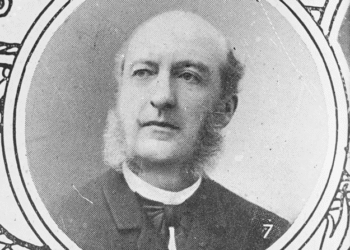
Henri Alexandre Mouhot (1826–1861) was a French naturalist, philologist and explorer who became famous posthumously for his journeys in mainland Southeast Asia. Born in Montbéliard in eastern France, he spent part of his early career in Russia as a language teacher before turning to travel and scientific collecting. Backed mainly by British learned societies such as the Royal Geographical Society and the Zoological Society of London, he headed to Southeast Asia in 1857 to explore, collect specimens and map little-known regions.
Mouhot was not a colonial officer or a merchant; he travelled essentially as a freelance scientific explorer, collecting insects, shells and plants, and recording geography and ethnography along the way. His personality combined scientific curiosity, religious sentiment and romantic sensitivity to landscapes, which would later make his pages about Angkor especially vivid for European readers. Although he died young, at 35, his journals and letters ensured his lasting fame in Europe.
Mouhot’s Expeditions in Siam, Cambodia and Laos
From Bangkok into the interior
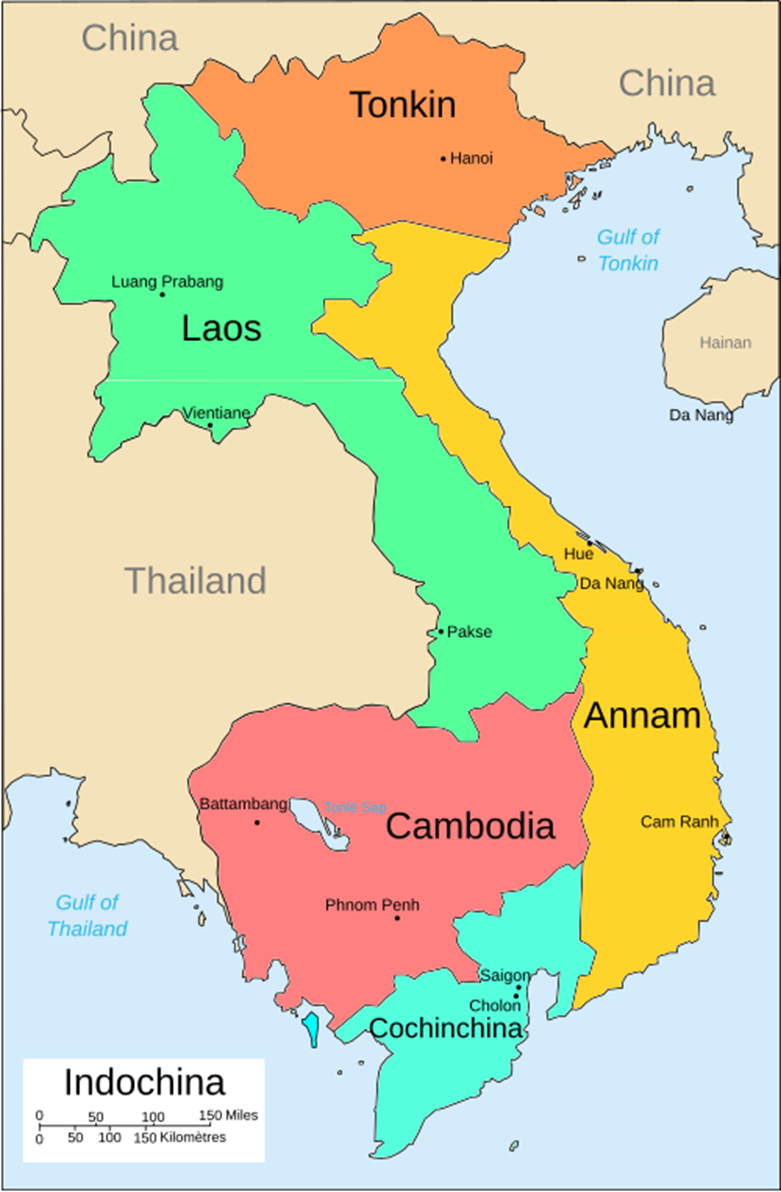
Mouhot reached Bangkok in 1858 and made the city his base for a series of four journeys into the interior of Siam, Cambodia and Laos. Over roughly three years he endured heat, disease, difficult river travel and occasional hostility while traversing forests and uplands that, from a European perspective, were still poorly mapped. On his first expedition he visited Ayutthaya, the former Siamese capital, where he collected large numbers of insects and shells that he dispatched to England.

Subsequent journeys pushed further east and north. He moved through southern Siam towards Cambodia, followed stretches of the Mekong, crossed the Tonlé Sap region, and eventually travelled deep into Laos. Along the way he noted landscapes, languages, customs and wildlife in the careful, descriptive style that would later appeal to European audiences hungry for exotic travel literature.
The Cambodian leg and route to Angkor
Mouhot’s Cambodian journey, undertaken in 1859–1860, was the part of his travels that would make his name. Leaving Bangkok, he moved by sea and river toward the Gulf of Thailand and up through Cambodian territory, meeting missionaries such as Father Charles‑Émile Bouillevaux and securing letters of introduction to local authorities, including the Cambodian king. From there he navigated the Tonlé Sap and entered the provinces of what he called “Ongcor” (Angkor) and Battambang, where he would devote weeks to studying the monumental ruins.

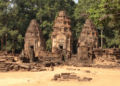
His notebooks from this period reveal a mixture of scientific observation and emotional reaction. He was struck by the scale and sophistication of the temples, comparing them to the greatest monuments known in Europe and the Middle East. These notes, later shaped into narrative form by his brother, became the core of his most influential writings.
Henri Mouhot and Angkor: Discovery or Reinvention?
One of the central questions around Henri Mouhot is whether he truly “discovered” Angkor. In reality, Angkor was never lost to the Khmer people, who continuously lived, worshipped and farmed in and around the temple complexes. Moreover, other Western visitors, including missionaries like Bouillevaux, had described Angkor several years before Mouhot arrived in 1860.
What Mouhot did was to make Angkor dramatically visible to European readers and scholars at a specific moment when archaeological curiosity and imperial interest in Asia were expanding. His dramatic descriptions, engravings based on his sketches, and comparisons with Egyptian and classical monuments fed the 19th‑century fascination with “lost civilizations”. As a result, he became widely and inaccurately celebrated as Angkor’s “discoverer”, a label modern historians now treat with caution.
How his narrative shaped Western perceptions
In his Angkor chapters, Mouhot often used analogies familiar to European readers, likening temple towers or sculpted heads to Egyptian or Greco‑Roman models. By framing Angkor in this way, he hinted that sophisticated art and architecture might have non‑local origins, reflecting the era’s tendency to see the Middle East and Europe as the cradle of all “high” civilization. At the same time, he sometimes speculated that the builders of Angkor belonged to a vanished, superior race, despite observing Khmer communities living nearby.
These views contributed to a myth of Angkor as a “lost city” rediscovered by Europeans, a narrative later reinforced by colonial scholarship and popular histories. Today, specialists emphasize Cambodian continuity and the long local memory of Angkor to dismantle the rediscovery myth, while still acknowledging that Mouhot’s published accounts were pivotal in drawing sustained Western attention to the site.
The Travel Journals and Their Publication
From field notes to bestselling travelogue
Mouhot kept detailed diaries and correspondence throughout his travels, recording everything from botany and zoology to small incidents in village life. After his death, these manuscripts were returned to Europe and edited by his brother Charles into the work usually cited as Voyage dans les royaumes de Siam, de Cambodge et de Laos (and in English as Travels in the Central Parts of Indo‑China). Published in the 1860s, the book combined narrative chapters, letters, sketches and vocabularies, turning scientific notes into a readable adventure story.
The Angkor sections, drawn mainly from his visit in January 1860, became especially famous. Later editions for a broader readership, including a popular Hachette series, helped secure his reputation well beyond specialist circles. For modern readers and researchers, these texts remain valuable both as primary historical sources and as examples of 19th‑century travel writing.

Reading Mouhot critically today
For anyone interested in Cambodia and Angkor, Mouhot’s travelogue still rewards careful reading. He provides early descriptions of landscapes and settlements, notes on Khmer and Lao languages, and eyewitness accounts of routes that were then rarely described in European languages. At the same time, his work must be read critically: some of his interpretations of Angkor’s origins are wrong, and his assumptions about “civilized” and “savage” peoples reflect 19th‑century hierarchies rather than local realities.
A useful approach is to pair Mouhot’s text with Cambodian sources such as Zhou Daguan’s earlier account The Customs of Cambodia and with recent scholarship on Angkor and its surrounding communities. Doing so allows readers to appreciate Mouhot’s meticulous observation and narrative talent without adopting his outdated explanations.
Death in Laos and Posthumous Legacy
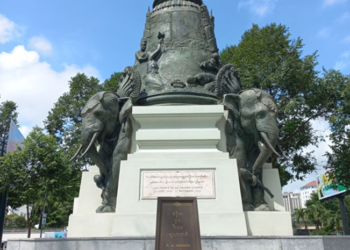
In 1861, while exploring in northern Laos near Luang Prabang, Mouhot contracted what he called “jungle fever,” most likely malaria. He died in November of that year on the banks of a tributary of the Mekong, bringing his final expedition to a tragic end. His companions buried him near the site, and later a tomb was erected in his honour, which can still be visited today.
Ironically, Mouhot never saw the impact his writings would have. In the decades following his death, his descriptions helped fuel European curiosity about Angkor and Indochina, indirectly contributing to later French colonial projects in the region. Modern reassessments, however, place him not as a lone discoverer but as one figure in a longer history of Cambodian, regional and foreign engagement with Angkor.
How Henri Mouhot Matters Today
For contemporary readers, Henri Mouhot matters in at least three ways. First, his travel journals are a rich repository of mid‑19th‑century observations on Siam, Cambodia and Laos, including natural history, geography and everyday life. Second, his Angkor narrative shows how powerful a single, well‑written account can be in shaping global perceptions of a place—even when it contains misunderstandings. Third, his case illustrates how myths of “discovery” can obscure local histories and continuous cultural presence.
If you are researching Angkor, Cambodian history or the history of exploration, reading Mouhot alongside Khmer voices and recent scholarship will give you a more balanced and respectful view. His story is a reminder that travel writing is never neutral: it reflects both the world observed and the gaze of the observer.
Sources & further reading / To know more
- Henri Mouhot – Biographical overview (Wikipedia) – Concise overview of Mouhot’s life, travels and connection with Angkor, with references to major publications and archival material.
- Henri Mouhot – Britannica article – Short scholarly biography emphasizing his role as a naturalist and explorer and his impact on Western awareness of Angkor.
- Voyage dans les royaumes de Siam, de Cambodge et de Laos (Angkor Database) – Presentation of Mouhot’s main travelogue, with context on its publication history and surviving manuscripts.
- Asia & History: Angkor revealed, Henri Mouhot’s journey through Cambodia and beyond (Cambodge Mag) – Narrative article (in English) focusing on his Cambodian route and encounter with Angkor.
- How Angkor Became a “Lost City” (Minneapolis Institute of Art hub) – Explores how Angkor was framed as a “lost city” and the role of 19th‑century explorers in that myth.
- In the footsteps of Henry Mouhot (Dawn Rooney) – Historical essay retracing his routes in Thailand, Cambodia and Laos, linking diary entries to present‑day locations.
Pascal Médeville is a writer and digital publisher specialising in Southeast Asian history, language and culture, with a particular focus on Cambodia and Angkor. He creates in‑depth, accessible articles that connect classic travel narratives and modern scholarship for online readers. His work often explores how explorers, missionaries and local communities have shaped the stories we tell about places like Angkor.