
Nestled in the remote jungles of northwestern Cambodia, in Banteay Meanchey province, about 160 kilometers from Siem Reap, lies the sprawling temple complex of Banteay Chhmar (ប្រាសាទបន្ទាយឆ្មារ)—one of the most enigmatic and least-visited relics of the Khmer Empire. Often overshadowed by the fame of Angkor Wat, this 12th-century temple is a treasure trove of history, art, and mystery. Built during the reign of King Jayavarman VII, the same monarch responsible for Angkor Thom and the Bayon, Banteay Chhmar stands as a testament to the empire’s grandeur, devotion, and architectural brilliance.
Historical Significance
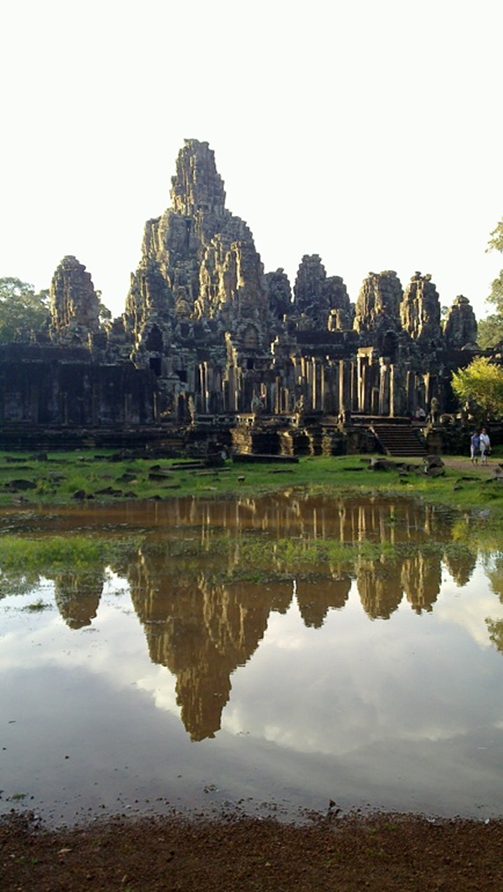
Banteay Chhmar, meaning “Narrow Fortress” in Khmer (and not, as explained sometimes, the “Fortress of the Cats”), was constructed in the late 12th to early 13th century. It served as a provincial hub of the Khmer Empire, likely dedicated to Jayavarman VII’s son, Prince Indravarman, who died in battle. The temple also housed a massive face-tower sanctuary, similar to the Bayon, featuring serene, smiling visages believed to represent the bodhisattva Avalokiteshvara or the king himself as a divine protector.
Unlike Angkor, which was a royal capital, Banteay Chhmar was a strategic and spiritual center in the empire’s northwest, possibly guarding against invasions from the neighboring Thai kingdoms. Its remote location helped preserve many of its carvings, though centuries of neglect and looting have taken their toll.
Architectural Marvels
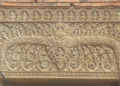
The temple complex is vast, covering an area of about 2.5 by 2 kilometers, surrounded by a moat and an outer wall with four entrance gates. Inside, visitors find a labyrinth of collapsed galleries, towering face-towers, and intricate bas reliefs depicting mythological battles, daily life, and religious ceremonies.
One of its most remarkable features is the “Hall of Dancers”, adorned with carvings of celestial Apsara dancers—similar to those in Angkor Wat but with a unique, dynamic style. Another highlight is the bas-relief of the “Churning of the Ocean of Milk”, a Hindu creation myth also depicted at Angkor Wat but presented here with a rare level of detail.
Perhaps the most striking aspect of Banteay Chhmar is its multi-faced towers, which once numbered over 30, though only a handful remain intact today. These serene stone faces gaze out in all directions, symbolizing the omnipresence of the king and the divine.
Conservation Challenges
For centuries, Banteay Chhmar was swallowed by the jungle, much like Ta Prohm. However, unlike the temples of Angkor, it suffered from severe looting in the 1990s and early 2000s. Thieves hacked away entire sections of bas-reliefs, smuggling them into the illegal antiquities trade. Some stolen panels were later recovered and returned, but many remain lost.
In recent years, efforts by the Global Heritage Fund and Cambodia’s APSARA Authority have stabilized the site, clearing vegetation and reinforcing collapsing structures. A community-based tourism initiative now allows visitors to explore the temple while supporting local livelihoods.
Visiting Banteay Chhmar Today
Reaching Banteay Chhmar remains an adventure. The journey from Siem Reap takes 4-5 hours by road, passing through rural villages and rice fields. Few tourists make the trip, meaning those who do often have the temple entirely to themselves.
The best time to visit is sunrise or late afternoon, when the golden light casts an ethereal glow on the weathered stones. Nearby, travelers can stay in homestays, experiencing traditional Khmer hospitality while contributing to sustainable tourism.
Banteay Chhmar is more than just a “mini-Angkor”—it is a lost masterpiece of Khmer architecture, filled with untold stories and artistic wonders. Its isolation has preserved an air of mystery, making it one of Cambodia’s most rewarding off-the-beaten-path destinations. For those willing to venture beyond Angkor, Banteay Chhmar offers a rare glimpse into the soul of the Khmer Empire, untouched by mass tourism and alive with history.