In March 1970, Cambodia experienced one of the most dramatic political reversals in its modern history. The coup d’État that deposed Prince Norodom Sihanouk and brought General Lon Nol to power did not merely change the ruler; it upended Cambodia’s delicate neutrality amid the escalating Vietnam War and opened the road toward civil war and eventual genocide.
To understand why the coup took place, it is necessary to look at Cambodia’s position in the 1960s. After independence from France in 1953, Sihanouk pursued a policy of strict neutrality, trying to balance between communist powers such as China and North Vietnam and anti-communist countries like the United States and South Vietnam. This balancing act worked for a time, but as the Vietnam War expanded and great‑power tensions intensified, Cambodia’s neutral stance became increasingly difficult to maintain.
Sihanouk’s Neutrality Under Strain
Sihanouk governed through the Sangkum Reastr Niyum movement, combining monarchy, populism, and personal authority. He marginalized formal opposition, kept a tight grip on power, and alternated between left‑leaning and right‑leaning rhetoric to maintain control over a fragmented political landscape. While this system preserved stability for a while, it alienated conservatives, republicans, and communists alike, who all resented his dominance in different ways.

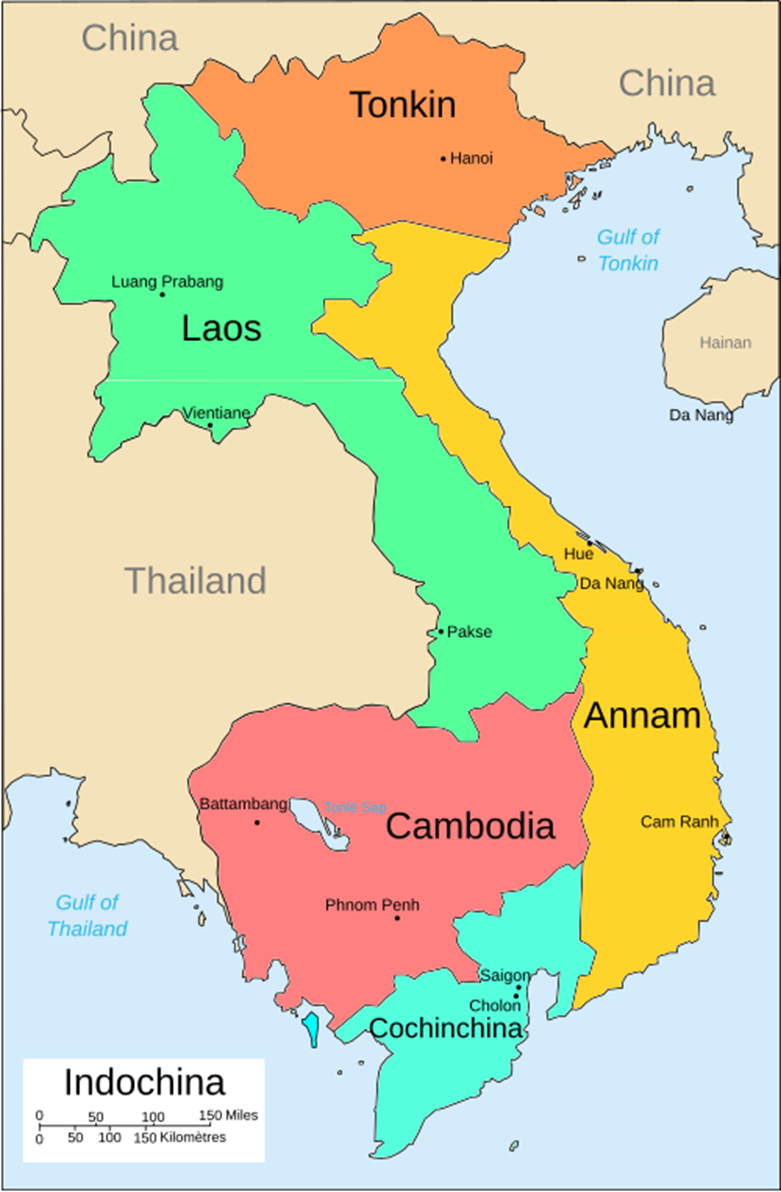
By the mid‑1960s, the Vietnam War began to spill across Cambodia’s eastern borders. Sihanouk permitted North Vietnamese and Viet Cong forces to use Cambodian sanctuaries and, through a secret arrangement, allowed the port of Sihanoukville to serve as a conduit for arms in exchange for guaranteed rice purchases at favorable prices. This policy infuriated nationalist officers and politicians, including Lon Nol and Prince Sirik Matak, who viewed Vietnamese military presence as an intolerable violation of Cambodian sovereignty.
Economic Troubles and Political Opposition
Economic pressures deepened Sihanouk’s problems. Falling revenues from rice exports, corruption among officials, and growing rural hardship eroded his legitimacy. Parliamentary elections in 1966 produced a more conservative assembly, bringing Lon Nol—a staunch nationalist and anti‑communist—into the prime minister’s post. This shifted the balance inside the regime and created an institutional base for those who wanted a harder line against both internal leftists and foreign communists.
At the same time, Sihanouk’s relations with the United States deteriorated. Washington accused Cambodia of serving as a rear base for the Viet Cong, while Sihanouk condemned American and South Vietnamese incursions and gradually moved closer to Beijing and Hanoi. By 1969, U.S. President Richard Nixon had already authorized secret bombing raids on communist sanctuaries inside Cambodia, adding another layer of tension and instability to the situation.

March 1970: From Protests to Parliamentary Vote
The immediate prelude to the coup came when Sihanouk left Cambodia in January 1970 for medical treatment in France, followed by visits to Moscow and Beijing. In his absence, Lon Nol and Sirik Matak began to consolidate their position and exploited growing anger toward Vietnamese forces operating inside the country.
On 11–12 March 1970, demonstrations erupted in Phnom Penh, targeting the North Vietnamese and Viet Cong embassies. Mobs attacked and sacked the North Vietnamese mission, and Vietnamese businesses and churches were assaulted in an atmosphere of orchestrated anti‑Vietnamese fury. Soon afterward, Lon Nol’s government cancelled existing trade agreements with North Vietnam and closed Sihanoukville to communist shipping, while issuing an ultimatum demanding all Vietnamese communist forces leave Cambodia within 72 hours.

The ultimatum was impossible to enforce militarily and went unanswered. On 18 March 1970, with troops deployed around Phnom Penh, the National Assembly met under the presidency of In Tam. After a debate, deputies voted unanimously to withdraw confidence from Norodom Sihanouk and invoked constitutional provisions that effectively removed him as chief of state. Lon Nol assumed emergency powers as head of government, while Cheng Heng became provisional head of state. It was, on paper, a constitutional act rather than a classic military putsch, but in practice it functioned as a coup that ended Sihanouk’s two‑decade domination of Cambodian politics.
Sihanouk in Exile and Alliance with the Khmer Rouge
From Beijing, Sihanouk reacted with fury and called on Cambodians to rise up against the “traitors” in Phnom Penh. With Chinese backing, he formed a government‑in‑exile, the Royal Government of National Union of Kampuchea (GRUNK), and entered into an alliance with the Cambodian communist guerrillas who were increasingly known as the Khmer Rouge.
This alliance transformed the insurgency. Before 1970, the Khmer Rouge were a relatively small, clandestine movement with limited rural support. Once Sihanouk’s name and image were linked to the rebellion, many peasants—still loyal to the prince—rallied to forces they believed were fighting to restore him, not realizing they were strengthening a radical communist movement. North Vietnam also intensified its involvement in Cambodia, launching an offensive in late March 1970 at the Khmer Rouge’s request and pushing deep into Cambodian territory.
The Khmer Republic and the Widening War
In October 1970, the new regime proclaimed the Khmer Republic, formally abolishing the monarchy and redefining Cambodia as a republic aligned with the United States and South Vietnam. Lon Nol became the central figure in this new order, combining the roles of military strongman and political leader.

The Khmer Republic relied heavily on American military and financial support. U.S. and South Vietnamese forces entered eastern Cambodia in 1970 to attack communist bases, while U.S. bombing intensified over the following years. The goal was to disrupt the North Vietnamese and Viet Cong networks and shore up Lon Nol’s regime, but the bombings and fighting devastated large swathes of the countryside and displaced hundreds of thousands of civilians.
Inside the country, the republican authorities struggled with corruption, factionalism, and weak administration. Government troops were often underpaid and poorly supplied, while the insurgents, benefiting from North Vietnamese support and growing rural recruitment, expanded their control over much of the countryside. By 1973–1974, Phnom Penh and a few other cities were increasingly isolated, dependent on foreign aid and air resupply to survive.
The coup of 1970 is widely regarded as a turning point in the Cambodian Civil War. It destroyed the last vestiges of Sihanouk’s neutralist strategy and bound Cambodia more directly to the dynamics of the Indochina conflict. Lon Nol’s decision to align with Washington and confront Vietnamese communists militarily re‑cast Cambodia from a buffer state into a battlefield.
As the war dragged on, popular disillusionment with the Khmer Republic deepened. Economic collapse, inflation, and spiraling insecurity eroded what support the regime once had. In contrast, the Khmer Rouge, still formally allied with Sihanouk, presented themselves as patriotic fighters resisting foreign intervention and corrupt elites—even as they prepared a far more radical project for Cambodia’s future.
On 17 April 1975, Khmer Rouge forces captured Phnom Penh, forcing Lon Nol into exile and bringing an end to the republic born out of the 1970 coup. The new rulers soon emptied the cities, abolished money and markets, and launched policies that led to the deaths of an estimated 1.5 to 2 million people through execution, starvation, and overwork. The path from the parliamentary vote of March 1970 to the killing fields of the late 1970s was not inevitable, but the coup decisively helped set it in motion.
Debate continues over why the coup happened and how much outside actors were involved. Some scholars emphasize internal tensions—elite rivalries, nationalist anger at Vietnamese presence, and frustration with Sihanouk’s authoritarian yet erratic rule. Others highlight Cold War dynamics and suggest that the United States saw in Lon Nol an opportunity to weaken communist forces in Indochina, even if direct American orchestration remains disputed.
What is widely accepted is that the 1970 coup shattered Cambodia’s fragile equilibrium. It removed a charismatic, if deeply flawed, leader who had managed, for nearly two decades, to keep the country largely at peace while war raged around it. In his place emerged a republican experiment that lacked broad legitimacy, depended on foreign patronage, and unfolded in the worst possible regional context.
Today, the events of March 1970 are remembered in Cambodia as the beginning of a long descent—from contested neutrality to civil war, from the Khmer Republic to Democratic Kampuchea, and from there to Vietnamese occupation and prolonged instability. The coup stands as a stark reminder of how quickly a political gamble, undertaken in the name of national salvation, can accelerate a country’s slide into catastrophe.