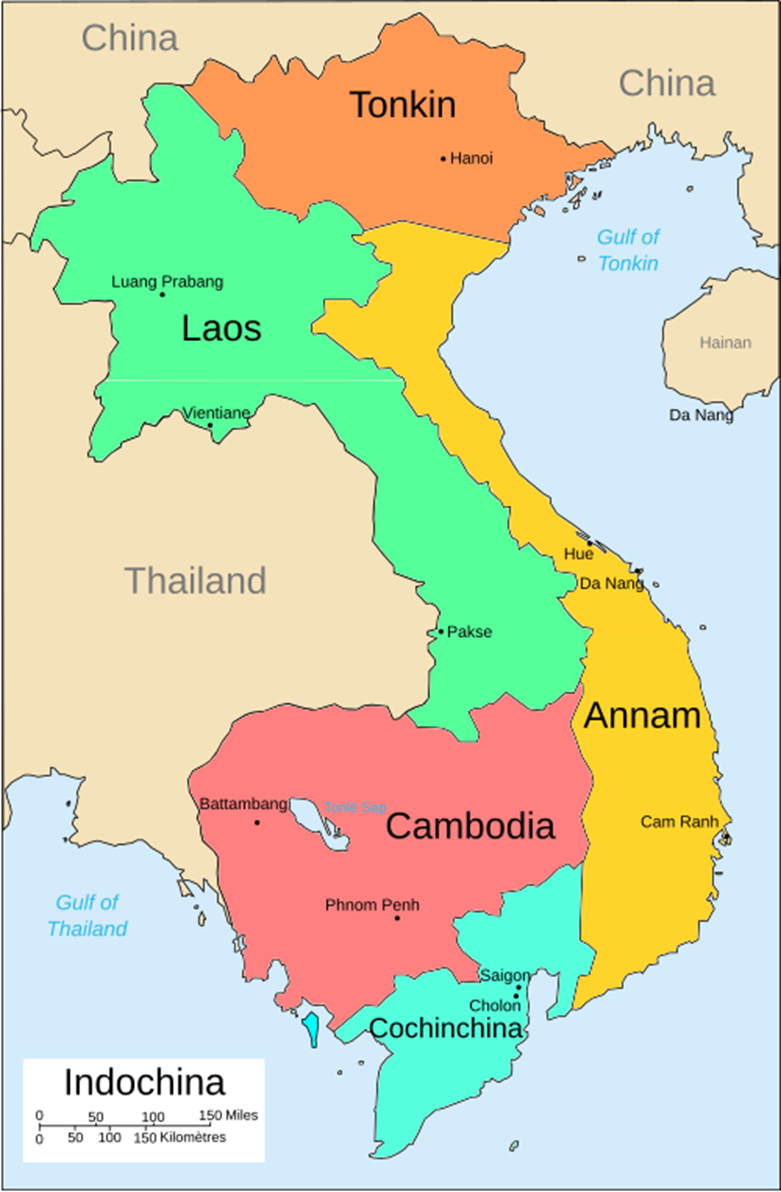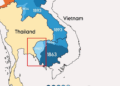
Kaundinya I (Khmer: កៅណ្ឌិន្យ), a.k.a. Preah Thong (Khmer: ព្រះថោង) is renowned as the legendary Indian Brahmin prince who co-founded the ancient kingdom of Funan—present-day southern Cambodia and parts of Vietnam—after marrying the Naga princess Soma, probably during 1st century CE. This union not only established Cambodia’s oldest known royal dynasty, but also marked a profound fusion between local traditions and Indian influences, laying the foundation for Khmer civilization and cultural identity.

Origin Myth and Historical Foundations
According to both historical records and poetic legend, Kaundinya I was an Indian Brahmin, often linked to the coastal region of ancient Kalinga (today’s Odisha) or to royal lineages from further north in India. Some sources describe him as a prince, others as a merchant, notably skilled in Hindu ritual and martial prowess. The story is primarily drawn from Chinese annals (like the Liangshu 《梁书》) and early Cambodian inscriptions.
Kaundinya’s fateful journey began when he and his companions sailed across the Bay of Bengal, likely seeking trade with Southeast Asia’s rich and diverse cultures. Their adventure soon turned dramatic: local ruler Soma, a Naga princess (naga: serpent deity), led a naval assault against Kaundinya’s ship, then commanded a people believed to be indigenous to the Mekong Delta region.
After fierce confrontation, Kaundinya’s skills and wisdom impressed Soma. Rather than perpetuating violence, the encounter turned diplomatic and romantic. Soma, struck by Kaundinya’s courage and reputedly guided by a prophecy that foretold her marrying a foreigner, offered peace—and her hand in marriage. Their union became both a mythic and historical explanation for Funan’s foundation as a kingdom.
This marriage symbolized more than romance: it physically and spiritually united the powers of earth and water, native and foreign, in the Khmer imagination. Soma embodied land and fertility, while Kaundinya brought knowledge of law, governance, and new religious rituals, representing the early intrusion of Indian influence into Southeast Asia.
Establishment of the Funan Kingdom
Through their alliance, Kaundinya and Soma established Vyadhapura (near today’s Ba Phnom), the capital of Funan, around the 1st century CE, making it one of Southeast Asia’s earliest state formations. Their dynasty and descendants would rule Funan for centuries. It is notable that succession and royal legitimacy in Funan initially followed the female (matrilineal) line, with Soma’s lineage providing the right to rule.
The legend further explains why the naga (serpent) became such a powerful motif throughout Khmer art, temple iconography, and ritual. The “marriage of the naga” was later echoed in centuries of royal court ceremonies, especially at Angkor, reinforcing the mystic ancestry of later Khmer kings.
Syncretism and Cultural Fusion
Kaundinya’s marriage to Soma is often interpreted by historians as a symbol of the fusion between India’s civilizational innovations—including writing, political institutions, and Hindu-Buddhist thought—and indigenous local belief systems centered on animism and ancestral spirits. The kingdom of Funan thus emerged as a remarkably syncretic civilization, blending Sanskrit with ancient Khmer, importing Indian gods, myths, and art, and adapting these to the Southeast Asian context.
Many aspects of the Funanese court, religious rituals, and governance were directly inspired by Indian prototypes, yet always adapted to local realities. Over time, the dominance of naga symbolism and veneration of local deities persisted, woven into the later temples and state ideology of the Khmer empire.
Chinese Accounts and Archaeological Evidence
Much of what is concretely known about Kaundinya and Funan comes from Chinese envoys’ reports, notably the accounts by Kang Tai and Zhu Ying in the 3rd century CE. These chronicles describe Funan as a prosperous kingdom engaged in extensive maritime trade with India and China, producing rice, silk, gold, and other goods. The Chinese also recorded the legend of Funan’s creation, and traced subsequent royal lineages back to Kaundinya and Soma.
Archaeological discoveries—such as the ruins of Vyadhapura and associated artifacts—confirm the presence of early Indian cultural items, inscriptions in both Sanskrit and ancient Khmer, and funerary practices reminiscent of both Indic and Austroasiatic traditions. These findings reinforce the interpretation of Funan as a hybrid society, a crossroads of cultures.
Kaundinya’s story is not just an account of ancient conquest or exotic marriage, but a creation myth foundational to Cambodian self-understanding. Later Cambodian kings traced their legitimacy to this union, and the motif of the foreign hero marriage to a local princess appears repeatedly in Khmer folklore, palace rituals, and Buddhist literature.
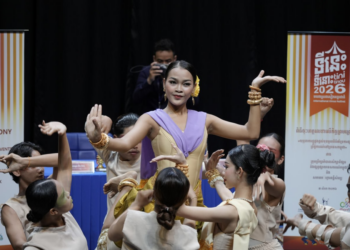
The connection to the naga (serpent deities) not only provided mythical authority, but also ensured the political and religious order of the Khmer people was anchored in both land and water, as reflected by the grand temples, bas-reliefs, and waterworks of subsequent eras, particularly Angkor. The marriage ritual “Preah Thong and Neang Neak” is still referenced today in both Khmer weddings and state ceremonies.
Historiographical Interpretations
Modern scholars debate many details—whether Kaundinya’s origins were Brahminical or royal, how much Indian influence really shaped early Funanese society, and to what extent the myth serves to legitimize later Khmer kingdoms by evoking a divine and foreign ancestry. Some argue that the legend reflects local agency and creative adaptation as much as outside intervention.
Recent academic work emphasizes the importance of reading Funan’s story not only as “Indianization,” but as the mutual and dynamic interplay of Indian and Southeast Asian peoples, generating new forms of language, polity, and art.
Kaundinya I’s name and story live on in numerous forms: Khmer wedding rituals, national creation myths, temple reliefs showing naga-wrapped staircases, and the naming of prominent Cambodian institutions. His tale, intertwined with that of Soma, underlines the Cambodian ethos of cultural resilience, openness, and syncretism.
In summary, Kaundinya I stands as a foundational hero of Cambodian history—his legendary voyage, union with Soma, and the creation of Funan continue to inspire national pride, research, and reinterpretation, not only in Cambodia, but in the larger context of Southeast Asian and world history.