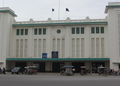
Customs procedures in Cambodia are managed by the General Department of Customs and Excise (GDCE) under the Ministry of Economy and Finance. These regulations govern the import, export, and transit of goods, ensuring compliance with national law and international trade agreements. The system has been modernized to promote transparency and efficiency through digital tools like the ASYCUDA World platform and new legal instruments introduced in 2025.

Registration and Preliminary Requirements
Businesses engaged in import and export must first register with the Ministry of Commerce, obtain a Taxpayer Identification Number (TIN) from the General Department of Taxation, and then register with the GDCE as authorized declarants. They must also open VAT accounts for tax compliance and may designate a licensed customs broker to handle documentation and submission through the ASYCUDA World system.
Every shipment entering Cambodia must be declared via the Single Administrative Document (SAD), submitted electronically and in print to a customs clearance office. Supporting documents generally include the commercial invoice, packing list, bill of lading or airway bill, certificates of origin, and relevant import permits. Goods such as food, chemicals, and electronics require pre-arrival assessment authorization from CAMCONTROL, the inspection authority for product quality and safety.
Once documents are submitted, customs will classify goods under a color-coded system (green, blue, yellow, red) to determine the inspection level. Green and blue lanes imply immediate clearance after tax payment, while yellow and red require additional verification or physical inspection. Import duties typically include a 10% VAT on the CIF (cost, insurance, and freight) value, plus applicable tariffs. Payments are processed electronically or through authorized banks before the goods are released.
Exporters follow similar steps, including submitting a SAD form with commercial documents such as invoices, packing lists, and export licenses when needed. Export duties are generally minimal, and Cambodian exporters often benefit from preferential tariffs under ASEAN and other free trade agreements. A Certificate of Origin must be obtained from the Ministry of Commerce if exporters wish to claim such benefits abroad.
Cambodia’s customs transit system allows goods to pass through the country’s territory under the control of customs authorities. The process was updated in 2025 under Instruction 3133, which introduced simplified procedures and clearer responsibilities. Only authorized operators—such as bonded warehouse companies or approved logistics firms—may transport goods under transit. Operators must submit a guarantee and ensure proper sealing of vehicles or containers to prevent tampering. Authorized Economic Operators (AEOs) enjoy faster clearance and fewer inspections.
GDCE officials conduct risk-based inspections and work closely with CAMCONTROL for sensitive items. Noncompliance with customs regulations, falsified documents, or misdeclaration may result in penalties, confiscation, or suspension of privileges. The introduction of ASYCUDA World, new digital tools, and Instruction 3133/25 aims to reduce clearance times, strengthen traceability, and align Cambodia’s trade system with international best practices.
Overall, Cambodia’s customs framework in 2025 reflects a balance between trade facilitation and regulatory enforcement, designed to support business growth while safeguarding national interests and public safety.
A “Manual on Customs Procedures in Cambodia” issued par GDEC in December 2024, in English, is available here for free downloading.