In the middle of the 17th century, at a time when Japan had already embarked on its policy of seclusion (sakoku), one man undertook a remarkable journey that brought him all the way to the majestic ruins of Angkor, the spiritual and political heart of the former Khmer Empire. This man, Morimoto Kazufusa (森本一房, ?–1674, a.k.a. Morimoto Ukondayu Kazufusa 森本右近太夫一房), a Japanese merchant from either Osaka or Nagasaki according to different sources, is considered the only Japanese of the 17th century whom we can be certain visited Angkor and left behind a written account of it. Little known today, his testimony is a rare glimpse of Japanese awareness of the wider world and stands as one of the earliest Japanese ethnographic observations of Southeast Asia.

The Japanese Context of Long-Distance Voyages
Japan during the Edo period maintained highly controlled exchanges with the outside world. Under the Tokugawa shogunate’s sakoku policy, enacted in the 1630s, Japanese subjects were prohibited from leaving the archipelago. Yet, before this closure became absolute, Japanese merchant communities had settled in a number of Southeast Asian ports: Ayutthaya in Siam, Hội An in Vietnam, and Manila in the Philippines. These colonies provided support for voyages of the so-called “red-seal ships” (shuinsen), merchant vessels authorized by the shogunate through licensed documents.
It was in this context of fragile but active maritime exchange that Morimoto Kazufusa embarked on his voyage. Likely motivated by trade opportunities as well as personal curiosity, he traveled southward to Cambodia, a kingdom then experiencing political decline, but still crowned with vestiges of its former grandeur—above all, the temple city of Angkor.
Arrival in Cambodia
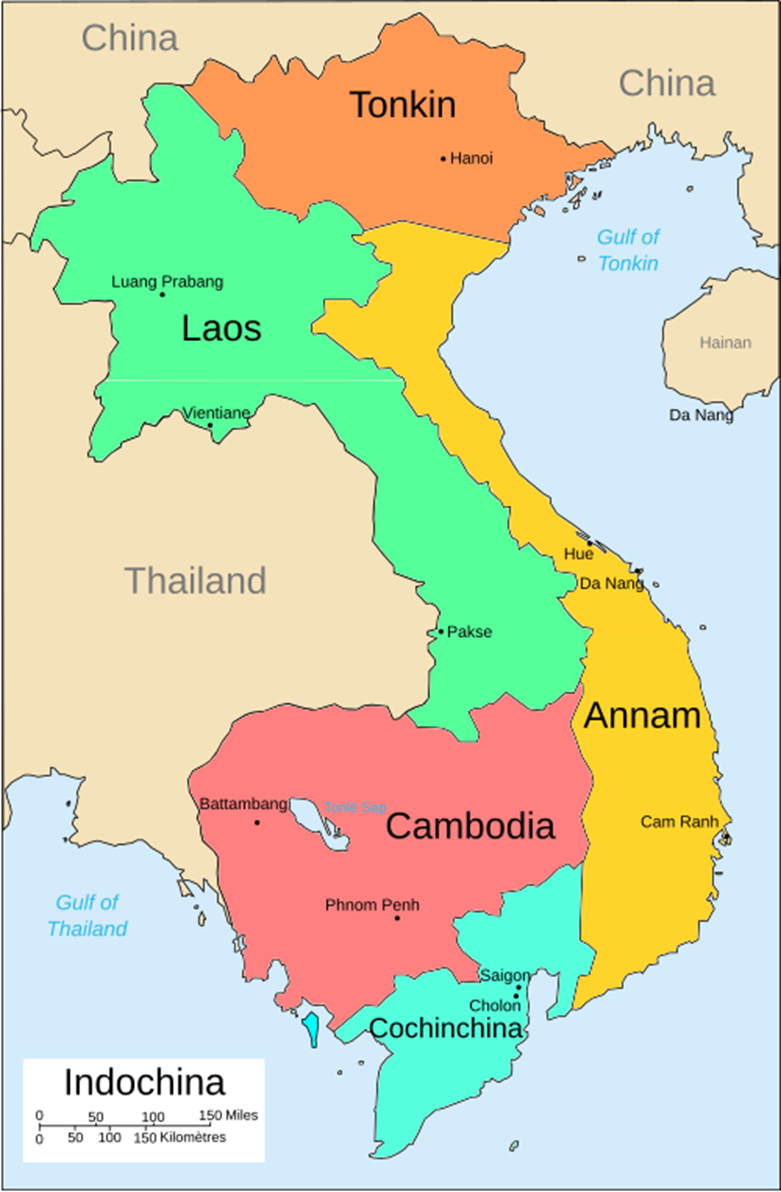
In the 17th century, Cambodia was caught between rival influences from Siam and Đại Việt, who competed for dominance in the Mekong basin. The capital, Phnom Penh, was a modest site in comparison to the splendor of the past at Angkor. Nevertheless, the fame of the ancient temples still circulated among merchants and travelers.
Morimoto Kazufusa likely disembarked in the region of Phnom Penh or Oudong, which served as the royal capital of Cambodia during those years. His notes suggest he was received with relative openness by local officials and granted freedom of movement, a rare privilege for a foreigner. From there, he journeyed northward toward the plain of Angkor, most probably following the waterways of the Tonlé Sap.
The Visit to Angkor
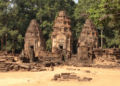
His account conveys the awe he felt on encountering the monumental ruins of Angkor. By that time, the royal court had abandoned the city for nearly two centuries. The jungle had overgrown much of the stonework, yet the towers and galleries still stood in somber majesty.
Morimoto described the scale of the architecture, the intricate carvings of apsaras and mythological scenes, and the engineering of moats and reservoirs. Though not a scholar in the classical sense, he approached Angkor with the practical eye of a merchant and an observer. He noted the immense strength of the stone and the enduring symmetry of structures that left him astounded.
Two monuments in particular appear in his writings: Angkor Wat, which he described as a temple “of immeasurable expanse,” and the Bayon, whose many towers with serene faces struck him as uncanny guardians staring through the forest canopy.
A Japanese Gaze on Angkor
What makes Morimoto’s testimony valuable is that it provides a rare foreign perspective from Asia itself. Zhou Daguan, the Chinese envoy of the late 13th century, offered detailed ethnography of Angkor at its height. Three centuries later, Morimoto offered a contrasting perspective: Angkor in its ruin, suffused with mystery and silence.
His Japanese viewpoint brings out a pragmatic astonishment. Where Zhou Daguan focused on customs and court life, Morimoto dwelt on the physicality of the ruins. He compared their vastness to Japanese architecture, confessing that he had never imagined such scale. Beneath this awe lay a note of melancholy, for he realized that this grandeur belonged to a bygone world being reclaimed by the forest.
Return and Transmission
After his journey, likely completed via Nagasaki, Morimoto wrote down his impressions. These records circulated within limited circles and became a rare document about ancient Cambodia from a Japanese eye. Upon his death in 1674, his legacy remained quiet, confined to manuscripts rather than widespread renown. Unfortunately, there seem to be no English translation of these records.
In later centuries, particularly during the 19th and 20th centuries, historians who revisited Asian testimonies on Angkor rediscovered his account. Although the French explorer Henri Mouhot is often credited with “introducing Angkor” to the Western world, Kazufusa’s travels reveal that Angkor had already attracted Japanese curiosity centuries earlier.
Historical Significance
Morimoto’s voyage is significant for several reasons:
- Cross-cultural contact: His presence highlights the limited yet real Japanese connections with Southeast Asia during the early Edo period.
- Memory of Angkor: His words reveal how Angkor was perceived not in its grandeur, but as a site fallen to ruin, imbued with mystery.
- Proto-ethnography: His practical descriptions bridge the literary chronicles of China and the scientific attitudes that European explorers would later bring.
A Little-Known but Symbolic Figure
Today, Morimoto Kazufusa remains a marginal name in the larger story of Japan’s interactions with Southeast Asia. Yet, his journey speaks of human curiosity unbound by distance or national frontiers. He traveled neither as a diplomat nor as a famous scholar but as a merchant who allowed wonder to guide his steps.
Through him, Japanese and Cambodian histories touched fleetingly, forming a bridge between two distant worlds.
Conclusion
Morimoto Kazufusa’s 17th-century journey to Angkor is a modest adventure but one full of meaning. It shows the universal appeal of Angkor, capable of inspiring awe in Chinese envoys of the 13th century, European explorers of the 19th century, and a lone Japanese merchant in between.
When Morimoto died in 1674, he could not have imagined that posterity would remember him not for trade or wealth but for his quiet curiosity that carried him into the heart of Angkor. In the long memory of world heritage, his name remains a small but shining reminder that Angkor’s magic has always belonged to all who beheld it, regardless of origin.