
Kandal province (ខេត្តកណ្ដាល), located in the heart of Cambodia, is a region characterized by its strategic geographic position, vibrant economy, and rich cultural history. As the second most populous province in Cambodia after Phnom Penh, Kandal plays a significant role not just as a logistical and agricultural hub, but also as a region with deep historic roots and diverse communities.
Geographical Overview
Kandal province completely surrounds Phnom Penh, Cambodia’s capital, forming part of the greater Phnom Penh Metropolitan Area. Geographically, it lies in the southeast of the country, bordered to the north by Kampong Chhnang and Kampong Cham, to the west by Kampong Speu and Takéo, to the east by Prey Veng, and to the south by Vietnam’s An Giang and Đồng Tháp provinces. Covering a total area of approximately 3,179 square kilometers, its landscape is predominantly a low-lying floodplain with an average elevation of no more than 10 meters above sea level.
Two of Cambodia’s largest rivers, the Mekong and the Bassac, flow through Kandal, shaping its fertile agricultural land and supporting trade and transport throughout the region. The province’s climate is typically tropical, with warm, humid weather and distinct wet and dry seasons. The monsoon season lasts from May to October, while the dry season extends from November through April. The hottest months are March through May, with the coolest period from November to March.
History and Cultural Heritage
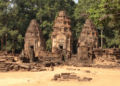
Kandal’s history mirrors the broader historical trajectory of Cambodia. Archaeological evidence shows the area has been inhabited since the Funan and Chenla periods (from the 1st to the 9th centuries). Later, Kandal became part of the powerful Khmer Empire, whose influence is visible in the province’s ancient temples and historical sites. The region thrived due to its position near the Mekong and proximity to the ancient trade routes, allowing it to become both a cultural and economic center.
In the post-Angkor era, the area continued to evolve, particularly with increased French administrative influence during the colonial period. The modern boundaries and administrative divisions of Kandal were solidified under French colonial rule and subsequent Cambodian governments. The province has remained central to Cambodia’s economic and political spheres, especially given its proximity to the capital.
Demographics and Communities
With a population exceeding 1.28 million, Kandal is the country’s second-most-populated province and one of its most densely settled regions. Most residents are Khmer, but there are also minority communities, including Cham Muslims — historically comprising 8–12% of the population, but now reduced due to assimilation — and Vietnamese and Chinese Cambodians who have concentrated in certain areas. The provincial capital is Ta Khmau, located just 8–10 kilometers south of Phnom Penh’s urban center, underscoring the close interlinkage between Kandal and the capital.
Administrative Structure
Kandal is subdivided into 10 districts and 3 municipalities, which encompass 146 communes and over 1,000 villages. The principal districts include Kandal Stueng, Angk Snuol, Kien Svay, S’ang, Ponhea Lueu, Kaoh Thum, Lvea Aem, Leuk Daek, Mukh Kampul, and Khsach Kandal. Ta Khmau serves as both the capital and the most populous urban center.
Economy and Livelihood
Kandal’s economy is robust and diverse, acting as a critical economic belt for Phnom Penh. It is one of Cambodia’s leading agricultural regions, thanks to its rich alluvial soils and water resources. Agriculture employs a large proportion of the population, with rice cultivation dominating (over 100,000 hectares are devoted to rice, producing yields above the national average). Besides rice, farmers grow palm oil, peanuts, maize (especially in the Leuk Daek district), pepper, and various vegetables. Fishing is another important livelihood due to the proximity of major rivers.
The province also supports extensive cottage industries, including wood carving, silk weaving, and the production of traditional handicrafts. In recent decades, Kandal has become a nucleus for Cambodia’s burgeoning garment industry, with over 500,000 workers employed in its numerous garment factories. These factories not only bolster the provincial economy but also contribute substantially to Cambodia’s national export revenues.
Industrial development is further encouraged by Kandal’s proximity to key transportation infrastructure, including major national roads and bridges that link it to other provinces and neighboring Vietnam. Two international checkpoints — Kaam Samnar and Chrey Thom — facilitate cross-border trade and travel, enhancing the province’s economic connectivity.
In line with Cambodia’s modernization efforts, new projects such as the construction of Techo – Ta Khmao International Airport are underway, reflecting the dynamic economic expansion of the region and its increasing importance as a gateway for international business and tourism.
Tourism and Attractions
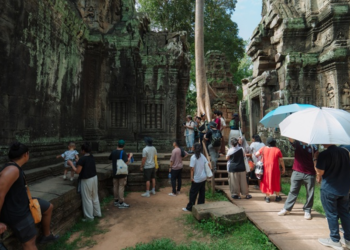
While much of Kandal’s tourism is overshadowed by Phnom Penh, the province offers several notable attractions in its own right. Oudong, the former royal capital of Cambodia and home to the Oudong Mountain, remains an important pilgrimage site and offers panoramic views of the surrounding countryside.
The rural landscape, dotted with rice paddies, traditional villages, and palm-fringed fields, draws visitors seeking authentic Cambodian rural life. Local markets in towns such as Ta Khmau and Kien Svay offer vibrant experiences of everyday life in Kandal, while the province’s proximity to Phnom Penh makes it a popular base for day trips or weekend getaways.
Socio-Economic and Cultural Trends
Kandal province is known not only for its economic vigor but also for its cultural resilience. Traditional festivals, Buddhist ceremonies, and local customs continue to shape the social calendar. Minority groups contribute to the cultural mosaic of the region, with Cham Muslims and Vietnamese communities maintaining their languages, cuisines, and religious practices alongside the majority Khmer population.
Education and Infrastructure
Kandal benefits from its connectivity to Phnom Penh, giving residents access to educational and health facilities. The province itself has numerous primary and secondary schools, as well as vocational centers supporting local industries. Infrastructure development, including roads, bridges, and water management systems, has improved significantly over the years, enhancing both quality of life and economic opportunities.
Environmental Features
Kandal’s plains are prone to periodic flooding, which, while challenging to manage, plays an important ecological role in maintaining soil fertility for rice and other crops. The presence of large rivers not only supports agriculture and fisheries but also biodiversity, although increasing industrialization and urbanization pose environmental challenges that require balanced policy interventions.
Conclusion and Prospects
Kandal province stands out as a microcosm of Cambodia itself: a region blending ancient history, rural tradition, and rapid modernization. Its integration with Phnom Penh drives economic and demographic dynamism, while its fertile landscape supports robust agricultural production. As ongoing infrastructure and industrial projects cement its strategic centrality, Kandal is poised to remain at the forefront of Cambodia’s development trajectory, even as its cultural heritage and natural landscapes continue to enrich both residents and visitors alike.