Introduction
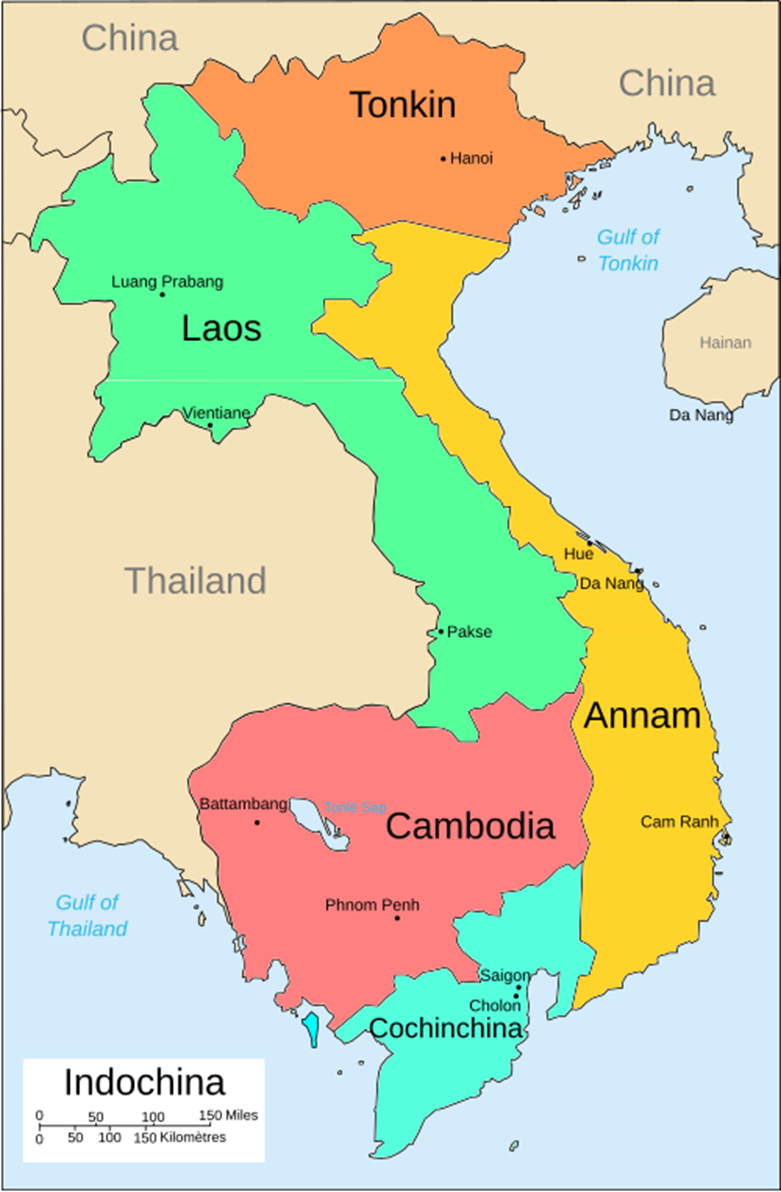
The Franco-Thai War was a conflict fought between the Kingdom of Thailand and Vichy France from late 1940 to early 1941, primarily over disputed territories in French Indochina. While often overshadowed by World War II, this war was a significant event for Southeast Asia, reflecting both regional ambitions and the shifting power dynamics resulting from colonial decline and Japan’s rise.
Background
Colonial Tensions and Thai Ambitions
Over the course of the late 19th and early 20th centuries, colonial France had gained control over Laos and Cambodia, acquiring territories previously under Siamese (Thai) influence. The 1904 and 1907 Franco-Siamese Treaties saw Thailand (then Siam) cede significant land to France. The weakening of France after its defeat by Nazi Germany in 1940 and formation of the Vichy regime left its colonial holdings in Asia vulnerable. Observing France’s waning control and Japan’s encroachment into Indochina, Thai Prime Minister Field Marshal Plaek Phibunsongkhram saw an opportunity to recover lost land.
Build-up to War
Nationalist fervor in Thailand was stoked by the government, leading to anti-French demonstrations. Initial efforts to negotiate for the return of lost territory failed, prompting Thailand to begin military preparations. The military buildup included strengthening the Royal Thai Army and Air Force, which at the time enjoyed a technology and morale advantage over local French colonial forces.
Outbreak and Course of the War
Initial Skirmishes
Border skirmishes erupted in October 1940 along the Mekong frontier. By January 1941, Thailand launched a coordinated offensive with operations in Laos and Cambodia, backed by air strikes conducted by the Royal Thai Air Force on key French military targets in Vientiane, Phnom Penh, Sisophon, and Battambang. The outdated French air force struggled to counter these raids and was frequently outmatched.
Thai Offensive and French Response
On 5 January 1941, after a French attack on Aranyaprathet, the Thai military pushed into Laos and Cambodia. The Burapha and Isan Armies overran many French positions, especially in Laos, while French resistance stiffened in parts of Cambodia. The fighting was marked by the use of modern Thai aircraft, whose effectiveness was noted even by French commanders.
Battle of Yang Dang Khum and Phum Preav
On 16 January, the French attempted a counteroffensive at Yang Dang Khum and Phum Preav, hoping to blunt the Thai advance. Poor intelligence and disorganization hindered the French attack; despite initial gains, they were forced to withdraw. Thai forward units, limited by French Foreign Legion artillery, could not fully exploit the victory, and a further advance was checked.
Naval Engagement: The Battle of Ko Chang
In an attempt to turn the tide at sea, Admiral Jean Decoux ordered the French Groupe Occasionnel into action. On 17 January 1941, the French squadron surprised a Thai naval detachment at anchor off Ko Chang. In a brief but fierce battle, the French light cruiser Lamotte-Picquet and supporting ships sank two Thai torpedo boats and badly damaged the coastal defense ship Thonburi, suffering no casualties themselves. This victory boosted French morale, but proved insufficient to reverse the overall course of the war.
Air Battles
The Thai air force continued to bomb French positions, culminating in an attack on the Angkor airfield on 24 January, and a final bombing of Phnom Penh and Sisophon on 28 January. Despite these efforts, the war appeared to be entering a new phase, as regional powers began to intervene.
Japanese Mediation and Armistice
With both sides at risk of greater casualties and concerned about regional stability, Japan intervened. Keen to strengthen its influence over Indochina and maintain stability for its own strategic aims, Japan brokered a ceasefire. On 31 January 1941, representatives of both Thailand and Vichy France met aboard the Japanese cruiser Natori in Saigon to sign an armistice. The ceasefire was backdated to 28 January, reflecting ongoing negotiations already underway.
On 9 May 1941, a formal peace treaty was signed in Tokyo, requiring the Vichy French to cede territory to Thailand. The transferred provinces included:
- Battambang and Pailin (reorganized as Phra Tabong Province)
- Siem Reap, Banteay Meanchey, and Oddar Meanchey (as Phibunsongkhram Province)
- Preah Vihear and part of Champassak (merged as Nakhon Champassak Province)
- Xaignabouli (renamed Lan Chang Province)
Casualties and Military Losses
Combat casualties were moderate but significant. The French lost approximately 321 dead or wounded, 178 missing, and 222 captured, with heavy losses to their air force (around 30 aircraft lost). The Thai suffered 108 killed, 374 wounded, and 21 captured. Civilians also bore consequences from bombing raids and ground battles.
Aftermath and Legacy
Return of Territories in 1946
Japan’s defeat in World War II forced a new reckoning. The 1945 Allied victory left France eager to regain authority in Indochina and compelled Thailand to return all wartime territorial gains. Under Allied and French pressure — specifically a threat to veto Thailand’s entry into the United Nations — a new Franco-Thai settlement was signed in November 1946 in Washington, D.C., formally reversing the previous cessions.
Impact on Thailand The war heightened Thai nationalism and reinforced the government’s legitimacy. Military victories were used for domestic propaganda. The construction of the Victory Monument in Bangkok commemorated those who died and became a nationalist symbol. However, the temporary restoration of territory ultimately produced limited lasting benefit and entangled Thailand in the politics of imperial Japan and Allied postwar diplomacy.

Broader Implications
The Franco-Thai War illustrated both the fragility of imperial control in Southeast Asia and the ambitions of regional powers. It also set a precedent for Japanese intervention in regional disputes for its own strategic gain—part of a prelude to greater Japanese expansion in the Pacific.
Conclusion
The Franco-Thai War was a short but consequential episode that encapsulated the interplay of weakened colonial authority, rising Asian nationalism, and the looming shadow of Japanese imperial ambition. Despite Thai military successes and temporary territorial gains, the war’s ultimate effect was to reaffirm the arbitrariness of colonial borders and foreshadow further upheaval in Southeast Asia as World War II unfolded.