Wonders of Cambodia
  • Home
  • Culture
  • Cuisine
  • Tourism
  • Business
  • Life in Cambodia
  • 中文
  • ខ្មែរ
  • Français
  • Tiếng Việt
  • e-Books
No Result
View All Result
  • Home
  • Culture
  • Cuisine
  • Tourism
  • Business
  • Life in Cambodia
  • 中文
  • ខ្មែរ
  • Français
  • Tiếng Việt
  • e-Books
No Result
View All Result
Wonders of Cambodia
No Result
View All Result
Home Culture Geography

The Emerald Triangle in Southeast Asia: A Geopolitical and Developmental Crossroads

Pascal Medeville by Pascal Medeville
March 20, 2026
in Geography, Knowledge
Reading Time: 4 mins read
0
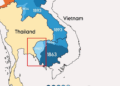
Location of the Emerald Triangle (Source: ResearchGate)

Introduction

The Emerald Triangle—where Thailand, Cambodia, and Laos converge—is an emerging focal point for geopolitical interest, sustainable tourism, and economic integration in mainland Southeast Asia. Known for its lush landscapes and rich biodiversity, the region exudes both opportunity and complexity, shaped by its turbulent history and ongoing challenges in international relations. Whether for scholars, political analysts, investors, or adventure travelers, the Emerald Triangle is an area of growing significance.

Geographic Significance and Border Context

Strategically located at the Chong Bok mountain pass on the Dangrek Range, the Emerald Triangle is a tri-border region enveloping seven provinces: Preah Vihear, Oddar Meanchey, and Stung Treng in Cambodia; Champasak and Salavan in Laos; and Ubon Ratchathani and Sisaket in Thailand. The region boasts verdant rainforests, mountainous terrain, and culturally significant heritage sites, making it both a potential destination for eco-tourism and a sensitive area in terms of border security.

This intersection—often referred to as “Mom Bei” by locals—exists at roughly 330 meters elevation and serves as a symbolic link and occasional flashpoint between the three nations. Its geography, marked by dense forests and isolated rural communities, has historically made state oversight and border demarcation challenging.

Historical Background: From Conflict to Cooperation

During the Cold War and specifically the Third Indochina War (1985-1987), the Emerald Triangle experienced significant military activity, with Vietnamese forces entering the area to eliminate remnant Khmer Rouge fighters. These incursions highlighted ambiguities in border definitions and underscored the difficulties of effective governance in peripheral regions.

Following years of conflict, the 1990s saw initiatives toward peacemaking. The construction of a friendship pavilion at the tri-junction in 1993 was a milestone, representing a new era of trilateral engagement and diplomatic normalization.

Regional Cooperation and Economic Opportunities

In 2000, the Emerald Triangle was officially branded as part of a trilateral strategy to unlock shared economic and tourism potential. The Emerald Triangle Cooperation Project lays the groundwork for developing sustainable tourism, streamlining border procedures, and fostering cross-border trade.

Key goals include:

  • Modernizing checkpoints for efficient customs and immigration (“one-stop service”)
  • Upgrading infrastructure for connectivity and hospitality
  • Joint tourism promotion and resource sharing

Ongoing challenges—such as jurisdiction disputes, security incidents, and logistical constraints—have restrained full realization of these ambitions. For instance, efforts to establish a cross-border golf course, touted as a symbol of cooperation, have faced postponements.

Economic Integration & Cross-border Trade

As a node within the Greater Mekong Subregion (GMS) and the East-West Economic Corridor, the Emerald Triangle demonstrates increasing cross-border economic activity. Trade flows through Ubon Ratchathani alone surpassed $350 million in 2011, with agricultural products, timber, and manufactured goods fueling growth.

Despite progress, the region faces periodic setbacks due to intermittent border closures linked to diplomatic tensions. Nevertheless, market integration and infrastructure improvements continue, propelled by regional frameworks and international investment.

Tourism, Heritage & Environmental Richness

Home to UNESCO World Heritage Sites such as Wat Phou in Laos and an array of pre-Khmer and Khmer temples, the Emerald Triangle offers unique opportunities for cultural tourism and eco-travel. However, underdeveloped infrastructure, complex border restrictions, and sporadic security advisories deter large-scale tourism development.

For those seeking authentic experiences—trekking, exploring ancient ruins, or visiting conservation areas—the Emerald Triangle promises adventure off the mainstream trail.

Contemporary Security Concerns

Recent border skirmishes, including violent incidents in May and July 2025, attest to the ongoing volatility in the region. Unresolved disputes over sovereignty and ambiguous mapping contribute to tensions that threaten developmental progress and sustained trilateral cooperation.

Conclusion

The Emerald Triangle of Southeast Asia exemplifies the tensions and potential rewards of transboundary collaboration. As Thailand, Cambodia, and Laos navigate the balancing act of sovereignty, security, and economic opportunity, the path forward will require patient diplomacy, continued investment, and an unwavering commitment to peace and regional integration.

Don’t miss our upcoming articles!

We don’t spam!

Check your INBOX or SPAM folder to confirm your subscription.

Tags: Border Disputes between Cambodia and ThailandEmerald Triangle of Southeast AsiaGreater Mekong SubregionRelations between Cambodia and ThailandSoutheast AsiaUNESCO World Heritage in Cambodia
ShareTweet
Previous Post

UNESCO World Heritage Sites in Cambodia

Next Post

Picture of the day: Your lips

Pascal Medeville

Pascal Medeville

Author of the blog Wonders of Cambodia, I share my passion for Cambodia through stories, cultural insights, and personal reflections on the country. I'm also the founder of Simili Consulting, where we provide high-quality, professional translation services to international clients.

Related Posts

Two halves of a ripe red-fleshed dragon fruit on a white plate, showing vibrant magenta flesh dotted with tiny black seeds, with whole dragon fruits in the background.
Cuisine

Dragon Fruit in Cambodia: A Complete Guide to the Kingdom’s Vibrant Superfruit

July 19, 2026
Close-up of white tuberose (Polianthes tuberosa, ចន្ធូ) buds on green stems in Cambodia against a dark background, highlighting their smooth texture and emerging blossoms.
Flora

Picture of the day: Tuberose Blossoms in Cambodia

July 12, 2026
Close-up of a ripe orange pandanus (fragrant screw pine) fruit hanging among long spiny green leaves on a coastal tree near the seaside in Kampot, Cambodia.
Flora

Picture of the day: Pandanus Fruit by the Kampot Sea

July 10, 2026
Bright red Probergrothius nigricornis kapok bug walking over mixed gray and brown gravel stones in Cambodia, showing black dorsal spots and slender antennae.
Fauna

Picture of the day: Scarlet Kapok Bug on Cambodian Stones

June 30, 2026
Four ripe marian plums, two peeled and two whole, on a speckled ceramic plate on a wooden table, illustrating Cambodian home-style fruit enjoyment.
Flora

Picture of the day: Marian Plum Moments on a Cambodian Table

June 28, 2026
Half-opened pomegranate on a white surface, showing glossy red seeds and pale rind, photographed in natural Cambodian indoor light.
Flora

Picture of the day: Ruby Pomegranate Jewels in Cambodia

June 26, 2026
Next Post
Picture of the day: Your lips

Picture of the day: Your lips

  • Trending
  • Comments
  • Latest
The French Protectorate of Cambodia (1863–1953): An Overview

The French Protectorate of Cambodia (1863–1953): An Overview

July 13, 2025
The Franco-Siamese Treaty of 23 March 1907: Borders, Politics, and the Return of Angkor

The Franco-Siamese Treaty of 23 March 1907: Borders, Politics, and the Return of Angkor

February 11, 2026
Cambodian-Vietnamese War (1978-1989)

Cambodian-Vietnamese War (1978-1989)

July 13, 2025
The Legend of Preah Ko Preah Keo: Guardians of Cambodia’s Lost Treasures

The Legend of Preah Ko Preah Keo: Guardians of Cambodia’s Lost Treasures

February 23, 2026
Kampot Province

Takeo Province: A Cradle of Cambodian History and Culture

3
Kratié Town on the Mekong: Colonial Echoes, River Life, and Irrawaddy Dolphins

Kratié Town on the Mekong: Colonial Echoes, River Life, and Irrawaddy Dolphins

3
Banteay Meanchey Province: A Gateway to Cambodia’s Rich Heritage

Banteay Meanchey Province: A Gateway to Cambodia’s Rich Heritage

2
Stung Treng Province: The Gateway to Cambodia’s Northern Wilderness

Stung Treng Province: The Gateway to Cambodia’s Northern Wilderness

2
Life: Bringing Your Pet to Cambodia: What Future Residents Need to Know

Life: Bringing Your Pet to Cambodia: What Future Residents Need to Know

July 24, 2026
Snail amok served in large snail shells at Kraya Angkor Restaurant in Phnom Penh, featuring rich Cambodian coconut curry, fresh herbs, chili, and elegant presentation.

Picture of the day: Snail Amok in Phnom Penh, A Khmer Culinary Surprise

July 24, 2026
Colonial French Urban Planning in Cambodia: Why the Streets Meet at the Roundabout

Colonial French Urban Planning in Cambodia: Why the Streets Meet at the Roundabout

July 23, 2026
Rangées d'hévéas dans une plantation de l'est du Cambodge, illustrant l'héritage de la culture du caoutchouc introduite durant la période coloniale française

L’introduction des plantations d’hévéas au Cambodge : comment l’ambition coloniale française a transformé le paysage du Royaume

July 23, 2026

Recent News

Life: Bringing Your Pet to Cambodia: What Future Residents Need to Know

Life: Bringing Your Pet to Cambodia: What Future Residents Need to Know

July 24, 2026
Snail amok served in large snail shells at Kraya Angkor Restaurant in Phnom Penh, featuring rich Cambodian coconut curry, fresh herbs, chili, and elegant presentation.

Picture of the day: Snail Amok in Phnom Penh, A Khmer Culinary Surprise

July 24, 2026
Colonial French Urban Planning in Cambodia: Why the Streets Meet at the Roundabout

Colonial French Urban Planning in Cambodia: Why the Streets Meet at the Roundabout

July 23, 2026
Rangées d'hévéas dans une plantation de l'est du Cambodge, illustrant l'héritage de la culture du caoutchouc introduite durant la période coloniale française

L’introduction des plantations d’hévéas au Cambodge : comment l’ambition coloniale française a transformé le paysage du Royaume

July 23, 2026
Wonders of Cambodia

Exploring Culture, Nature, and Spirit in the Land of Wonder.

Follow Us

Browse by Category

  • Architecture
  • Architecture
  • Art
  • Books
  • Business
  • Business
  • Cinema
  • Costume
  • Costume
  • Cuisine
  • Culture
  • Defense
  • Du lịch
  • e-Books
  • Education
  • Expat life
  • Fauna
  • Festival
  • Flora
  • Food providers
  • Français
  • Geography
  • Handicraft
  • Health
  • Histoire
  • History
  • Hotels
  • Khmer Stories
  • Khmer stories
  • Knowledge
  • Language
  • Last posts
  • Lịch sử
  • Life in Cambodia
  • Literature
  • Meet the neigbhors
  • Music
  • Pictures
  • Politics
  • Population
  • Press review
  • Professional services
  • Proverbs
  • Reference
  • Reference
  • Religion
  • Restaurants
  • Temples
  • Textile
  • Tiếng Việt
  • Tourism
  • Tourisme
  • Transport
  • Uncategorized
  • Vidéo
  • Video
  • Vie quotidienne
  • Who's who
  • ខ្មែរ
  • ទេសចរណ៍៖
  • បគ្គលល្បី
  • ប្រវត្តិសាស្ត្រោ
  • សៀវភៅ
  • 中文
  • 书籍
  • 历史
  • 商业
  • 旅游
  • 生活

Recent News

Life: Bringing Your Pet to Cambodia: What Future Residents Need to Know

Life: Bringing Your Pet to Cambodia: What Future Residents Need to Know

July 24, 2026
Snail amok served in large snail shells at Kraya Angkor Restaurant in Phnom Penh, featuring rich Cambodian coconut curry, fresh herbs, chili, and elegant presentation.

Picture of the day: Snail Amok in Phnom Penh, A Khmer Culinary Surprise

July 24, 2026
  • About Us
  • Advertise
  • Privacy & Policy
  • Contact Us

© 2025 - Made with 💫 by TechFlow.

No Result
View All Result
  • Home
  • Culture
  • Cuisine
  • Tourism
  • Business
  • Life in Cambodia
  • 中文
  • ខ្មែរ
  • Français
  • Tiếng Việt
  • e-Books

© 2025 - Made with 💫 by TechFlow.