Wonders of Cambodia
  • Home
  • Culture
  • Cuisine
  • Tourism
  • Business
  • Life in Cambodia
  • 中文
  • ខ្មែរ
  • Français
  • Tiếng Việt
  • e-Books
No Result
View All Result
  • Home
  • Culture
  • Cuisine
  • Tourism
  • Business
  • Life in Cambodia
  • 中文
  • ខ្មែរ
  • Français
  • Tiếng Việt
  • e-Books
No Result
View All Result
Wonders of Cambodia
No Result
View All Result
Home Culture

Khmer proverb: Easy to Say, Hard to Do

Pascal Medeville by Pascal Medeville
June 22, 2026
in Culture, Language, Proverbs
Reading Time: 6 mins read
0

How a short Khmer proverb reminds us that words are light, but action is heavy.

The Khmer proverb ថាងាយ ធ្វើពិបាក (tha ngeay, tveu pibak) expresses a universal truth: talking is easy, but doing is hard. In Cambodia, this saying is often used when someone gives orders, criticizes others, or makes big promises without recognizing the effort that real action demands. Short and sharp, it carries a moral lesson about humility, responsibility, and respect for genuine work.
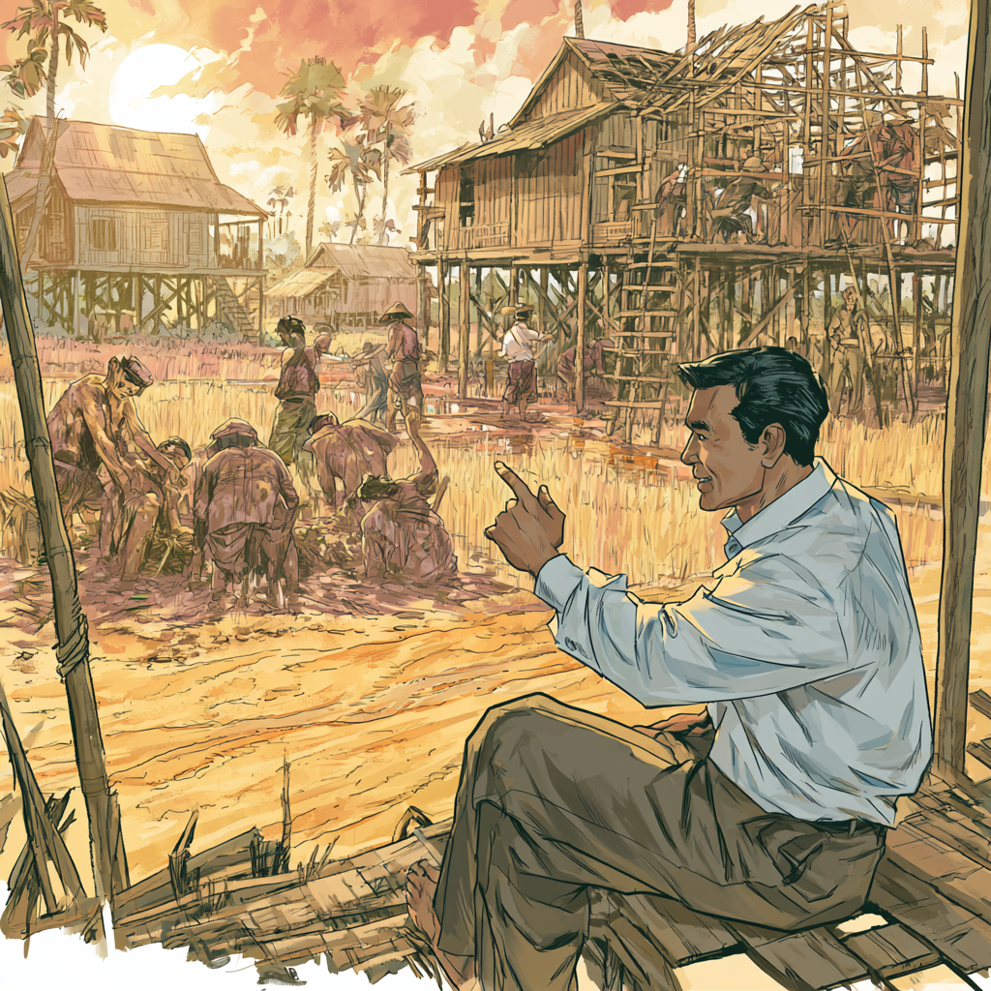
A man relaxes and points from a porch while villagers toil in the fields and build houses (Produced with AI)

Introduction

In everyday Khmer life, proverbs are not just decorative language. They are compact lessons shaped by family experience, village life, and Buddhist values such as patience, self‑discipline, and awareness of consequences. ថាងាយ ធ្វើពិបាក remains relevant today because the gap between words and deeds is visible everywhere, from homes and schools to workplaces and social media. It gently challenges people who speak too easily about tasks that are, in reality, difficult.

Khmer wording and basic info

The proverb is written in Khmer as ថាងាយ ធ្វើពិបាក, and can be transcribed in Latin script as “tha ngeay, thveu pibak”. Literally, it means “easy to say, hard to do.” Those four words are built from simple verbs and adjectives that most Khmer speakers learn early in life, which helps the saying feel natural and ready‑to‑use in almost any context.

In conversation, people frequently quote the proverb on its own, without further explanation. When someone talks about a plan as if it required no effort, or when a person judges others too quickly, a listener may respond only with ថាងាយ ធ្វើពិបាក. The meaning is clear: speaking lightly about something does not make it easy to achieve.

Literal meaning and imagery

Unlike many Khmer proverbs that rely on animal stories or rural imagery, this one draws its power from direct contrast. It sets ថា (“to say”) against ធ្វើ (“to do”), and ងាយ (“easy”) against ពិបាក (“difficult”). The structure is almost mathematical: what belongs to the mouth is easy; what belongs to action is hard.

This plain structure reflects the proverb’s message. Talking requires almost no physical effort or risk. A person can criticize, promise, or command from a place of comfort. Doing, by contrast, demands time, energy, and sometimes sacrifice. It involves uncertainty, mistakes, and the possibility of failure. The proverb holds this tension in a single line, reminding listeners that words can never replace the weight of lived effort.

Deeper meaning and moral lesson

At a deeper level, ថាងាយ ធ្វើពិបាក criticizes empty talk and shallow judgment. It warns against a tendency found in every society: to underestimate the difficulty faced by others, while overestimating one’s own abilities. The proverb urges people to think carefully before saying something is “simple,” and to consider whether they themselves could carry out the same task.

This wisdom aligns with broader Khmer values. In many families and communities, modesty and quiet perseverance are admired more than loud self‑promotion. People who speak less but act more are respected. The proverb supports this view by suggesting that speech alone has little value if it is not backed by real commitment and sustained action.

It also serves as a reminder to honor the invisible work that supports daily life. Farming, caregiving, teaching, and small‑business labor can look easy from far away, but are full of hidden challenges. By highlighting the difficulty of “doing,” the proverb invites respect for those whose efforts often go unnoticed.

Cultural background

Khmer proverbs form part of a long oral tradition in which elders, parents, monks, and teachers compress life experience into a few memorable words. Many of these sayings circulate without a known author and are passed down through stories, advice, and casual conversation. They reflect a world shaped by agriculture, extended family structures, and Buddhist ethics.

ថាងាយ ធ្វើពិបាក fits neatly into this tradition. It is often quoted when discussing people who “only use their mouth,” whether they are bosses, officials, or ordinary relatives who never help. Because it is short and not directly insulting, it can be used as gentle correction rather than open confrontation. The proverb lets the listener save face while still hearing a clear message: do not treat difficult work as if it were effortless.

In this way, the saying functions both as a social tool and as a personal reminder. It helps maintain harmony in relationships while encouraging honest self‑reflection.

Similar sayings in other languages

The idea behind ថាងាយ ធ្វើពិបាក is not unique to Khmer culture, and many languages express parallel thoughts. In English, the closest equivalent is “Easier said than done.” This phrase is used whenever a proposal sounds simple but proves challenging in reality. Another related English saying is “Actions speak louder than words,” which stresses that what people do matters more than what they say.

French offers an almost direct counterpart: “C’est plus facile à dire qu’à faire” (“It is easier to say than to do”). Like the Khmer proverb, it places “saying” and “doing” in clear opposition. The global presence of such expressions suggests that people from many backgrounds recognize the same human weakness.

What remains distinctly Khmer, however, is how ថាងាយ ធ្វើពិបាក is woven into daily speech. It connects to a cultural preference for modesty, respect for elders’ experience, and an appreciation of hard work that is often quiet and unadvertised. Within this context, the proverb does more than state a fact; it supports a particular way of living and interacting.

Modern relevance

In contemporary Cambodia, the proverb’s message may be more relevant than ever. Digital communication makes it easy to express opinions, criticize decisions, or sketch out ambitious plans with very little effort. A few lines in a chat or a post on social media can create the illusion that problems are simple to fix.

Yet the reality of building a business, supporting a family, improving a school, or strengthening a community still demands patience and sustained work. The saying “Easy to Say, Hard to Do” helps keep this contrast visible. It encourages people to look beyond attractive words and ask: who is actually taking responsibility, and who is simply talking?

In offices, classrooms, homes, and online spaces, the proverb continues to serve as a quiet but firm standard. It invites everyone, from young students to experienced leaders, to measure themselves not only by their ideas and promises, but by the actions they are prepared to carry through.

Conclusion

The Khmer proverb ថាងាយ ធ្វើពិបាក – tha ngeay, thveu pibak, “easy to say, hard to do,” offers a compact piece of Cambodian wisdom about the gap between speech and action. It calls for humility, honors real effort, and reminds people that lasting change is built not by the mouth, but by the hands and heart. For anyone willing to listen, it is an invitation to let deeds carry as much weight as words – if not more.


Don’t miss our upcoming articles!

We don’t spam!

Check your INBOX or SPAM folder to confirm your subscription.

Tags: Cambodian cultural insightsCambodian moral teachingsCambodian sayings about hard workeasy to say hard to do proverbKhmer culture and wisdomKhmer proverb about words and actionsKhmer proverbsSoutheast Asian proverbstha ngeay tveu pibak meaningWonders of Cambodia proverbsថាងាយ ធ្វើពិបាក
ShareTweet
Previous Post

Who’s who: Chov Theanly, Cambodia’s Painter of Quiet Determination

Next Post

Picture of the day: Creamy Cambodian Black-Eyed Pea Coconut Milk Dessert

Pascal Medeville

Pascal Medeville

Author of the blog Wonders of Cambodia, I share my passion for Cambodia through stories, cultural insights, and personal reflections on the country. I'm also the founder of Simili Consulting, where we provide high-quality, professional translation services to international clients.

Related Posts

Discover Lakhon Khol, Cambodia’s magnificent masked dance drama. Explore its history, UNESCO recognition, Reamker stories, traditional masks, and living heritage.
Culture

Lakhon Khol: Cambodia’s Majestic Masked Dance Drama

August 6, 2026
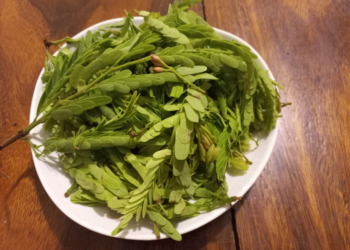
Fresh tamarind (Tamarindus indica) leaves arranged on a white plate, a traditional ingredient widely used in Khmer cuisine for soups and herbal dishes.
Cuisine

Picture of the day: Tamarind Leaves in Traditional Khmer Cuisine

August 6, 2026
AI-generated illustration in the style of a traditional Khmer temple mural, depicting an elderly hermit with a long white beard facing an ungrateful tiger in a lush Cambodian forest, inspired by the classic Khmer folktale “The Good Hermit and the Ungrateful Tiger.”
Khmer Stories

The Good Hermit and the Ungrateful Tiger

August 5, 2026
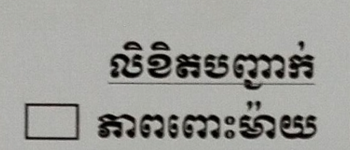
Close-up of a Cambodian administrative form listing civil status options, including នៅលីវ (single), ភាពមេម៉ាយ (widow or divorcee), and ភាពពោះម៉ាយ (widower or divorced man), with the "single" box checked.
Culture

Language: Widow or Divorcee, Who Knows?

August 4, 2026
AI-generated illustration depicting a Cambodian family gathered around architectural plans in a rural village, discussing the design of a traditional stilt house that reflects the proverb សង់ផ្ទះតាមចិត្តអ្នកនៅ, emphasizing homes built to suit the needs of their inhabitants.
Proverbs

Khmer proverb: Build the House for the People Who Will Live in It

August 4, 2026
Two crashed U.S. Air Force CH-53 Sea Stallion helicopters lie damaged on the jungle-covered slopes of Koh Tang Island, Cambodia, during the Mayaguez Incident in May 1975. The black-and-white photograph captures the intense fighting that marked the final battle associated with the Vietnam War.
History

History: The Mayaguez Incident and Cambodia’s Final Battle of the Vietnam War

August 2, 2026
Next Post
Close-up of a Cambodian dessert with black-eyed peas and sticky rice covered in creamy coconut milk, served in a blue-and-white patterned ceramic bowl.

Picture of the day: Creamy Cambodian Black-Eyed Pea Coconut Milk Dessert

  • Trending
  • Comments
  • Latest
The French Protectorate of Cambodia (1863–1953): An Overview

The French Protectorate of Cambodia (1863–1953): An Overview

July 13, 2025
The Franco-Siamese Treaty of 23 March 1907: Borders, Politics, and the Return of Angkor

The Franco-Siamese Treaty of 23 March 1907: Borders, Politics, and the Return of Angkor

February 11, 2026
Cambodian-Vietnamese War (1978-1989)

Cambodian-Vietnamese War (1978-1989)

July 13, 2025
The Legend of Preah Ko Preah Keo: Guardians of Cambodia’s Lost Treasures

The Legend of Preah Ko Preah Keo: Guardians of Cambodia’s Lost Treasures

February 23, 2026
Kampot Province

Takeo Province: A Cradle of Cambodian History and Culture

3
Kratié Town on the Mekong: Colonial Echoes, River Life, and Irrawaddy Dolphins

Kratié Town on the Mekong: Colonial Echoes, River Life, and Irrawaddy Dolphins

3
Banteay Meanchey Province: A Gateway to Cambodia’s Rich Heritage

Banteay Meanchey Province: A Gateway to Cambodia’s Rich Heritage

2
Stung Treng Province: The Gateway to Cambodia’s Northern Wilderness

Stung Treng Province: The Gateway to Cambodia’s Northern Wilderness

2
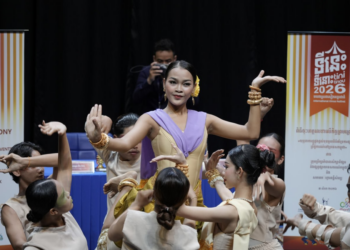
Traditional Khmer dance performance during the signing ceremony of the partnership between the Cambodia Tourism Board (CTB) and Phare Ponleu Selpak, celebrating the launch of the Tini Tinou International Circus Festival 2026 in Cambodia.

吴哥迈向艺术长廊:柬埔寨打造世界当代艺术旅游新目的地

August 6, 2026
Discover Lakhon Khol, Cambodia’s magnificent masked dance drama. Explore its history, UNESCO recognition, Reamker stories, traditional masks, and living heritage.

Lakhon Khol: Cambodia’s Majestic Masked Dance Drama

August 6, 2026
Fresh tamarind (Tamarindus indica) leaves arranged on a white plate, a traditional ingredient widely used in Khmer cuisine for soups and herbal dishes.

Picture of the day: Tamarind Leaves in Traditional Khmer Cuisine

August 6, 2026
AI-generated illustration in the style of a traditional Khmer temple mural, depicting an elderly hermit with a long white beard facing an ungrateful tiger in a lush Cambodian forest, inspired by the classic Khmer folktale “The Good Hermit and the Ungrateful Tiger.”

The Good Hermit and the Ungrateful Tiger

August 5, 2026

Recent News

Traditional Khmer dance performance during the signing ceremony of the partnership between the Cambodia Tourism Board (CTB) and Phare Ponleu Selpak, celebrating the launch of the Tini Tinou International Circus Festival 2026 in Cambodia.

吴哥迈向艺术长廊:柬埔寨打造世界当代艺术旅游新目的地

August 6, 2026
Discover Lakhon Khol, Cambodia’s magnificent masked dance drama. Explore its history, UNESCO recognition, Reamker stories, traditional masks, and living heritage.

Lakhon Khol: Cambodia’s Majestic Masked Dance Drama

August 6, 2026
Fresh tamarind (Tamarindus indica) leaves arranged on a white plate, a traditional ingredient widely used in Khmer cuisine for soups and herbal dishes.

Picture of the day: Tamarind Leaves in Traditional Khmer Cuisine

August 6, 2026
AI-generated illustration in the style of a traditional Khmer temple mural, depicting an elderly hermit with a long white beard facing an ungrateful tiger in a lush Cambodian forest, inspired by the classic Khmer folktale “The Good Hermit and the Ungrateful Tiger.”

The Good Hermit and the Ungrateful Tiger

August 5, 2026
Wonders of Cambodia

Exploring Culture, Nature, and Spirit in the Land of Wonder.

Follow Us

Browse by Category

  • Architecture
  • Architecture
  • Art
  • Books
  • Business
  • Business
  • Cinema
  • Costume
  • Costume
  • Cuisine
  • Culture
  • Defense
  • Du lịch
  • e-Books
  • Education
  • Expat life
  • Fauna
  • Festival
  • Flora
  • Food providers
  • Français
  • Geography
  • Handicraft
  • Health
  • Histoire
  • History
  • Hotels
  • Khmer Stories
  • Khmer stories
  • Knowledge
  • Language
  • Last posts
  • Latest posts
  • Lịch sử
  • Life in Cambodia
  • Literature
  • Meet the neigbhors
  • Music
  • Pictures
  • Politics
  • Population
  • Press review
  • Professional services
  • Proverbs
  • Reference
  • Reference
  • Religion
  • Restaurants
  • Temples
  • Textile
  • Tiếng Việt
  • Tourism
  • Tourisme
  • Transport
  • Uncategorized
  • Vidéo
  • Video
  • Vie quotidienne
  • Who's who
  • ខ្មែរ
  • ទេសចរណ៍៖
  • បគ្គលល្បី
  • ប្រវត្តិសាស្ត្រោ
  • សៀវភៅ
  • 中文
  • 书籍
  • 历史
  • 商业
  • 旅游
  • 生活

Recent News

Traditional Khmer dance performance during the signing ceremony of the partnership between the Cambodia Tourism Board (CTB) and Phare Ponleu Selpak, celebrating the launch of the Tini Tinou International Circus Festival 2026 in Cambodia.

吴哥迈向艺术长廊:柬埔寨打造世界当代艺术旅游新目的地

August 6, 2026
Discover Lakhon Khol, Cambodia’s magnificent masked dance drama. Explore its history, UNESCO recognition, Reamker stories, traditional masks, and living heritage.

Lakhon Khol: Cambodia’s Majestic Masked Dance Drama

August 6, 2026
  • About Us
  • Advertise
  • Privacy & Policy
  • Contact Us

© 2025 - Made with 💫 by TechFlow.

No Result
View All Result
  • Home
  • Culture
  • Cuisine
  • Tourism
  • Business
  • Life in Cambodia
  • 中文
  • ខ្មែរ
  • Français
  • Tiếng Việt
  • e-Books

© 2025 - Made with 💫 by TechFlow.