This week’s Pictures of the Week move easily between Cambodian food, tropical vegetation, Phnom Penh dining, and the long historical story of Angkor. Together, they show a Cambodia where everyday flavors, temple landscapes, and centuries-old encounters continue to sit comfortably side by side.
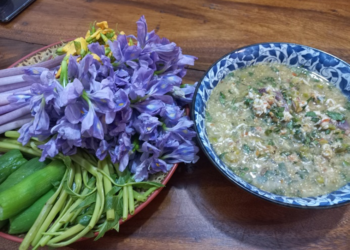
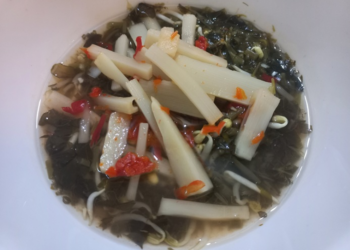
“Cambodian Pickled Bamboo Shoots and African Cabbage” offers a glimpse of Cambodia’s love of sharp, fermented and fresh flavors. The combination of pickled bamboo shoots and leafy greens belongs to the practical side of Khmer cooking, where simple ingredients can bring plenty of character to a meal.
“Yellow Trumpetbush in Bloom at a Takeo Pagoda” shifts the mood from the kitchen to the temple grounds. The bright yellow flowers bring a little tropical cheer to a pagoda setting, reminding us that Cambodian religious spaces are also places of gardens, trees, shade and everyday beauty.
“Cambodian Shrimp Dipping Sauce with Fresh Herbs” returns to the table, this time with the fresh, aromatic side of Khmer cuisine. Herbs and dipping sauces may occupy only a small corner of a meal, but they often provide the punch that makes Cambodian food so lively and distinctive.
“Kuy Fruit: Cambodia’s Wild Golden Treasure” celebrates a less familiar part of the country’s edible landscape. Wild fruits such as kuy connect food with Cambodia’s countryside and local knowledge, offering flavors and textures that are easily overlooked when attention is focused only on better-known Cambodian dishes.
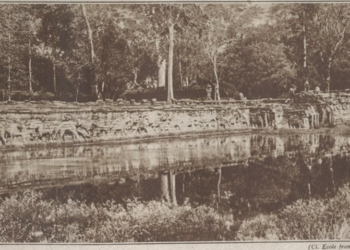
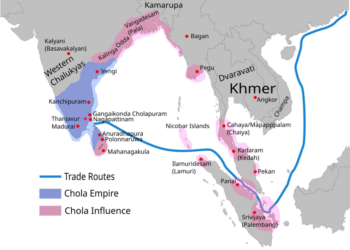
“Angkor and the Chola Empire” takes us much further back, into the international world of the Khmer Empire. Angkor was never an isolated civilization, and its connections with powerful South Indian states such as the Chola Empire reveal a Southeast Asia shaped by diplomacy, trade, ambition and cultural exchange.
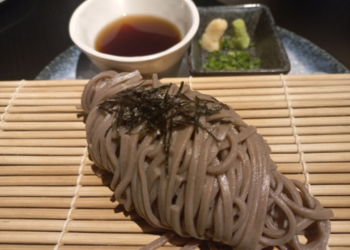
“Soba Noodles at Iza in Phnom Penh” brings the story firmly into contemporary Cambodia. Phnom Penh’s food scene reflects the capital’s increasingly cosmopolitan character, where Japanese cuisine can find a place alongside Khmer soups, grilled meats, rice dishes and the many other traditions that make the city’s dining culture so varied.
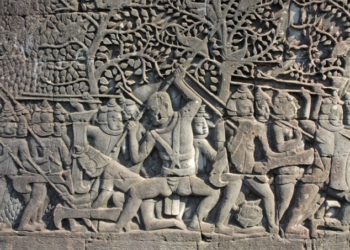
“Khmer and Champa Warriors Clash at Bayon” closes the week with one of Angkor’s most dramatic historical images. The Bayon bas-reliefs turn military conflict into stone, preserving a vivid record of the encounters between the Khmer and Champa worlds and giving modern visitors an unusually direct glimpse into the medieval past.
Taken together, this week’s images reveal Cambodia through contrast rather than a single theme. A pagoda garden, a bowl of herbs, a wild fruit, a Phnom Penh restaurant and the carved armies of Angkor all belong to different moments, yet they share the same landscape of memory, adaptation and everyday life. That mixture is perhaps one of Cambodia’s most enduring qualities: the old remains visible, while the new keeps finding its place.