Estimated reading time: 6 minutes – A short musical journey, although the sralai may occasionally make you reconsider the meaning of “short.”
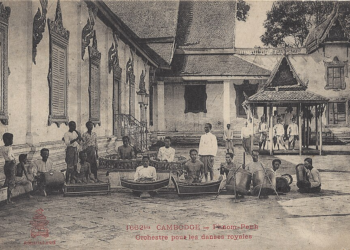
The pinpeat orchestra is one of Cambodia’s most distinctive traditional ensembles, with gongs, drums, cymbals and the piercing sralai creating a sound closely associated with Buddhist ceremonies, classical dance, masked theater and royal traditions. To hear pinpeat is to hear Cambodia in a particularly ancient musical language, one that remains remarkably alive in temples, performances and cultural celebrations today.
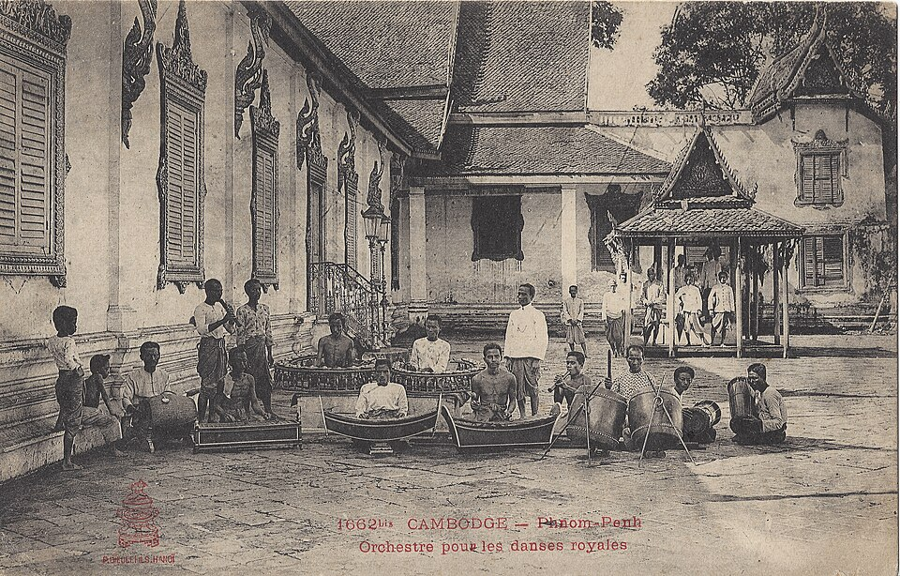
What Is the Pinpeat Orchestra?
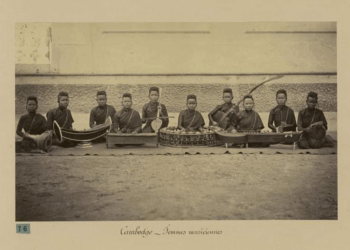
The pinpeat (Khmer: ពិណពាទ្យ) orchestra is one of the most important forms of traditional Khmer music. Its sound is instantly recognizable: layers of metallic gongs, resonant drums, rhythmic cymbals and the penetrating voice of the sralai, a traditional double-reed wind instrument. Together, these instruments create music that can sound ceremonial, energetic, hypnotic and, to unfamiliar ears, wonderfully mysterious.
For visitors to Cambodia, pinpeat is often encountered around temples, religious ceremonies, classical dance performances and traditional theater. It is not simply background music. In many contexts, the orchestra is an active part of the performance, establishing rhythm, atmosphere and transitions while connecting music with ritual and storytelling.
Understanding pinpeat therefore means looking beyond individual instruments. It means understanding how Khmer music functions within Cambodian culture.
The Instruments of a Pinpeat Orchestra
A traditional pinpeat ensemble is made up primarily of percussion and wind instruments. The exact instrumentation can vary according to the occasion, locality and musical tradition.
Roneat Ek
The roneat ek is a bamboo or wooden xylophone with graduated bars arranged over a resonating frame. It often carries an important melodic role and produces the bright, agile sound that many listeners associate with Khmer traditional music.
The player uses two mallets to create rapid patterns. To a Western musician accustomed to a piano keyboard, the arrangement may initially appear rather unconventional. That is part of the charm. Khmer music does not need to organize itself according to European habits simply to make tourists comfortable.
Kong Vong Thom
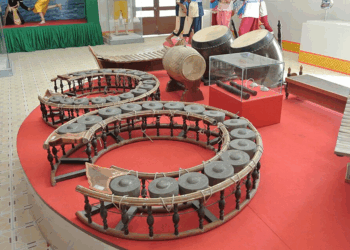
The kong vong thom is a circular frame carrying a series of tuned gongs. The musician sits inside the circle and strikes the gongs with beaters.
The instrument produces a shimmering sequence of pitches and contributes greatly to the distinctive texture of the pinpeat orchestra.
There are several gong-circle traditions in Southeast Asian music, and Cambodia’s kong vong has relatives elsewhere in the region. Yet its role and musical language belong firmly within Khmer musical practice.
Samphor
The samphor is a double-headed barrel drum played with the hands. It is especially important for rhythm and helps regulate the musical flow.
The drummer is not merely keeping time in the modern Western sense. Khmer traditional music relies on intricate rhythmic patterns and interactions between instruments, so the drummer plays a central role in shaping the performance.
Sralai
Then comes the instrument that tends to announce itself without waiting for an introduction: the sralai.
The sralai is a traditional double-reed wind instrument with a powerful, penetrating sound. It can seem almost startlingly loud when heard at close range, particularly in a small temple courtyard.
Its strong tone allows it to rise above the percussion and provides a melodic voice for the ensemble. The sralai is particularly associated with ceremonial and theatrical contexts.
Ching and Other Percussion
Small finger cymbals called ching provide another essential rhythmic layer. Their regular patterns help articulate the beat and organize the ensemble.
Other drums, gongs and percussion instruments may also be included depending on the particular performance. The result is not an orchestra built around one dominant instrument, but a tightly coordinated musical conversation.
Where Is Pinpeat Music Performed?
Pinpeat has traditionally been associated with religious, ceremonial and theatrical settings.
It can accompany Buddhist ceremonies, traditional dances, masked theater and other forms of Khmer performing arts. It may also be heard during cultural events and staged performances intended to introduce Cambodian music to wider audiences.
The connection with theater is particularly important. In Lakhon Khol, for example, traditional orchestral music accompanies masked performers and recitation. The music is part of the performance environment, alongside dance and narrative.
Pinpeat also has an important relationship with Cambodian classical dance. The music does not merely accompany movement. It helps establish the rhythm, atmosphere and dramatic structure of the performance.
This is why listening to Cambodian traditional music without seeing the accompanying art form can sometimes leave half the story untold.
Pinpeat and Cambodian Religious Life
Music has long played an important role in Cambodian religious and communal life. Traditional instrumental ensembles can mark important moments in ceremonies, create an appropriate atmosphere and help distinguish sacred occasions from ordinary daily activity.
The relationship between music and ritual is hardly unique to Cambodia. In Cambodia, however, the combination of music, Buddhism, theater, dance and ritual gives traditional orchestras a particularly rich cultural context.
In Cambodia, a pinpeat performance at a temple should therefore not necessarily be treated as a concert in the Western sense. The music may have a practical ceremonial function, and the musicians are participating in a broader cultural practice.
Is Pinpeat Ancient?
The history of Khmer music reaches deep into Cambodia’s past, although it is important to avoid the temptation to assign a modern orchestra unchanged origins thousands of years ago.
Angkorian bas-reliefs provide evidence of musicians, drums, gongs and other instruments, demonstrating that organized musical performance was an important part of Khmer society. But the modern pinpeat ensemble developed through a long process of musical transmission and change.
This distinction matters. Traditional music is not a museum specimen. Instruments evolve, ensembles change and performance contexts adapt.
The fact that Cambodian traditional music survived enormous political and social upheaval during the twentieth century makes its continued presence particularly significant. Cambodian cultural organizations have worked to preserve musical knowledge and transmit traditional techniques to younger generations.
The story of Cambodian traditional music is consequently one of both loss and resilience.
Pinpeat After the Khmer Rouge Period
Cambodian traditional music suffered catastrophic losses during the Khmer Rouge period. Musicians, teachers and other cultural practitioners were among those who disappeared or were killed, while institutions and systems of transmission were severely disrupted.
The consequences were not limited to the loss of individual performers. Traditional arts depend on people teaching other people. When masters disappear, an entire chain of knowledge can be broken.
The recovery of Cambodian music has therefore involved more than rebuilding instruments. It has required finding surviving masters, training new musicians, documenting traditions and creating opportunities for performance.
The work of Cambodian Living Arts, among other organizations, has supported musicians and traditional music education.
The story of Cambodian traditional music is consequently one of both loss and resilience.
How to Listen to Pinpeat Music
For someone hearing pinpeat for the first time, the music can initially seem extremely busy. Several instruments may be producing different rhythmic or melodic patterns simultaneously.
The easiest approach is not to search immediately for a Western-style melody.
Instead, listen in layers.
First, notice the rhythm created by the drums and ching. Then listen to the repeating patterns of the gongs. After that, focus on the roneat and finally on the sralai rising above the ensemble.
With a little attention, what first sounds like a wall of sound begins to reveal a carefully organized musical structure.
It is also worth listening to pinpeat in context. A recording is useful, but seeing the orchestra accompanying a dance, ceremony or theatrical performance makes its role much easier to understand.
Pinpeat Is More Than Traditional Music
Calling pinpeat simply “traditional Cambodian music” is accurate but incomplete.
It is also part of Cambodia’s cultural memory. It links musicians with dancers, actors, monks, audiences and communities. It connects contemporary Cambodia with older forms of artistic expression while continuing to adapt to modern performance spaces.
This is one reason the preservation of intangible cultural heritage matters. Safeguarding means helping communities maintain the knowledge and skills that allow a tradition to remain meaningful.
The same principle applies to pinpeat. Its survival depends on musicians being able to learn, perform, teach and earn a place for traditional music in contemporary Cambodian life.
Where Visitors Can Hear Pinpeat in Cambodia
Travelers may encounter pinpeat during cultural performances, temple ceremonies, festivals and presentations of Cambodian classical dance or traditional theater.
In Siem Reap, cultural performances connected with Khmer dance and heritage are among the easiest ways for visitors to hear traditional orchestral music. In Phnom Penh and other Cambodian cities, universities, cultural institutions and performing-arts organizations also contribute to the teaching and presentation of traditional music.
The best advice is simple: when you hear a pinpeat orchestra, stop for a moment and listen.
Do not worry about identifying every instrument. Notice how the musicians interact. Watch the drummer. Listen for the gong patterns. Then wait for the sralai to cut through the ensemble with its unmistakable voice.
You may discover that what initially sounds chaotic is actually remarkably disciplined.
Why the Pinpeat Orchestra Still Matters
Cambodia has modern pop music, rock bands, electronic music and every other form of contemporary entertainment found in the twenty-first century. Traditional music nevertheless remains an important part of the country’s cultural identity.
The pinpeat orchestra represents one particularly vivid example because it sits at the intersection of music, ritual, dance and theater.
Its survival also demonstrates something fundamental about cultural heritage. A tradition remains alive not because people declare it ancient, but because people continue to practise it.
That requires musicians, teachers, students, audiences and institutions willing to give traditional arts a place in contemporary society.
Conclusion
The pinpeat orchestra is far more than a collection of gongs, drums and a very assertive sralai. It is a living component of Cambodian music, religious practice, theater and classical performance. For anyone interested in Cambodia’s cultural heritage, listening to pinpeat is one of the best ways to hear how the country’s past continues to speak in the present.
About the author
Pascal Médeville is a writer and digital publisher based in Cambodia. His work explores Cambodian history, culture, heritage, cuisine and everyday life, with particular attention to the traditions and stories that help explain the country beyond its most famous monuments.
Watch the performance of a pinpeat orchestra on Youtube: