Estimated reading time: 8 minutes. Just enough time to travel from Angkor to the mythical kingdom of Hanuman, without leaving your chair.
Lakhon Khol is one of Cambodia’s oldest and most captivating performing arts, combining dance, music, storytelling, and elaborate masks into a spectacular cultural tradition. Rooted in the ancient Khmer court, this UNESCO-recognized art form continues to preserve the epic tales of the Reamker while inspiring new generations to rediscover Cambodia’s extraordinary artistic heritage.
Introduction
Among Cambodia’s many artistic treasures, few are as visually striking as Lakhon Khol, the traditional Khmer masked dance drama. With its richly decorated costumes, expressive masks, powerful choreography, and haunting music, this remarkable performance offers far more than entertainment. It opens a window onto Cambodia’s history, spirituality, and literary traditions.
Whether you are planning a trip to Cambodia, exploring Southeast Asian performing arts, or simply curious about Khmer culture, understanding Lakhon Khol adds a fascinating dimension to the country’s heritage. Behind every gesture, every mask, and every drumbeat lies centuries of craftsmanship, symbolism, and storytelling.
Although modern audiences often associate Cambodia with the graceful Royal Ballet, Lakhon Khol represents another equally important artistic tradition. It is bold where classical dance is delicate, martial where court dance is lyrical, yet both share the same cultural roots.
What Is Lakhon Khol?
Lakhon Khol (ល្ខោនខោល) is a traditional Khmer masked dance theatre performed primarily by male dancers, although contemporary productions sometimes include female performers. The word lakhon simply means “theatre” or “drama” in Khmer, while khol refers to the male actors.
Unlike spoken theatre, performers communicate largely through stylized movement, martial choreography, and symbolic gestures. A narrator recounts the story while an orchestra accompanies the performance, creating an immersive experience where dance, music, literature, and visual arts merge into a single spectacle.
The performances traditionally present episodes from the Reamker, the Khmer adaptation of the Indian epic Ramayana. While inspired by the Indian original, the Reamker has evolved into a uniquely Cambodian masterpiece, reflecting local values, aesthetics, and spiritual beliefs.
The Ancient Origins of Lakhon Khol
A Heritage Dating Back Centuries
The roots of Lakhon Khol stretch deep into Cambodia’s history. Although historians debate its precise origins, evidence suggests that masked performances were already flourishing during the Angkorian period.
Bas-reliefs at Angkor depict dancers, musicians, warriors, and ceremonial processions that resemble elements found in today’s performances. Royal courts later refined the art, making it an important part of state ceremonies and religious celebrations.
For centuries, temples and monasteries also played an essential role in preserving the tradition. Many performances took place during religious festivals, reinforcing the close relationship between Buddhism, local beliefs, and performing arts.
Surviving Difficult Times
Like many Cambodian cultural traditions, Lakhon Khol suffered devastating losses during the Khmer Rouge period between 1975 and 1979. Numerous performers, musicians, and master craftsmen disappeared, and valuable knowledge was nearly lost forever.
Fortunately, surviving masters dedicated themselves to teaching younger generations after the conflict. Their perseverance transformed what could have become a forgotten art into one of Cambodia’s proudest cultural revivals.
Today, schools, cultural organizations, and local communities continue this transmission, ensuring that the tradition remains alive rather than confined to museums.
The Storytelling Power of the Reamker
At the heart of nearly every Lakhon Khol performance lies the Reamker, literally “The Glory of Rama.”
The epic follows Prince Preah Ream, his faithful wife Neang Seda, and the loyal monkey general Hanuman as they confront powerful enemies led by the demon king Krong Reap.
For Cambodian audiences, these stories are not merely adventures filled with battles and magical creatures. They explore timeless themes including:
- Loyalty
- Justice
- Courage
- Compassion
- Duty
- Wisdom
- Self-sacrifice
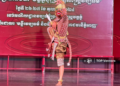
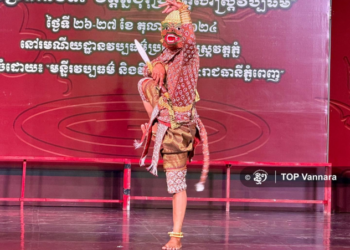
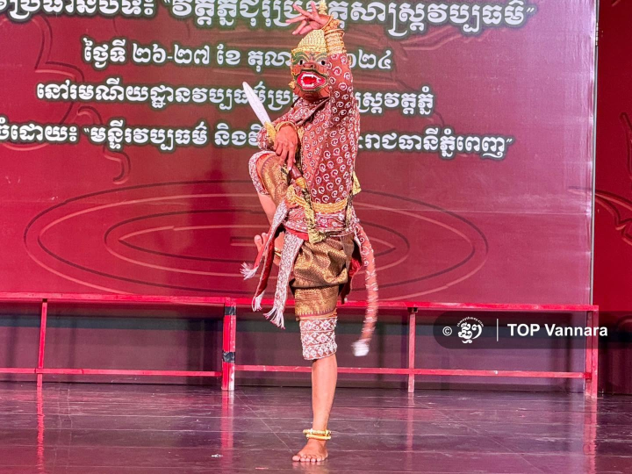
Hanuman often steals the show with his energetic acrobatics, mischievous personality, and unwavering devotion. His mask, instantly recognizable by its white monkey features, has become one of the symbols of Khmer performing arts.
The Masks That Bring Characters to Life
More Than Beautiful Objects
The masks are perhaps the most iconic feature of Lakhon Khol.
Each one represents a specific character and immediately tells the audience whether the performer portrays a hero, monkey warrior, demon, giant, or mythical creature.
Traditional masks are carefully crafted from papier-mâché, lacquer, paint, and decorative materials. Bright colors, elaborate crowns, and expressive facial features help distinguish the personalities of the various characters.
Creating these masks requires remarkable patience and artistic skill. In many workshops, the techniques have been passed from master to apprentice over several generations.
Learning to Dance Behind a Mask
Performing while wearing a mask presents unique challenges.
The dancer must rely entirely on body language because facial expressions disappear behind the painted face. Every movement of the arms, hands, shoulders, and feet becomes essential to communicating emotion.
The result is surprisingly expressive. Experienced performers can convey anger, humor, tenderness, or determination without speaking a single word.
Music That Guides Every Movement
No Lakhon Khol performance exists without its musicians.
The accompanying pinpeat orchestra provides the rhythm, atmosphere, and dramatic intensity of each scene. Gongs, xylophones, drums, cymbals, and reed instruments interact with remarkable precision.
Rather than simply providing background music, the orchestra responds directly to the dancers’ movements. Tempo changes highlight battles, emotional moments, comic scenes, or ceremonial entrances.
Meanwhile, narrators and singers explain the unfolding story, allowing audiences unfamiliar with every episode of the Reamker to follow the action.
UNESCO Recognition
In 2018, Lakhon Khol of Wat Svay Andet was inscribed on UNESCO’s Representative List of the Intangible Cultural Heritage of Humanity.
This recognition celebrated not only the artistic value of the performances but also the remarkable efforts of local communities who safeguarded the tradition through difficult decades.
UNESCO highlighted the importance of intergenerational transmission, community participation, and the preservation of traditional knowledge, from dance techniques to costume making and mask production.
International recognition has also encouraged greater public interest among younger Cambodians and visitors eager to experience authentic Khmer culture.
Where Visitors Can Experience Lakhon Khol
Watching a genuine Lakhon Khol performance is one of the most memorable cultural experiences available in Cambodia.
Special performances occasionally take place during religious festivals, cultural celebrations, and heritage events. Some institutions also organize demonstrations for educational purposes.
If you are fortunate enough to attend one, arrive with patience rather than expecting the pace of a modern theatre production. Traditional performances unfold deliberately, allowing each gesture and musical phrase to develop naturally.
Understanding a few basic characters beforehand can greatly enrich the experience. Once Hanuman leaps onto the stage or Krong Reap appears in his imposing mask, the story quickly becomes surprisingly easy to follow.
Why Lakhon Khol Still Matters Today
In an era dominated by streaming platforms and short online videos, Lakhon Khol reminds us that some stories deserve to unfold slowly.
It represents far more than a performance. It embodies craftsmanship, literature, music, dance, religious traditions, community memory, and national identity all at once.
For Cambodia, preserving Lakhon Khol means preserving a living connection with the country’s past while giving younger generations a reason to celebrate their cultural inheritance.
Visitors often arrive expecting ancient temples alone. Many leave equally impressed by the artists who continue to breathe life into centuries-old traditions through movement, music, and extraordinary masks.
Conclusion
Lakhon Khol remains one of Cambodia’s most remarkable cultural treasures, where epic storytelling, masterful craftsmanship, and centuries of tradition come together on stage. Whether discovered during a temple festival or through a cultural performance, this magnificent masked dance drama offers an unforgettable glimpse into the soul of Khmer civilization.
About the Author
Pascal Médeville is a writer and digital publisher based in Cambodia. Through Wonders of Cambodia, he explores the country’s history, arts, traditions, architecture, and everyday life, making Khmer culture accessible to an international audience. He has a particular interest in preserving and sharing Cambodia’s rich intangible cultural heritage, including performing arts such as Lakhon Khol.
A short presentation of Lakhon Khol by Panasia Life on Youtube: