Can kindness become a dangerous mistake? This classic Khmer folktale reminds us that gratitude is never guaranteed, and that wisdom often triumphs where strength and authority fail.
Cambodian folklore is filled with stories that entertain while quietly teaching lessons about justice, morality, and human nature. Collected in the famous Prachum Rœng Preng Khmer (Collection of Khmer Folktales) edited by the Buddhist Institute in Phnom Penh, “The Good Hermit and the Ungrateful Tiger” is one of the finest examples. It combines suspense, humor, talking animals, and Buddhist ethics into a tale that remains remarkably relevant today.
The Story
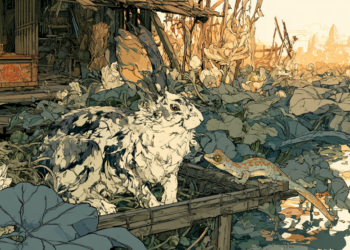
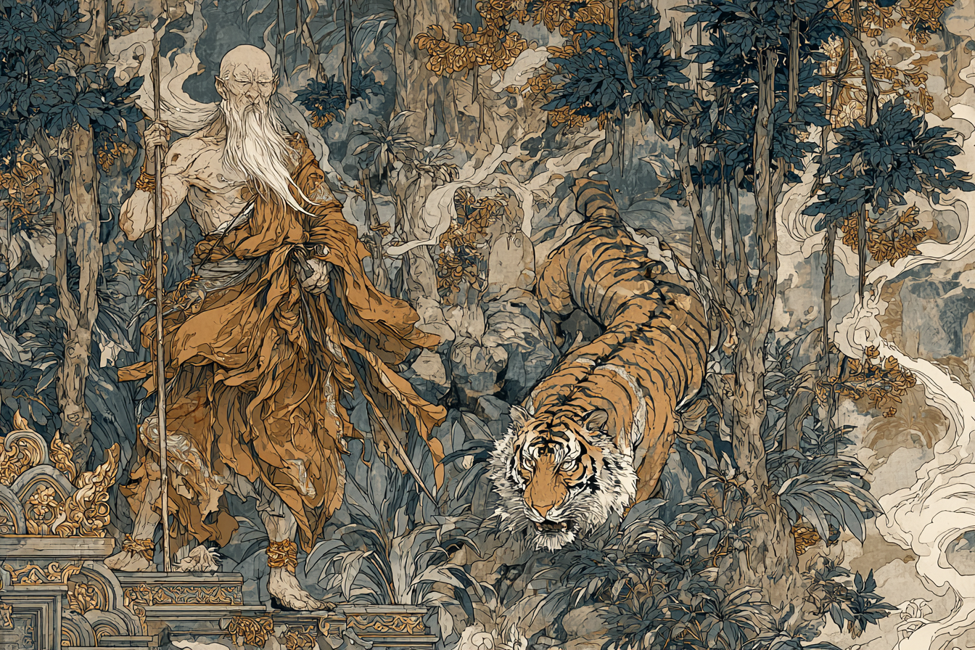
Long ago, a solitary tiger wandered through the forest and, seeking a comfortable place to rest, lay down on top of the entrance to a cobra’s burrow. The disturbed snake emerged and bit the tiger, killing it almost instantly.
Later that day, a wandering hermit, renowned for his spiritual powers and compassion, passed by. Seeing the lifeless tiger, he felt pity and used his sacred knowledge to revive the animal.
The tiger opened its eyes, stretched, and looked around in confusion. “I was sleeping peacefully in my forest,” it growled. “Who dared wake me? Since you disturbed my rest, I shall eat you.”
The hermit stared in disbelief. “I did not disturb your sleep. You were dead. A snake bit you, and I restored your life. Instead of thanking me, you wish to devour your benefactor?”
The tiger remained unmoved. “I am hungry.” Unable to settle the dispute, they agreed to seek judgment.
Their first judge was a dhole. The dhole listened carefully but secretly thought, “If I rule against the tiger, I will never be safe in this forest.” So he declared that the tiger had every right to eat the hermit. This judgment, the tale explains, was corrupted by partiality.
The disappointed hermit appealed to an ox. The ox reflected, “If I oppose the tiger, I may become its next meal.” Fear guided his decision, and he also ruled in the tiger’s favor. His judgment was corrupted by fear.
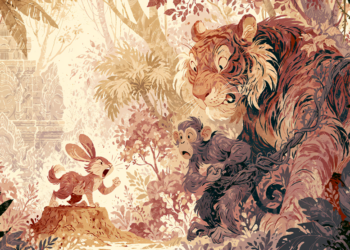
Still refusing to surrender, the hermit sought the wisdom of a monkey. The monkey remembered how his own father had once rescued a man from danger, only to be murdered by the very person he had saved. Ever since, the monkey distrusted acts of kindness. Convinced that gratitude was an illusion, he sided with the tiger. His judgment was clouded by resentment.
The hermit then turned to a vulture. The bird considered the matter carefully before thinking, “The tiger’s leftovers feed me every day. Why should I offend such a generous supplier?” Naturally, the vulture also ruled for the tiger. His judgment was corrupted by greed.
Desperate, the hermit appealed to the spirit of a great tree. The tree spirit reflected bitterly on how humans rested in the shade, then broke branches, stripped bark, and cut down trees without gratitude. Disgusted with humanity, the tree spirit also ruled against the hermit. This decision arose from delusion and prejudice.
The poor hermit had lost every case. At last, he met a rabbit.
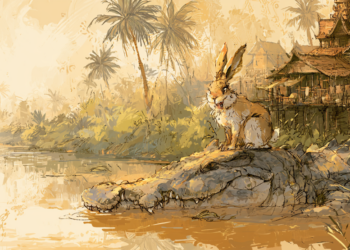
Unlike the previous judges, the rabbit did not rush to a conclusion. “I cannot understand what happened,” the rabbit said politely. “Please take me to the exact place where this strange event occurred. Show me everything exactly as it happened.” The tiger, proud of its story, happily agreed.
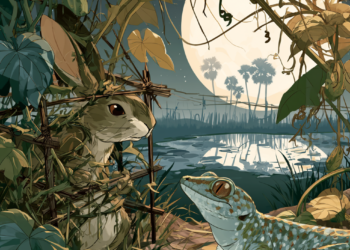
They returned to the cobra’s burrow. “Now,” said the rabbit, “lie down exactly as you did before.” The tiger stretched out over the entrance and closed its eyes. Moments later, the cobra emerged once again. Annoyed by the intruder blocking its home, it struck with lightning speed. The tiger died exactly as before.
The rabbit turned calmly toward the hermit. “Now you can see the truth,” he said. “Those who forget kindness cannot escape the consequences of their own actions. From now on, do not waste your compassion on a creature that knows no gratitude.” The hermit nodded, wiser than before, while the rabbit quietly returned to the forest, having solved the dispute without violence or argument.
More Than a Tale About Animals
Like many Khmer folktales, this story is not really about a tiger or a rabbit. It is about people. Each judge represents one of the classic Buddhist causes of unjust decisions. The dhole is biased by favoritism, the ox by fear, the monkey by anger, the vulture by greed, and the tree spirit by delusion. Together, they illustrate how justice can be distorted whenever personal interests outweigh truth.
The rabbit stands apart. He listens, investigates the facts, and allows the truth to reveal itself. Rather than debating endlessly, he recreates the circumstances of the event. His intelligence lies not in clever words but in practical reasoning.
The tale also explores a timeless dilemma: should kindness always be unconditional? The hermit’s compassion is admirable, yet the story gently reminds us that wisdom should accompany generosity. Good intentions alone are not always enough.
With its memorable characters, subtle humor, and enduring moral, “The Good Hermit and the Ungrateful Tiger” remains one of Cambodia’s finest traditional stories, proving that the sharpest claws are no match for a sharp mind.