In this classic Khmer folktale, a tiny rabbit outsmarts a powerful tiger with nothing but wit – and a perfectly timed lie.
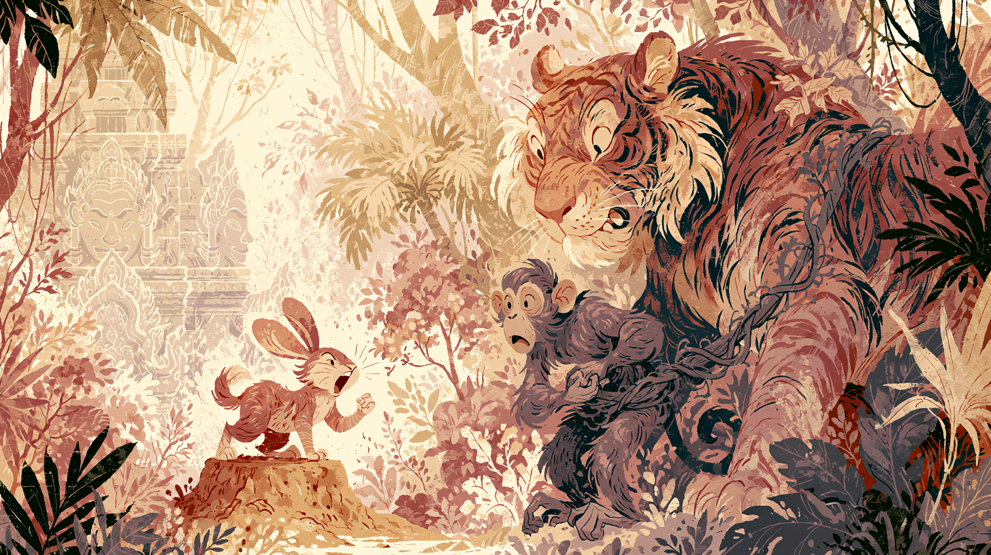
Cambodian folklore is rich with clever tricksters, and few are as beloved as the quick-thinking rabbit. Found across oral traditions in rural Cambodia, these stories are more than entertainment; they carry lessons about intelligence, survival, and the subtle art of persuasion. In this tale, a small rabbit faces a dangerous tiger – and wins without lifting a paw.
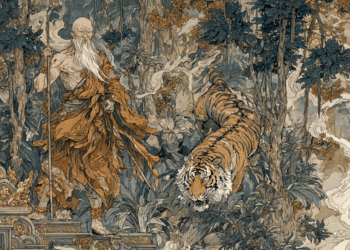
Once, a rabbit escaped from an old hunter’s trap and ran deep into the forest, finally hiding beneath a thick bush. Not long after, a tiger passed by and spotted the trembling rabbit. Quietly, the tiger crept closer, ready to pounce and make a quick meal.
The rabbit realized the danger. Instead of fleeing, it puffed itself up and spoke loudly, pretending not to notice the tiger.
“Hmm! I’ve eaten five elephants and still not full. I’ve swallowed creatures no bigger than my thumb, and my throat still feels dry. If only I could get a tiger’s liver to eat, perhaps that would finally satisfy me.”
Hearing this, the tiger froze. A tiny animal that eats elephants? And now it wants a tiger’s liver? Fear replaced hunger. The tiger slowly backed away and ran off, shaken.
Still unsure, the tiger went to find a monkey and told the story.
“I saw a strange little animal,” said the tiger. “It claimed to have eaten five elephants and now wants to eat my liver. I was too frightened to attack.”
The monkey frowned. “What did it look like?”
“Small,” said the tiger, “about the size of my wrist, with long ears and a short tail.”
The monkey laughed. “That’s just a rabbit. They’re harmless. You’ve been fooled.”
But the tiger shook its head. “No, I saw bits of tusk scattered around it. Proof of what it had eaten!”
The monkey sighed. “Come with me. I’ll show you the truth.”
“I’m afraid,” said the tiger. “If it attacks, you’ll climb a tree and leave me behind.”
The monkey thought for a moment. “Then tie us together with a vine. That way, we stay side by side.”
The tiger agreed. They bound themselves together at the waist with a strong vine and headed back.
Meanwhile, the rabbit had left the bush and climbed onto a small mound nearby. When it saw the tiger returning – this time tied to a monkey – it immediately understood what was happening.
The rabbit stood tall and shouted:
“Ah! Monkey! You owe me a debt for years, and now you bring me this old tiger to repay it!”
The tiger’s heart pounded. The monkey had tricked it! Terrified, the tiger bolted in panic. As it ran, it dragged the monkey along, slamming it against trees and rocks. The monkey tried to shout, but the force knocked the breath out of it.
The tiger ran wildly until the monkey was lifeless. Looking back, the tiger saw the monkey’s mouth hanging open and thought it was laughing. Furious and frightened, it struggled to break free, finally snapping the vine and fleeing alone into the forest.
And the rabbit? It calmly disappeared into the trees, safe once again.
This Khmer folktale highlights a recurring theme in Cambodian storytelling: intelligence triumphs over strength. The rabbit, often a symbol of wit and survival in Southeast Asian folklore, reflects the values of rural communities where quick thinking can mean the difference between danger and safety.
The tiger, a powerful but impulsive figure, represents unchecked fear and pride. Meanwhile, the monkey’s role shows how overconfidence can be just as dangerous as ignorance. Together, the characters create a layered moral: strength without wisdom leads to downfall, and even the smallest voice can reshape reality with the right words.
Stories like this have been passed down for generations in Cambodia, often told by elders in village settings or shared during quiet evenings. They are not only entertaining but also serve as subtle lessons in human behavior, strategy, and the power of language. In a world where size and strength often dominate, this tale reminds us that cleverness – especially when delivered with confidence – can change the outcome entirely.